This book offers a unique perspective on contemporary Polish cinema's engagement with histories of Polish violence against their Jewish neighbours during the Holocaust.
This collection of essays explores how historians of theatre apply ethical thinking to the attempt to truthfully represent their subject - whether that be the life of a well-known performer, or the little known history of colonial theatre in India - by exploring the process by which such histories are written, and the challenges they raise.
'Through a series of excellent essays this volume uses concrete ethnographic analyses of memory practices in different parts of the globe to offer theoretical reflections on how memory shapes and is shaped by mobility in time and space.
This book explores how photography and recorded music act as vehicles or catalysts in processes of remembering, and how they are regarded, treated, valued and drawn upon as resources connecting past and present in everyday life.
Drawing on a range of cities and conflicts from Europe, Africa and the Middle East, the collection explores the post-conflict condition as it is lived and expressed in modern cities such as Berlin, Belfast, Bilbao, Beirut, Derry, Skopje, Sarajevo, Tunis, Johannesburg and Harare.
This book provides a critical engagement with the idea of the 'security society' which has been the focus of so much attention in criminology and the social sciences more broadly.
This volume explores the ways in which music scenes are not merely physical spaces for the practice of collective musical life but are also inscribed with and enacted through the articulation of cultural memory and emotional geography.
In historical terms, the Old Diplomacy is not really that old many of its concepts and methods date to the mid-nineteenth century while the practices of New Diplomacy emerged only a couple of generations later.
Asa Briggs has been a prominent figure in post-war cultural life - as a pioneering historian, a far-sighted educational reformer, and a sensitive chronicler of the way in which broadcasting and communication more generally have shaped modern society.
Building on over a century of scholarly achievements and advances, this book addresses the core problem of how to incorporate gender in the study of the history of medieval Europe, and why it is important to do so.
Over the course of three centuries, American settlers helped to create the richest, most powerful nation in human history, even as they killed and displaced millions.
Authors from a variety of disciplines dealing with diverse historical cases engage with the spatial deployment of violence and the possibilities for memory and resistance in contexts of state sponsored violence, enforced disappearances and regimes of exception.
The Media of Testimony explores testimony relating to the Stasi in different cultural forms: autobiographical writing, memorial museums and documentary film.
This book asks how 21st century technologies such as the Internet, mobile phones and social media are transforming human memory and its relationship to gender.
Although some historians have been researching and writing history from a transnational perspective for more than a century, it is only recently that this approach has gained momentum.
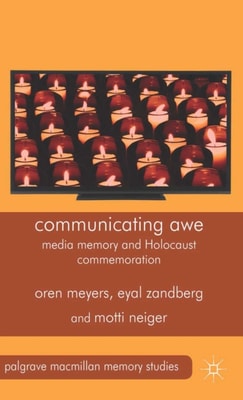
Offering a cross-media exploration of Israeli media on Holocaust Remembrance Day, one of Israel's most sacred national rituals, over the past six decades, this fascinating book investigates the way in which variables such as medium, structure of ownership, genre and targeted audiences shape the collective recollection of traumatic memories.
It is the aim of this volume to investigate how academic practices of Memory Studies are being applied, adapted, and transformed in the countries of East-Central Europe and the former Soviet Union.
Exploring the developments that have occurred in the practice of oral history since digital audio and video became viable, this book explores various groundbreaking projects in the history of digital oral history, distilling the insights of pioneers in the field and applying them to the constantly changing electronic landscape of today.
A comprehensible and accessible portrait of the various 'languages' which shaped public life in nineteenth century Britain, covering key themes such as governance, statesmanship, patriotism, economics, religion, democracy, women's suffrage, Ireland and India.
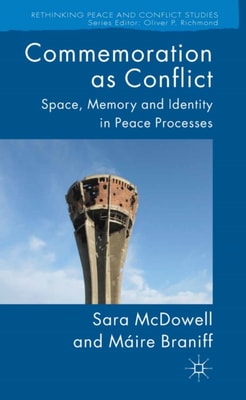
McDowell and Braniff explore the relationship between commemoration and conflict in societies which have engaged in peace processes, attempting to unpack the ways in which the practices of memory and commemoration influence efforts to bring armed conflict to an end and whether it can even reactivate conflict as political circumstances change.
In this concise historical and conceptual analysis of China's evolving position in a world defined predominantly by global capitalist development, Lin offers a critical review of relevant debates and discusses the imperative and feasibility of a socialist Chinese model, reconstructed, as an alternative to standardized modernity at an impasse.
Based on analysis of archival and published sources, Opponents of the Annales School examines for the first time those who have dared to criticise and ignore one of the most successful currents of thought in modern historiography.
Exploring the ways in which the GDR has been remembered since its demise in 1989/90, this volume asks how memory of the former state continues to shape contemporary Germany.
Explaining crime by reference to abnormalities of the brain is just one example of how the human and social sciences have influenced the approach to social problems in Western societies since 1880.
Tracking the ways in which journalism and memory mutually support, undermine, repair and challenge each other, this fascinating collection brings together leading scholars in journalism and memory studies to investigate the complicated role that journalism plays in relation to the past.
Negotiating Memories of Protest in Western Europe explores the transmission of memories of 1970s protest movements in Italy, Germany, France and Great Britain.
This collection of essays explores the emergence of economic societies in the British Isles and their development into a European, American and global reform movement in the eighteenth century.