This volume takes a fresh approach to the issue of 'space' in intellectual history and puts forward novel ways of rendering conceptions of space useful for historians of political thought.
Although there is a rich historiography on Enlightenment Tuscany in Italian as well as French and German, the principle Anglophone works are Eric Cochrane's Tradition and Enlightenment in the Tuscan Academies (1961) and his Enlightenment Florence in the Forgotten Centuries (1973).
This volume takes a fresh approach to the issue of 'space' in intellectual history and puts forward novel ways of rendering conceptions of space useful for historians of political thought.
The Laboratory of Progress: Switzerland in the 19th Century tells the improbable story of how a small, backward, mountainous agricultural country with almost no raw materials became an industrial powerhouse, a hub of innovation, a touristic mecca and a pioneer in transportation - all in the course of a single century.
The Laboratory of Progress: Switzerland in the 19th Century tells the improbable story of how a small, backward, mountainous agricultural country with almost no raw materials became an industrial powerhouse, a hub of innovation, a touristic mecca and a pioneer in transportation - all in the course of a single century.
This book investigates how ideas of and discourses about Europe have been affected by images of the Mediterranean Sea and its many worlds from the nineteenth century onwards.
This book investigates how ideas of and discourses about Europe have been affected by images of the Mediterranean Sea and its many worlds from the nineteenth century onwards.
This book explores the significance of Ibn Khaldun's magnum opus, the Book of Examples, to our understanding of human history and the disciplines of anthropology, history, and sociology.
Nation and the Writing of History in China and Britain explores, through a comparative approach, the reception of the nationalist worldview and its effects on the practice of history in China and Britain.
Nation and the Writing of History in China and Britain explores, through a comparative approach, the reception of the nationalist worldview and its effects on the practice of history in China and Britain.
In this important and hugely ambitious book, one of the world's leading political scientists working on China demonstrates how Western views of China are flawed because the long tradition of Western scholarship studying China views China from the Western philosophical and intellectual perspective rather than viewing China on its own terms through the lens of China's own long-established and reputable philosophical and intellectual tradition.
In this important and hugely ambitious book, one of the world's leading political scientists working on China demonstrates how Western views of China are flawed because the long tradition of Western scholarship studying China views China from the Western philosophical and intellectual perspective rather than viewing China on its own terms through the lens of China's own long-established and reputable philosophical and intellectual tradition.
Taking as its focus an age of transformational development in cartographic history, namely the two centuries between Columbus's arrival in the New World and the emergence of the Scientific Revolution, this study examines how maps were employed as physical and symbolic objects by thinkers, writers and artists.
Taking as its focus an age of transformational development in cartographic history, namely the two centuries between Columbus's arrival in the New World and the emergence of the Scientific Revolution, this study examines how maps were employed as physical and symbolic objects by thinkers, writers and artists.
The Laboratory of Progress: Switzerland in the 19th Century tells the improbable story of how a small, backward, mountainous agricultural country with almost no raw materials became an industrial powerhouse, a hub of innovation, a touristic mecca and a pioneer in transportation - all in the course of a single century.
The Laboratory of Progress: Switzerland in the 19th Century tells the improbable story of how a small, backward, mountainous agricultural country with almost no raw materials became an industrial powerhouse, a hub of innovation, a touristic mecca and a pioneer in transportation - all in the course of a single century.
This volume deals with philosophical, scientific, and ideological images of women during the French Enlightenment, examining their emergence in the reflections of the philosophes, in Catholic morality, in biological and medical knowledge, in novels, in periodicals, and in the law.
This volume deals with philosophical, scientific, and ideological images of women during the French Enlightenment, examining their emergence in the reflections of the philosophes, in Catholic morality, in biological and medical knowledge, in novels, in periodicals, and in the law.
This book tells the story of how the "e;servile arts"e; turned into the "e;mechanical arts,"e; which in turn developed into a kind of philosophical apparatus that made modern science possible.
This book tells the story of how the "e;servile arts"e; turned into the "e;mechanical arts,"e; which in turn developed into a kind of philosophical apparatus that made modern science possible.
This companion consists of chapters that focus on and bring forward critical theories and productive methodologies for Indigenous art history in North America.
This companion consists of chapters that focus on and bring forward critical theories and productive methodologies for Indigenous art history in North America.
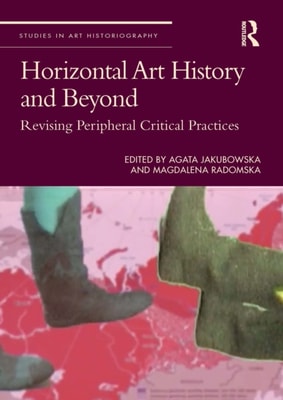
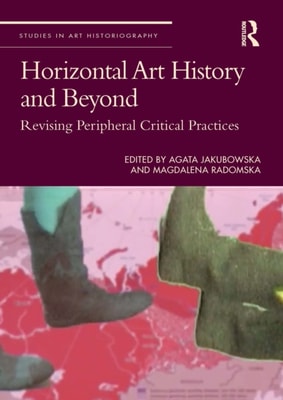
This book is devoted to the concept of horizontal art history-a proposal of a paradigm shift formulated by the Polish art historian Piotr Piotrowski (1952-2015)-that aims at undermining the hegemony of the discourse of art history created in the Western world.
This book is devoted to the concept of horizontal art history-a proposal of a paradigm shift formulated by the Polish art historian Piotr Piotrowski (1952-2015)-that aims at undermining the hegemony of the discourse of art history created in the Western world.
Drawing on a wide range of texts and using an interdisciplinary approach, this volume shows how Chinese and Japanese intellectuals mobilized the past to create a better future.
Drawing on a wide range of texts and using an interdisciplinary approach, this volume shows how Chinese and Japanese intellectuals mobilized the past to create a better future.
Sul's history of the international ginseng trade reveals the cultural aspects of international capitalism and the impact of this single commodity on relations between the East and the West.
Sul's history of the international ginseng trade reveals the cultural aspects of international capitalism and the impact of this single commodity on relations between the East and the West.
The path taken by German philosophy in the twentieth century is one of the most exciting and controversial in the history of human thought, by turns radical and conservative and secular and religious.
In 1600, Giordano Bruno, one of the leading intellectuals of the Renaissance, was burned at the stake on the charge of heresy by the Roman Inquisition.
In 1600, Giordano Bruno, one of the leading intellectuals of the Renaissance, was burned at the stake on the charge of heresy by the Roman Inquisition.
This book explores the thought of the three 'founding' members of the Austrian School of economics: Carl Menger, Friedrich von Wieser, and Eugen Bohm-Bawerk, considering the overlapping and specialization of their work on money, value, and capital.
This book explores the thought of the three 'founding' members of the Austrian School of economics: Carl Menger, Friedrich von Wieser, and Eugen Bohm-Bawerk, considering the overlapping and specialization of their work on money, value, and capital.
The path taken by German philosophy in the twentieth century is one of the most exciting and controversial in the history of human thought, by turns radical and conservative and secular and religious.