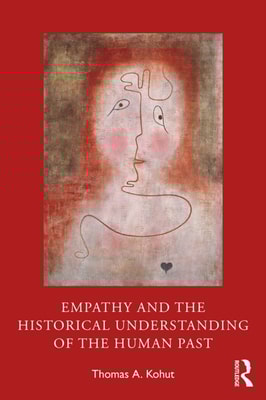
Empathy and the Historical Understanding of the Human Past is a comprehensive consideration of the role of empathy in historical knowledge, informed by the literature on empathy in fields including history, psychoanalysis, psychology, neuroscience, philosophy, and sociology.
This book provides the first comprehensive overview of atheism, secularity and non-religion in Central and Eastern Europe in the twentieth and twenty-first centuries.
This book provides the first comprehensive overview of atheism, secularity and non-religion in Central and Eastern Europe in the twentieth and twenty-first centuries.
Through an examination of the Opus maius, Roger Bacon's great scientific work of 1267, this book offers insight into Bacon's understanding of the role of science in society and the study and practice of science in the later Middle Ages.
History, Politics, and the American Past assesses the connection between historiography and politics in America on the basis of an important methodological distinction between the past and the history written about it.
History, Politics, and the American Past assesses the connection between historiography and politics in America on the basis of an important methodological distinction between the past and the history written about it.
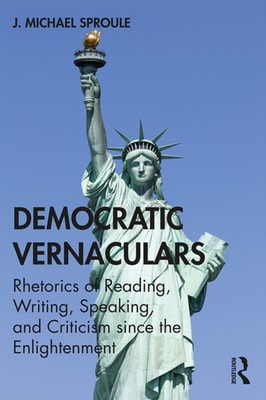
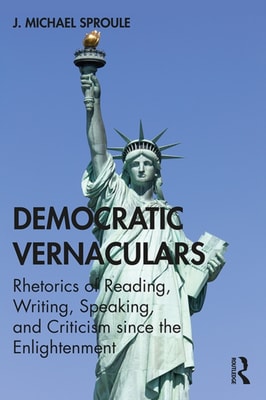
Democratic Vernaculars is a comprehensive, culturally inclusive, and thematically unified history of the communicative, audience-centered rhetorical vernacular that occupies the "e;middle range"e; of English, bounded on the one side by expressive structure (grammar and linguistics) and on the other by aesthetics (literature).
Democratic Vernaculars is a comprehensive, culturally inclusive, and thematically unified history of the communicative, audience-centered rhetorical vernacular that occupies the "e;middle range"e; of English, bounded on the one side by expressive structure (grammar and linguistics) and on the other by aesthetics (literature).
Devastated by two decades of war and ravaged by the spread of the plague, large parts of Italy fell quickly into the hands of a group known to history as the Lombards.
Devastated by two decades of war and ravaged by the spread of the plague, large parts of Italy fell quickly into the hands of a group known to history as the Lombards.
This volume, which gathers contributions presented at the annual conferences of l'Association pour le developpement de l'histoire culturelle (ADHC), questions the subjects and boundaries of cultural history in France - with regard to neighboring approaches such as cultural studies, media studies, and gender studies - to elaborate a "e;social history of representations.
This volume, which gathers contributions presented at the annual conferences of l'Association pour le developpement de l'histoire culturelle (ADHC), questions the subjects and boundaries of cultural history in France - with regard to neighboring approaches such as cultural studies, media studies, and gender studies - to elaborate a "e;social history of representations.
In this landmark volume, Samuel Hollander presents a fresh and compelling history of moral philosophy from Locke to John Stuart Mill, showing that a 'moral sense' can actually be considered compatible with utilitarianism.
In this landmark volume, Samuel Hollander presents a fresh and compelling history of moral philosophy from Locke to John Stuart Mill, showing that a 'moral sense' can actually be considered compatible with utilitarianism.
This book, first published in 1988, examines the origins, purposes and functioning of the civic universities founded in the second half of the nineteenth century and discusses their significance within both local and wider communities.
This book, first published in 1988, examines the origins, purposes and functioning of the civic universities founded in the second half of the nineteenth century and discusses their significance within both local and wider communities.
This book presents eight papers about important historiographical issues as debated in the history of science in Islamicate societies, the history of science and philosophy of medieval Latin Europe and the history of mathematics as an academic discipline.
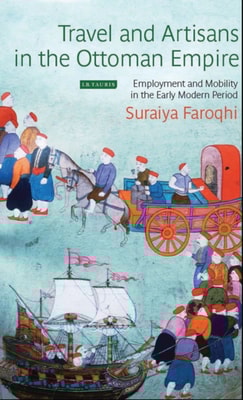
It has often been assumed that the subjects of the Ottoman sultans were unable to travel beyond their localities - since peasants needed the permission of their local administrators before they could legitimately leave their villages.
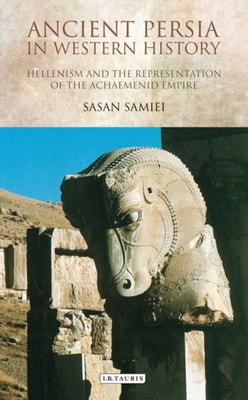
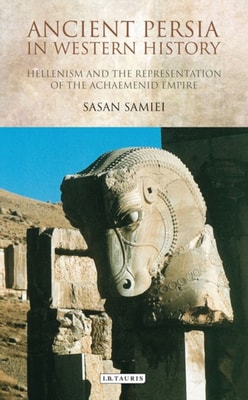
Ancient Persia in Western History is a measured rejoinder to the dominant narrative that considers the Graeco-Persian Wars to be merely the first round of an oft-repeated battle between the despotic 'East' and the broadly enlightened 'West'.
Saudi Arabia is generally and justifiably viewed as a country with the fewest democratic institutions and the weakest traditions of pluralism in the world.
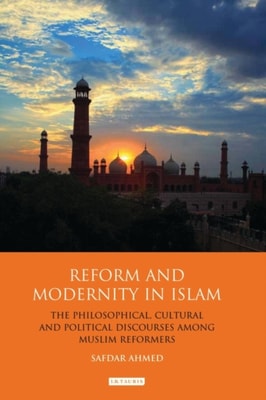
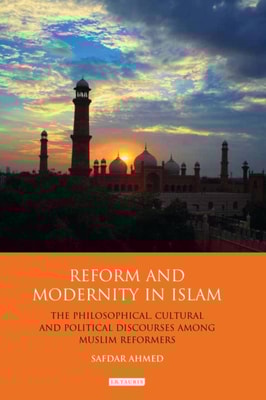
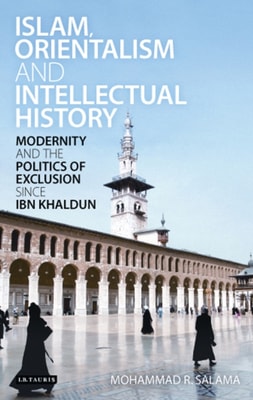
The debate over Islam and modernity tends to be approached from a Eurocentric perspective that presents Western norms as a template for progress - against which Islamic societies can be measured.
Ancient Persia in Western History is a measured rejoinder to the dominant narrative that considers the Graeco-Persian Wars to be merely the first round of an oft-repeated battle between the despotic 'East' and the broadly enlightened 'West'.
The debate over Islam and modernity tends to be approached from a Eurocentric perspective that presents Western norms as a template for progress - against which Islamic societies can be measured.
Debates on the relationship between Islam and the West rage on, from talk of clashing civilizations to political pacification, from ethical and historical perspectives to distrust, xenophobia and fear.
While bookstore shelves around the world have never ceased to display best-selling life-and-letters biographies in prominent positions, the genre became less popular among academic historians during the Cold War decades.
This series aims at bridging the gap between historical theory and the study of historical memory as well as western and non-western concepts, for which this volume offers a particularly good example.
Karl Leyser's intuitive and imaginative historical writing drew on deep reading in the primary sources and, above all, on an intimate knowledge of the major historians of the period displayed in this collection of his work.