In this clear, jargon-free guide, Willie Thompson provides a concise introduction to postmodernist theory and its significant impact on the study of history.
If the vibrancy on display in Thinking in the Past Tense is any indication, the study of intellectual history is enjoying an unusually fertile period in both Europe and North America.
How providential history-the conviction that God is an active agent in human history-has shaped the American historical imagination In 1847, Protestant missionary Marcus Whitman was killed after a disastrous eleven-year effort to evangelize the indigenous peoples of the Pacific Northwest.
A compelling comparison of the gospels and Greco-Roman mythology which shows that the gospels were not perceived as myths, but as historical records Did the early Christians believe their myths?
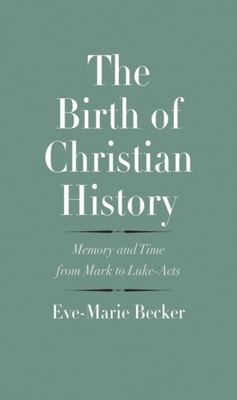
The first comprehensive account to explore the beginnings of early Christian history writing, tracing its origin to the Gospel of Mark and Luke-Acts When the Gospel writings were first produced, Christian thinking was already cognizant of its relationship to ancient memorial cultures and history-writing traditions.
A noted medical historian explores the roles played by various intellectual frameworks and trends in the writing of history A collection of ten essays paired with substantial prefaces, this book chronicles and contextualizes Roger Cooter’s contributions to the history of medicine.
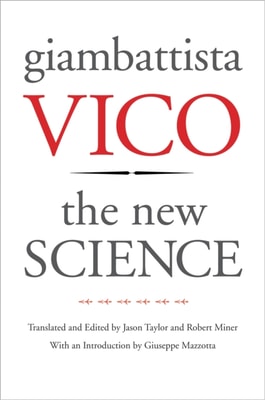
A fresh translation of The New Science, with detailed footnotes that will help both the scholar and the new reader navigate Vico’s masterpieceThe New Science is the major work of Italian philosopher Giambattista Vico.
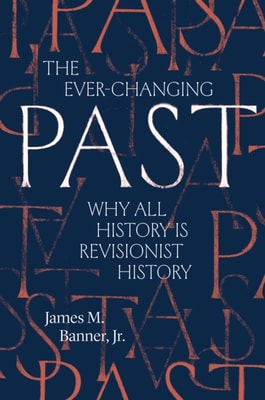
An experienced, multi-faceted historian shows how revisionist history is at the heart of creating historical knowledge"e;A rallying cry in favor of historians who, revisiting past subjects, change their minds.
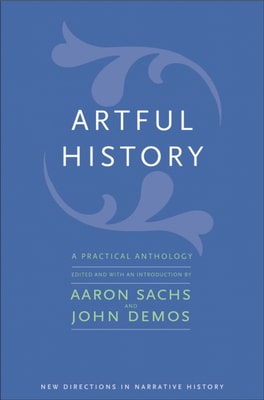
A collection of memorable, stirring, and eloquent historical essays, designed to help any historian write more artfully Is there any reason serious historical scholarship cannot receive literary expression?
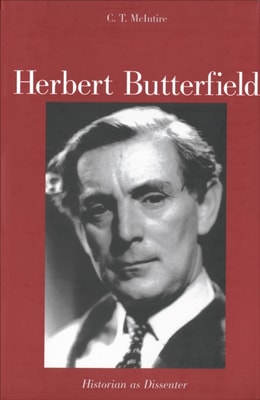
Herbert Butterfield (1900-1979) was an important British historian and religious thinker whose ideas, in particular his concept of a “Whig interpretation of history,” remain deeply influential.
In this collection of essays, scholars from a range of disciplines explore the activity of knowing in late antiquity by focusing on thirteen major concepts from the intellectual, social, political, and cultural history of the period.
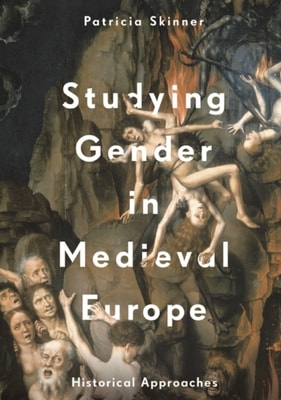
Building on over a century of scholarly achievements and advances, this book addresses the core problem of how to incorporate gender in the study of the history of medieval Europe, and why it is important to do so.
This book provides a critical engagement with the idea of the 'security society' which has been the focus of so much attention in criminology and the social sciences more broadly.
This book primarily focuses on the concept of forgetting, with particular emphasis on how we can trace the forgotten in contemporary life writing and memory texts.
This book explores how modern Egyptians understand the Mamluks and reveals the ways in which that historical memory is utilized for political and ideological purposes.
Based on the assumption that reality, reference and representation work together, this introductory textbook explains and illustrates the various ways in which historians write the past as history.
This introductory textbook presents medical history as a theoretically rich discipline, one that constantly engages with major social questions about ethics, bodies, state power, disease, public health and mental disorder.
Theories of Colour from Democritus to Descartes investigates issues of the ontological status and perception of colours, such as: What is the nature of colours?
This volume fills a gap in the literature on digital humanities (DH) in the Hispanic context by gathering a heterogeneous group of specialists who, from different standpoints in the humanities, explore Spanish texts as the object of study, DH as the work methodology, and Medieval and Early Modern Times as the historical framework.
This is a book about the conflict between history and poetry - and historians and poets - in Atlantic World society from the end of the seventeenth century to the present day.
Scholars have long been puzzled by why Muslim landowners in Central Asia, called begs, stayed loyal to the Qing empire when its political legitimacy and military power were routinely challenged.
Among the Jewish writers who emigrated from Eastern Europe to France in the 1910s and 1920s, a number chose to switch from writing in their languages of origin to writing primarily in French, a language that represented both a literary center and the promises of French universalism.
This book argues for a deconstructive approach to the practice and writing of history at a moment when available forms for writing and publishing history are undergoing radical transformation.
What are the archives of gay and lesbian leather histories, and how have contemporary artists mined these archives to create a queer politics of the present?
It is only in the past two decades that English-speaking scholars have fully breached European language barriers, permitting a comprehensive reexamination of the Napoleonic Wars beyond the limitations of English-, French-, and German-dependent works.
Dazzlingly original but deeply engaged with the philosophical currents of her time, Margaret Cavendish (1623-1673) was one of the most ingenious and exciting philosophers of the seventeenth century.
This is a fascinating account of two great scientists of the 20th century: Einstein and Heisenberg, discoverers, respectively, of the theory of relativity and quantum mechanics.