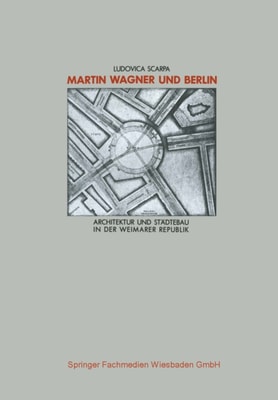
Diese Arbeit untersucht die Aktivitäten Martin Wagners (1885-1957), der zwischen 1918 und 1933 als Architekt, Ingenieur, Organisator gewerkschaftlicher Bauunterneh mungen und, in der zweiten Hälfte der zwanziger Jahre, als Stadtbaurat im Berliner Amt für Stadtplanung tätig gewesen ist.
Widerspruchsfreiheit ist eine Mangelerscheinung oder ein Widerspruch Hans Magnus Enzenberger Was wir zur Konzeption dieser Einführung - im Vertrauen auf ihre Nützlichkeit wie auch im Bewußtsein ihrer Schwächen - in der Vor bemerkung des ersten Bandes geschrieben haben, kann auch noch für diesen dritten gelten.
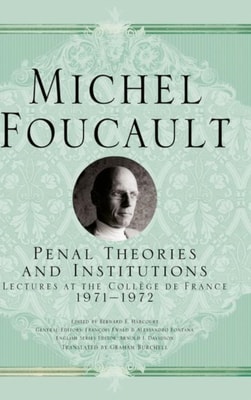
"e;What characterizes the act of justice is not resort to a court and to judges; it is not the intervention of magistrates (even if they had to be simple mediators or arbitrators).
This volume reflects on the role played by textbooks in the complex relationship between war and education from a historical and multinational perspective, asking how textbook content and production can play a part in these processes.
This book explores the contribution of discursive psychology and discourse analysis to researching the relationship between history and collective memory.
This handbook explores a diverse range of artistic and cultural responses to modern conflict, from Mons in the First World War to Kabul in the twenty-first century.
This volume explores the different mechanisms and forms of expression used by women to come to terms with the past, focusing on the variety and complexity of women's narratives of displacement within the context of Central and Eastern Europe.
This book illuminates how the 'long eighteenth century' (1660-1800) persists in our present through screen and performance media, writing and visual art.
This book provides a focus for future discussion in one of the most important debates within historical theology within the protestant tradition - the debate about the definition of a category of analysis that operates over five centuries of religious faith and practice and in a globalising religion.
The past decades have seen a growing "e;philosophical"e; interest in a number of authors, but strangely enough Saramago's oeuvre has been left somewhat aside.
This book traces the development of investigative cinema, whose main characteristic lies in reconstructing actual events, political crises, and conspiracies.
Despite the boom in scholarship in both Comics Studies and Memory Studies, the two fields rarely interact-especially with issues beyond the representation of traumatic and autobiographical memories in comics.
In Argentina and elsewhere in Latin America, decades after the fall of authoritarian regimes in the 1970s, transitional justice has proven to be anything but transitional-it has become a cornerstone of state policy and a powerful tool of state formation.
This volume studies a fundamental element of Montesquieu's argumentative architecture that is most apparent in his De l'Esprit des Lois: the problem of giving order to, and establishing a network of consistent explanations of political, social and cultural diversity.
Unraveling the Voynich Codex reviews the historical, botanical, zoological, and iconographic evidence related to the Voynich Codex, one of the most enigmatic historic texts of all time.
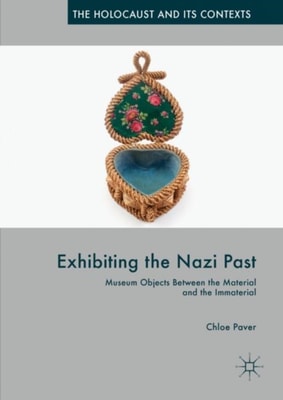
This book is the first full-length study of the museum object as a memory medium in history exhibitions about the Nazi era, the Second World War, and the Holocaust.
This book takes the concept of "e;dark tourism"e;-journeys to sites of death, suffering, and calamity-in an innovative yet essential direction by applying it to the virtual realms of literature, film and television, the Internet, and gaming.
This book uses Viktor Frankl's Existential Psychology (logotherapy) to explore the ways some professors use unusually personal scholarship to discover meaning in personal adversity.
This book is a distinctively original biography of Galileo Galilei, probably the last eclectic genius of the Italian Renaissance, who was not only one of the greatest scientists ever, but also a philosopher, a theologian, and a man of great literary, musical, and artistic talent - "e;The Tuscan Artist"e;, as the poet John Milton referred to him.
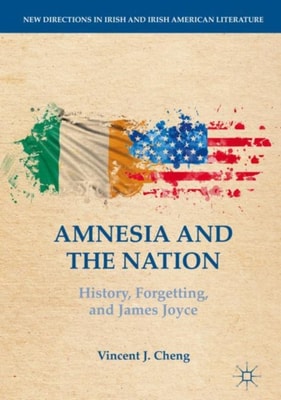
This book examines the relationships between memory, history, and national identity through an interdisciplinary analysis of James Joyce's works-as well as of literary texts by Kundera, Ford, Fitzgerald, and Walker Percy.