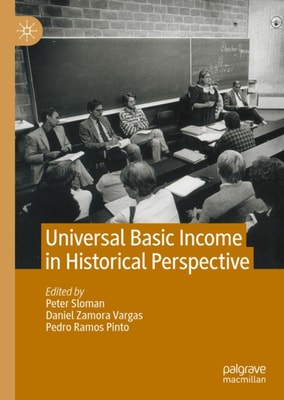
This new edited collection brings together historians and social scientists to engage with the global history of Universal Basic Income (UBI) and offer historically-rich perspectives on contemporary debates about the future of work.
This book examines the meaning of home through the investigation of a series of public and private spaces recurrent in Italian postcolonial literature.
Narratives of Forced Mobility and Displacement in Contemporary Literature and Culture: Border Violence focuses on the evidence of the effects of displacement as seen in narratives-cinematic, photographic, and literary-produced by, with, or about refugees and migrants.
This book presents new insights into the production and reception of Irish drama, its internationalisation and political influences, within a pivotal period of Irish cultural and social change.
This book collates papers presented at two international conferences (held at the Australian National University in 2018 and Birkbeck College London in 2019) exploring the relationships between big history and astrobiology and their wider implications for society.
This book explores how the expectations of historical justice movements and processes are understood within educational contexts, particularly history education.
This book sheds new light on the life and times of Theodore Roosevelt, drawing on a remarkable set of oral histories gathered in the 1950s from those who knew him.
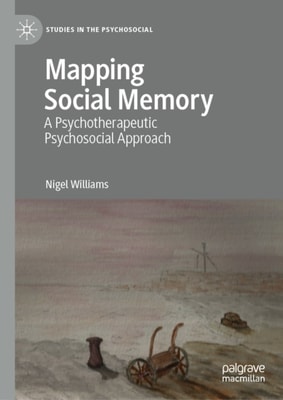
This book is grounded in psychosocial research that explores the complex intergenerational transmission of memories within families and the transgenerational social issues that form a part of those memories.
This book takes a sociocultural, developmental and dialogical perspective to explore the constructive and interconnected nature of remembering and imagining.
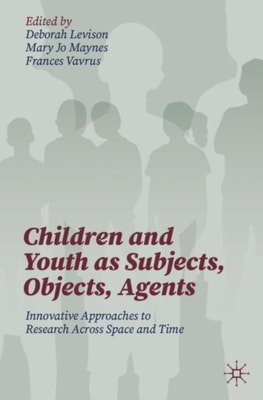
This textbook showcases innovative approaches to the interdisciplinary field of childhood and youth studies, examining how young people in a wide range of contemporary and historical contexts around the globe live their young lives as subjects, objects, and agents.
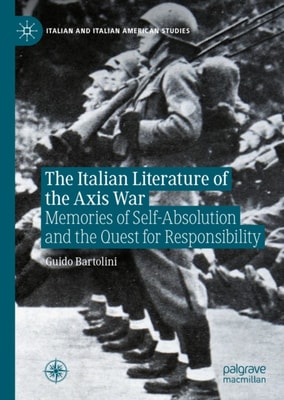
This book investigates the representation of the Axis War - the wars of aggression that Fascist Italy fought in North Africa, Greece, the Soviet Union, and the Balkans, from 1940 to 1943 - in three decades of Italian literature.
This book introduces the reader to the statues, busts, and memorial plaques of scientists, explorers, medicine men and women, and inventors found in the bustling capital of the United Kingdom, London.
In this book, practitioners and students discover perspectives on landscape, place, heritage, memory, emotions and geopolitics intertwined in evolving citizenship and democratization debates.
This second edition of the Encyclopedic Dictionary of Archaeology gathers all the terms and techniques in current use in the field of archaeology, more than 9,700 total, up from the original 7,000.
This handbook addresses the methodological problems and theoretical challenges that arise in attempting to understand and represent humour in specific historical contexts across cultural history.
As the world negotiates immense loss and questions of how to memorialize, the contributions in this volume evaluate the role of culture as a means to promote reconciliation, either between formerly warring parties, perpetrators and survivors, governments and communities, or within the self.
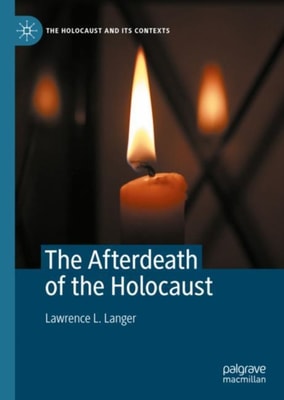
This book investigates the memory of the Holocaust in Sweden and concentrates on early initiatives to document and disseminate information about the genocide during the late 1940s until the early 1960s.
Exploring the Spatiality of the City across Cultural Texts: Narrating Spaces, Reading Urbanity explores the narrative formations of urbanity from an interdisciplinary perspective.
This book presents a concise yet comprehensive survey of methods used in the expanding studies of human evolution, paying particular attention to new work on social evolution.
This book questions when exactly the Anthropocene began, uncovering an "e;early Anthropocene"e; in the literature, art, and science of eighteenth- and nineteenth-century Britain.
"e;Reframing Postcolonial Studies addresses the urgent issues that Black Lives Matter has raised with respect to everyday material practices and the frameworks in which our knowledge and cultural heritage are conceptualized and stored.
Drawing on theories of historiography, memory, and diaspora, as well as from existing genre studies, this book explores why contemporary writers are so fascinated with history.