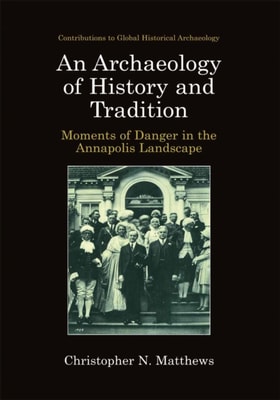
As the foundations of the modern world were being laid at the beginning of the 19th century, Annapolis, Maryland, identified itself as the Ancient City.
Historical archaeologists are in a unique position to analyze both historical documents and archaeological data in order to generate hypotheses and draw conclusions.
Starting at the dawn of science, History of Industrial Gases traces the development of gas theory from its Aristotelian roots to its modern achievements as a global industry.
In the past four decades or so, the so-called psychology of religion - after having been deemedextinct, impossible or unlikely has risen to prominence again: the number of publications israpidly growing, an impressive secondary literature (handbooks, introductions, etc.
The Archaeology of Capitalism in Colonial Contexts: Postcolonial Historical Archaeologies explores the complex interplay of colonial and capital formations throughout the modern world.
This book presents a series of case studies and thought-provoking essays arguing for a radical approach to history and providing a revisionist interpretation of the historians role.
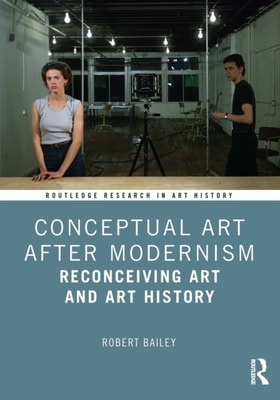
This study provides a new interpretation of art after modernism by foregrounding the importance of conceptual thinking as a pervasive force for change in art and art history since 1950.
This book is a detailed exploration of the Hispanic intellectual context and the different Aristotelian traditions that prevailed until the 16th century.
In historiography, the Idea of Progress is the theory that advances in technology, science, and social organization inevitably produce an improvement in the general human condition.
A COMPANION TO THE PHILOSOPHY OF HISTORY AND HISTORIOGRAPHY The philosophy of historiography examines our representations and knowledge of the past, the relation between evidence, inference, explanation and narrative.
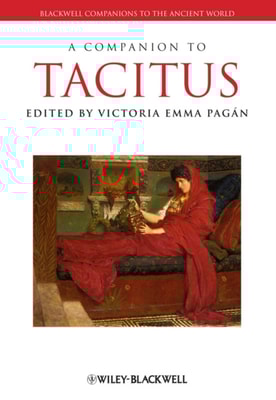
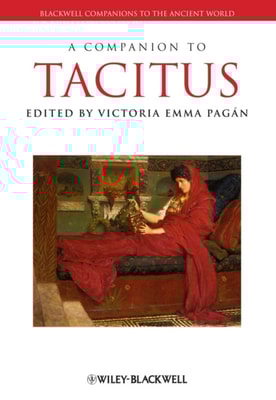
A Companion to Tacitus brings much needed clarity and accessibility to the notoriously difficult language and yet indispensable historical accounts of Tacitus.
A Companion to Tacitus brings much needed clarity and accessibility to the notoriously difficult language and yet indispensable historical accounts of Tacitus.
A COMPANION TO THE PHILOSOPHY OF HISTORY AND HISTORIOGRAPHY The philosophy of historiography examines our representations and knowledge of the past, the relation between evidence, inference, explanation and narrative.
Fernand Braudel (1912-1985), was a leading French historian and author of, among other books, the groundbreaking The Mediterranean and the Mediterranean World in the Age of Philip II (1949).
This volume of essays, from the Third David Nichol Smith Memorial Seminar, continues the valuable and lively tradition established in the two earlier seminars and volumes.
This volume presents an array of studies on many aspects of the eighteenth century: on the novel, history, the history of ideas, drama, poetry and sentimentality.
There is no doubt that local and regional history, considered by many as a kind of minor historical study, has a pressing need for a systematic inventory of its resources.
Professor Baker recounts and analyses the relations of the English Renaissance historians to other writers of their time and to the historians of later ages.
A member of the same intellectual generation as Harold Innis, Northrop Frye, and George Grant, Donald Creighton (1902–1979) was English Canada’s first great historian.
A member of the same intellectual generation as Harold Innis, Northrop Frye, and George Grant, Donald Creighton (1902–1979) was English Canada’s first great historian.
This short microhistory details the life and death of Eddie McKay, a varsity athlete at Western University, who flew with the Royal Flying Corps in the First World War.