Hugo Grotius and the Century of Revolution, 1613-1718 is a reconstruction of the way Hugo Grotius (1583-1645) was read and used by English political and religious writers in the seventeenth and early eighteenth centuries.
One of the most exciting recent developments in archaeology and history has been the adoption of new perspectives which see human societies in the past-as in the present-as made up of networks of interlinked individuals.
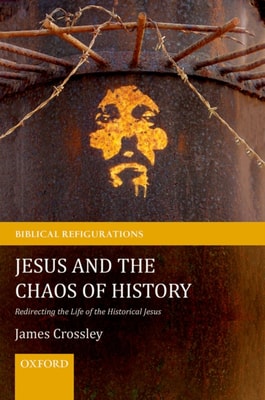
In Jesus and the Chaos of History, James Crossley looks at the way the earliest traditions about Jesus interacted with a context of social upheaval and the ways in which this historical chaos of the early first century led to a range of ideas which were taken up, modified, ignored, and reinterpreted in the movement that followed.
Reimagining Hagar illustrates that while interpretations of Hagar as Black are not frequent within the entire history of her interpretation, such interpretations are part of strategies to emphasize elements of Hagar's story in order to associate or disassociate her from particular groups.
Reimagining Hagar illustrates that while interpretations of Hagar as Black are not frequent within the entire history of her interpretation, such interpretations are part of strategies to emphasize elements of Hagar's story in order to associate or disassociate her from particular groups.
The Oxford History of Historical Writing is a five-volume series that explores representations of the past from the beginnings of writing to the present day and from all over the world.
Studies on the Text of Caesar's Bellum civile is a companion volume to Damon's revised Oxford Classical Texts edition of Caesar's Bellum civile, his account of his civil war with Pompey.
Plutarch's focus on the great leaders of the classical world, his anecdotal style, and his self-presentation as a good-natured friend and wise counsellor have appealed over the centuries to a wide audience, persons as diverse as Beethoven and Benjamin Franklin, Shakespeare and Harry Truman.
This study offers the first extensive analysis of the function and significance of urban panegyric in the Central Middle Ages, a flexible literary genre which enjoyed a marked and renewed popularity in the period 1100 to 1300.
Management, the pursuit of objectives through the organization and co-ordination of people, has been and is a core feature-and function-of modern society.
Management, the pursuit of objectives through the organization and co-ordination of people, has been and is a core feature-and function-of modern society.
A War of Peoples, 1914-1919 provides a new perspective on the First World War, offering a concise narrative of the war from the first military actions in July 1914 until the signing of the peace treaty by Germany in July 1919.
It has long been known that the origins of the early modern dynasties of the Ottomans, Safavids, Mughals, Mongols, and Shibanids in the sixteenth century go back to "e;Turco-Mongol"e; or "e;Turcophone"e; war bands.
It has long been known that the origins of the early modern dynasties of the Ottomans, Safavids, Mughals, Mongols, and Shibanids in the sixteenth century go back to "e;Turco-Mongol"e; or "e;Turcophone"e; war bands.
Hasidism is one of the most important religious and social movements to have developed in Eastern Europe, and the most significant phenomenon in the religious, social and cultural life of the Jewish population in Eastern Europe from the eighteenth century up to the present day.
Hasidism is one of the most important religious and social movements to have developed in Eastern Europe, and the most significant phenomenon in the religious, social and cultural life of the Jewish population in Eastern Europe from the eighteenth century up to the present day.
This book, the first-ever collection of primary documents on North African history and the Holocaust, gives voice to the diversity of those involved-Muslims, Christians, and Jews; women, men, and children; black, brown, and white; the unknown and the notable; locals, refugees, the displaced, and the interned; soldiers, officers, bureaucrats, volunteer fighters, and the forcibly recruited.
After emerging from the tumult of social movements of the 1960s and 1970s, the field of Asian American studies has enjoyed rapid and extraordinary growth.
Oral History is part of the Understanding Qualitative Research series, which is designed to provide researchers with authoritative guides to understanding, presenting, and critiquing analyses and associated inferences.
On December 13, 1937, the Japanese army attacked and captured the Chinese capital city of Nanjing, planting the rising-sun flag atop the city's outer walls.
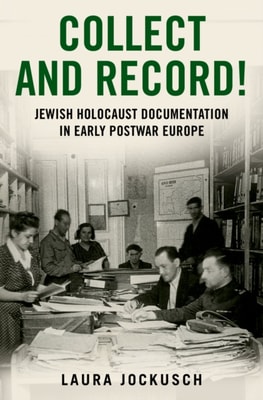
This book describes the vibrant activity of survivors who founded Jewish historical commissions and documentation centers in Europe immediately after the Second World War.