This sweeping survey of the history of work, from hunter-gatherers to dotcom telecommuters, deftly compresses thousands of years of human evolution into an incisive volume It is a book about work, about the organization and management of work, but it is also a book about people.
An accessible yet thorough look at how historians and social scientists have thought and written about the history of the present-day European Union, and the main themes of their research and debates.
Since the late 1700s new forms of visual entertainment have tried to simulate the details of nature: reenactment has now become the most widely-consumed form of popular history.
Explores the uncalculated and incalculable elements in historical re-enactment - unexpected emotions, unplanned developments - and locates them in countries where settlers were trying to establish national identities derived from metropolitan cultures inevitably affected by the land itself and the people who had been there before them.
This book traces the history of the word 'charisma', and the various meanings assigned to it, from its first century origins in Christian theology to its manifestations in twenty-first century politics and culture, while considering how much of the word's original religious meaning persists in the contemporary secular understanding.
Paying particular attention to the representation of women and to gendered notions of the nation, this book examines for the first time the marked parallels between Rushdie's critique of the Nehruvian legacy and the most significant recent trends in Indian historiography, especially the feminist and subalternist movements.
The emerging shape of the post Cold War world provides evidence that rather than diminishing, the profound intersection of political ideology and religious forms of belief is an ever more potent force in world affairs.
In this innovative and original collection, people are seen as active agents in the development of new ways of understanding the past and creating histories for the present.
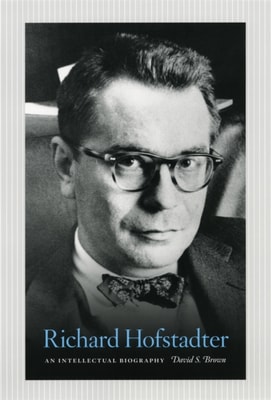
The past three decades have seen a remarkable growth of interest in intellectual history and this book provides the first comprehensive survey of recent research in this field.
This book brings together experts on national history writing from all five continents to discuss the role of history in the making of national identities in a transnational and comparative way.
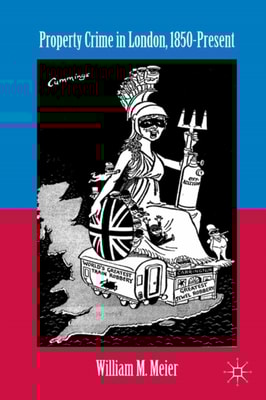
This book examines London's transformation from the mid-Victorian "e;miracle"e; of low crime to a high-crime society, treating six different types of misdeed as representative of phases in the evolution of crime to argue that lawbreaking must be explained by connecting all types of offenses to their social and economic contexts.
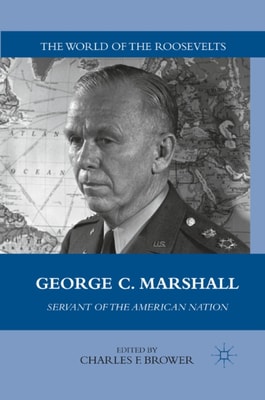
Bringing together a who's who of Marshall scholars, this volume examines the major roles assumed by Marshall over his five-decade career - soldier; statesman and peacemaker; and leader and manager - to illuminate key issues and themes surrounding the man and his era.
Covering topics such as the Soviet monopoly over information and communication, violence in the gulags, and gender relations after World War II, this festschrift volume highlights the work and legacy of Sheila Fitzpatrick offers a cross-section of some of the best work being done on a critical period of Russia and the Soviet Union.
In a series of short stories that both inform and amuse, this book transports the reader across the windswept shores of the Caspian Sea and provides a provocative view of the wars, peace, intrigues, and betrayals that have shaped the political geography of this important and volatile region.
This book examines successive stages in the development of the thought of Sir Herbert Butterfield in relation to fundamental issues in the science of history.
From the late nineteenth century until World War II, competing spheres of professional identity and practice redrew the field of history, establishing fundamental differences between the roles of university historians, archivists, staff at historical societies, history teachers, and others.
Spanning both the history of the modern West and his own five-decade journey as a historian, Gerald Stourzh's sweeping new essay collection covers the same breadth of topics that has characterized his career-from Benjamin Franklin to Gustav Mahler, from Alexis de Tocqueville to Charles Beard, from the notion of constitution in seventeenth-century England to the concept of neutrality in twentieth-century Austria.
If the vibrancy on display in Thinking in the Past Tense is any indication, the study of intellectual history is enjoying an unusually fertile period in both Europe and North America.
In 1939, on the eve of Hitler's invasion of Poland, seven-year-old Edith Milton (then Edith Cohn) and her sister Ruth left Germany by way of the Kindertransport, the program which gave some 10,000 Jewish children refuge in England.
In the past sixty years, oral history has moved from the periphery to the mainstream of academic studies and is now employed as a research tool by historians, anthropologists, sociologists, medical therapists, documentary film makers, and educators at all levels.
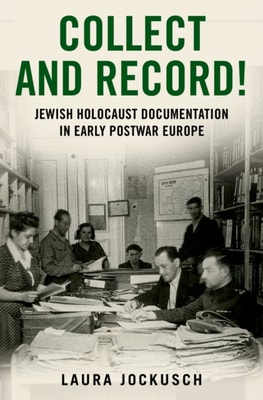
This book describes the vibrant activity of survivors who founded Jewish historical commissions and documentation centers in Europe immediately after the Second World War.
We live in an age of globalization on every conceivable level, but globalization has a deeper history than politicians and pundits often allow, and nothing is more significant to its history than exploration.
We live in an age of globalization on every conceivable level, but globalization has a deeper history than politicians and pundits often allow, and nothing is more significant to its history than exploration.
Bodies of Evidence: The Practice of Queer Oral History is the first book to provide serious scholarly insight into the methodological practices that shape lesbian, gay, bisexual, transgender, and queer oral histories.
Bodies of Evidence: The Practice of Queer Oral History is the first book to provide serious scholarly insight into the methodological practices that shape lesbian, gay, bisexual, transgender, and queer oral histories.
From the headlines of local newspapers to the coverage of major media outlets, scenes of war, natural disaster, political revolution and ethnic repression greet readers and viewers at every turn.
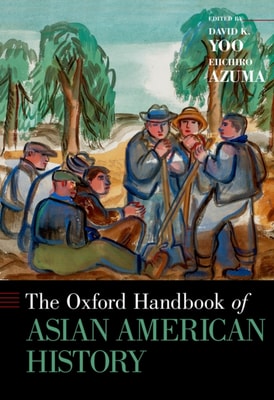
After emerging from the tumult of social movements of the 1960s and 1970s, the field of Asian American studies has enjoyed rapid and extraordinary growth.
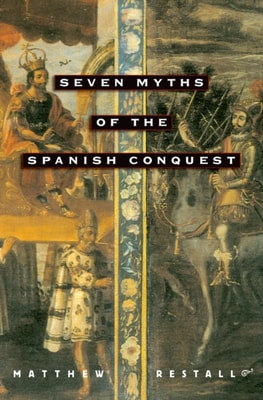
Here is an intriguing exploration of the ways in which the history of the Spanish Conquest has been misread and passed down to become popular knowledge of these events.
Oral History is part of the Understanding Qualitative Research series, which is designed to provide researchers with authoritative guides to understanding, presenting, and critiquing analyses and associated inferences.
Processing the Past explores the dramatic changes taking place in historical understanding and archival management, and hence the relations between historians and archivists.