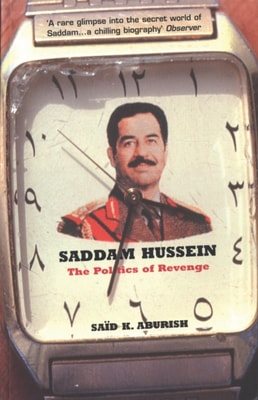
In SADDAM HUSSEIN: THE POLITICS OF REVENGE, the author draws on his own knowledge of and extensive contacts within the Arab world to produce both a thorough biography and a penetrating psychological profile of the most powerful and unpredictable man in the world today.
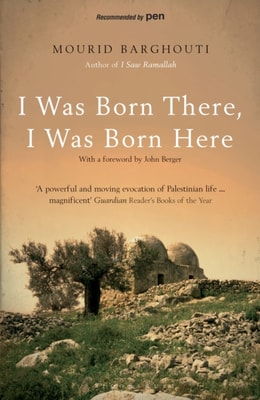
In 1996 Barghouti went back to his Palestinian home for the first time since exile following the Six-Day War in 1967, first in Egypt and then in Hungary, and wrote a poignant and incisive account of the exile's lot in the acclaimed memoir I Saw Ramallah.
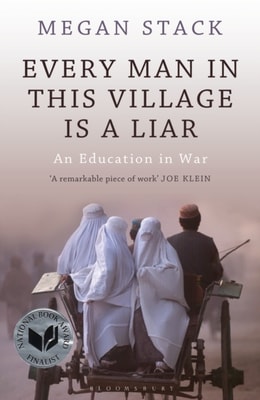
A shattering account of war and disillusionment from a young woman reporting from the front lines of the war on terror SHORTLISTED FOR THE NATIONAL BOOK AWARD 'You'll be thinking about this book long after you turn the final page' Jon Krakauer, author of Into Thin Air
A few weeks after the planes crashed into the World Trade Centre on 9/11, LA Times journalist Megan Stack was thrust into Afghanistan and Pakistan, dodging gunmen and prodding warlords for information.
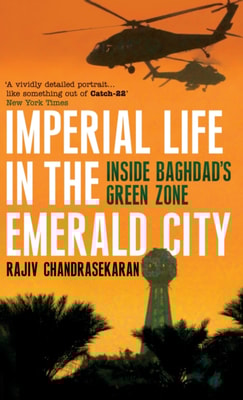
From a walled-off enclave of towering plants, smart villas and sparkling swimming pools - a surreal bubble of pure Americana known as the Green Zone - the US-led Coalition Provisional Authority, under imperial viceroy L.
Scholars have long argued over whether the 1648 Peace of Westphalia, which ended more than a century of religious conflict arising from the Protestant Reformations, inaugurated the modern sovereign-state system.
From the point of view of economic history, the ideal way to study any institution of commercial law would be to compare the information contained in legal codes and treatises with the material relating to its application in economic life as manifested by actual contracts, letters, and business records found in archives and other repositories.
The full story of human endeavour - complete with its dramas, wars, schemes, discoveries, and personalities - is laid out before you in this illustrated guide to the history of our world.
the Persians A Choice Outstanding Academic Title of the Year This book is not a dry historical narrative but an excellent, rigorous, yet generally accesible overview of Persians in history based on the latest scholarship on Iranian society and history.
Longlisted for the Financial Times and Schroders Business Book of the Year AwardA novel economic interpretation of how religions have become so powerful in the modern worldReligion in the twenty-first century is alive and well across the world, despite its apparent decline in North America and parts of Europe.
With Hezbollah's entry into the Lebanese government in 2009 and forceful intervention in the Syrian civil war, the potent Shi'i political and military organization continues to play an enormous role in the Middle East.
Much of what we know about life in the medieval Islamic Middle East comes from texts written to impart religious ideals or to chronicle the movements of great men.
The untold story of how the Arabic Qur'an became the English KoranFor millions of Muslims, the Qur'an is sacred only in Arabic, the original Arabic in which it was revealed to the Prophet Muhammad in the seventh century; to many Arab and non-Arab believers alike, the book literally defies translation.
The definitive account of the life and thought of the medieval Arab genius who wrote the MuqaddimaIbn Khaldun (13321406) is generally regarded as the greatest intellectual ever to have appeared in the Arab world--a genius who ranks as one of the world's great minds.
The 'Alawis, or Alawites, are a prominent religious minority in northern Syria, Lebanon, and southern Turkey, best known today for enjoying disproportionate political power in war-torn Syria.
A compelling history of atheism in American public lifeA much-maligned minority throughout American history, atheists have been cast as a threat to the nation's moral fabric, barred from holding public office, and branded as irreligious misfits in a nation chosen by God.
Like a great dynasty that falls to ruin and is eventually remembered more for its faults than its feats, Arab nationalism is remembered mostly for its humiliating rout in the 1967 Six Day War, for inter-Arab divisions, and for words and actions distinguished by their meagerness.
How secular governance in the Middle East is making life worse-not better-for religious minoritiesThe plight of religious minorities in the Middle East is often attributed to the failure of secularism to take root in the region.
Why it's wrong to single out religious liberty for special legal protectionsThis provocative book addresses one of the most enduring puzzles in political philosophy and constitutional theory-why is religion singled out for preferential treatment in both law and public discourse?
This landmark book probes Muslims' attitudes toward Jews and Judaism as a special case of their view of other religious minorities in predominantly Muslim societies.
In Frontier Fictions, Firoozeh Kashani-Sabet looks at the efforts of Iranians to defend, if not expand, their borders in the nineteenth and early twentieth centuries, and explores how their conceptions of national geography influenced cultural and political change.
A definitive history of the 20th century's first major genocide on its 100th anniversaryStarting in early 1915, the Ottoman Turks began deporting and killing hundreds of thousands of Armenians in the first major genocide of the twentieth century.
Turkey has leapt to international prominence as an economic and political powerhouse under its elected Muslim government, and is looked on by many as a model for other Muslim countries in the wake of the Arab Spring.
A revealing look at Islamic social institutions in Gaza and the West BankMany in the United States and Israel believe that Hamas is nothing but a terrorist organization, and that its social sector serves merely to recruit new supporters for its violent agenda.
Based on two years of ethnographic research in the southern suburbs of Beirut, An Enchanted Modern demonstrates that Islam and modernity are not merely compatible, but actually go hand-in-hand.
This richly textured social history recovers the voices and experiences of poor Egyptians--beggars, foundlings, the sick and maimed--giving them a history for the first time.
Emphasizing the interaction between political organizations and social forces, Ervand Abrahamian discusses Iranian society and politics during the period between the Constitutional Revolution of 1905-1909 and the Islamic Revolution of 1977-1979.
Before the intifada began, Joost Hiltermann had already looked at local organizations in the Israeli-occupied West Bank and Gaza Strip and seen there the main elements that would eventually be used to mobilize the Palestinian masses.
Drawing on archaeological findings and an unusual combination of Greek and Egyptian evidence, Dorothy Thompson examines the economic life and multicultural society of the ancient Egyptian city of Memphis in the era between Alexander and Augustus.
A sweeping and colorful account of Egypt's 5000-year historyThis is a sweeping, colorful, and concise narrative history of Egypt from the beginning of human settlement in the Nile River valley 5000 years ago to the present day.
An indispensable guide to Islamic political thought from Muhammad to the twenty-first centuryThe first encyclopedia of Islamic political thought from the birth of Islam to today, this comprehensive, authoritative, and accessible reference provides the context needed for understanding contemporary politics in the Islamic world and beyond.
Why religion must be separated from politics if democracy is to thrive around the worldFor eight years the president of the United States was a born-again Christian, backed by well-organized evangelicals who often seemed intent on erasing the church-state divide.
In The Religious Left and Church-State Relations, noted constitutional law scholar Steven Shiffrin argues that the religious left, not the secular left, is best equipped to lead the battle against the religious right on questions of church and state in America today.