The essays in this volume explore the complexities of the relationship between states, social groups and individuals in contemporary North Africa, as expressed through the politics, culture and history of nationhood.
Goodbye, Tahrir Square is a first-person memoir written from the standpoint of a Jewish boy growing up in Egypt during the watershed years that shaped the Middle East into the powder keg it is today.
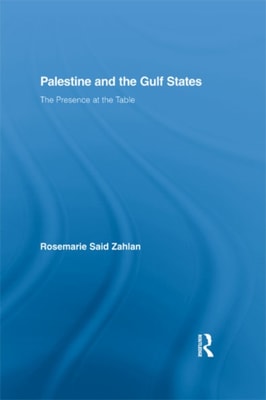
This final book from Rosemarie Said Zahlan, renowned scholar of Middle East Politics and History, explores the relationships between Palestine and the Gulf since the 1930s.
This final book from Rosemarie Said Zahlan, renowned scholar of Middle East Politics and History, explores the relationships between Palestine and the Gulf since the 1930s.
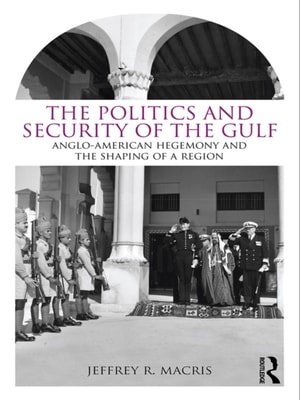
Since the 19th century the Gulf region has been an area of intense interest, having been influenced first by the British and more recently by the Americans.
Since the 19th century the Gulf region has been an area of intense interest, having been influenced first by the British and more recently by the Americans.
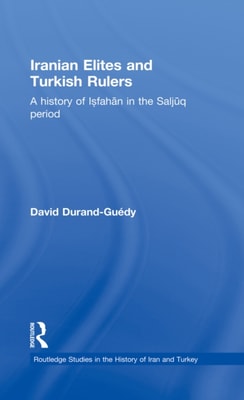
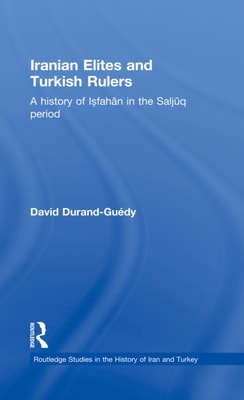
This book investigates the early history of the Seljuq Turks, founders of one of the most important empires of the mediaeval Islamic world, from their origins in the Eurasian steppe to their conquest of Iran, Iraq and Anatolia.
This book investigates the early history of the Seljuq Turks, founders of one of the most important empires of the mediaeval Islamic world, from their origins in the Eurasian steppe to their conquest of Iran, Iraq and Anatolia.
This book challenges the dominant scholarly notion that the Qur'an must be interpreted through the medieval commentaries shaped by the biography of the prophet Muhammad, arguing instead that the text is best read in light of Christian and Jewish scripture.
This book challenges the dominant scholarly notion that the Qur'an must be interpreted through the medieval commentaries shaped by the biography of the prophet Muhammad, arguing instead that the text is best read in light of Christian and Jewish scripture.
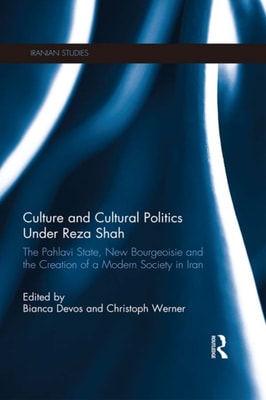
Culture and Cultural Politics Under Reza Shah presents a collection of innovative research on the interaction of culture and politics accompanying the vigorous modernization programme of the first Pahlavi ruler.
Culture and Cultural Politics Under Reza Shah presents a collection of innovative research on the interaction of culture and politics accompanying the vigorous modernization programme of the first Pahlavi ruler.
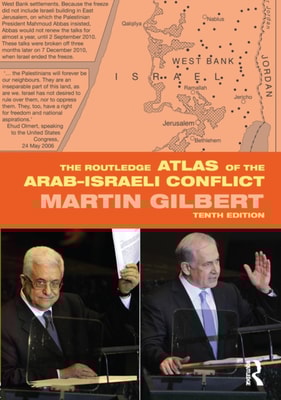
The Routledge Atlas of the Arab-Israeli Conflict traces not only the tangled and bitter history of the Arab-Jewish struggle from the early twentieth century to the present, including the death of Yasser Arafat and recent proposals for compromise and co-operation, it also illustrates the current moves towards finding peace, and the efforts to bring the horrors of the fighting to an end through negotiation and agreed boundaries.
The Routledge Atlas of the Arab-Israeli Conflict traces not only the tangled and bitter history of the Arab-Jewish struggle from the early twentieth century to the present, including the death of Yasser Arafat and recent proposals for compromise and co-operation, it also illustrates the current moves towards finding peace, and the efforts to bring the horrors of the fighting to an end through negotiation and agreed boundaries.
Orthodox Christians, as well as other non-Muslims of the Ottoman Empire, have long been treated as insular and homogenous entities, distinctly different and separate from the rest of the Ottoman world.
Orthodox Christians, as well as other non-Muslims of the Ottoman Empire, have long been treated as insular and homogenous entities, distinctly different and separate from the rest of the Ottoman world.
This study gives a comprehensive account of the evolution of the educational system in Modern Egypt, set against the events of the last twenty five years.
This study gives a comprehensive account of the evolution of the educational system in Modern Egypt, set against the events of the last twenty five years.
This critical analysis investigates the causes that brought about one of the most tumultuous periods in modern Egyptian history - the clashes between the Muslims and Copts during the 1970s.
This critical analysis investigates the causes that brought about one of the most tumultuous periods in modern Egyptian history - the clashes between the Muslims and Copts during the 1970s.
As the leaders of a revolutionary, nationalist regime, the Egyptian Free Officers who came to power following the 1952 Revolution committed themselves to the attainment of goals associated with modernization, namely rapid economic development based on State planning and industrialization and the political mobilization of society along State-decreed lines.