Focusing on the interplay between domestic-level changes and region-wide interaction, this book provides a comprehensive analytical and theoretical survey of Iranian foreign relations in the Middle East from Antiquity until the Islamic Republic.
The organized play of the pre-school child with a group of peers in an educational atmosphere is now recognised as an important element in child development.
Changes in economic and social conditions throughout the Middle East have been profound, and perhaps nowhere has this been more evident than in the field of urban development and town planning.
The British withdrawal from the Gulf in 1971 brought to an end the British Imperial era in the history of the Trucial States and marked the birth of the United Arab Emirates.
This book, first published in 1988, compiles selected contributions to a symposium on 'The Gulf and the Arab World' held by the Centre for Arab Gulf Studies at Exeter University, UK, in July 1986.
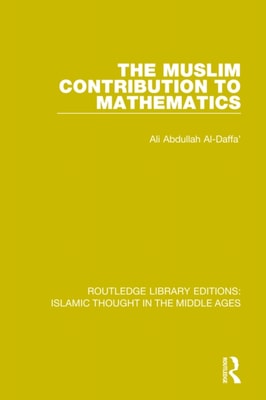
This book, first published in 1977, discusses the Muslim contribution to mathematics during the golden age of Muslim learning from the seventh to the thirteenth century.
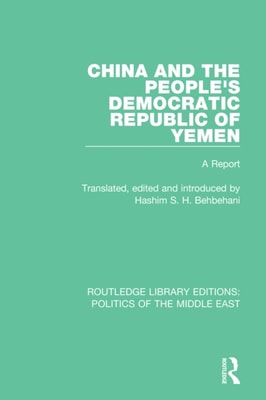
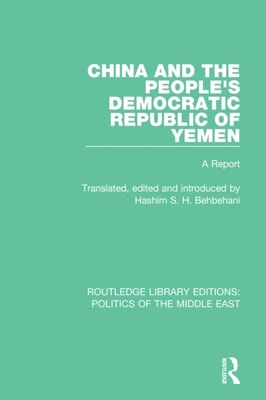
This report, first published in 1985, was compiled by members of the People's Democratic Republic of Yemen (South Yemen) and is an interesting historical document.
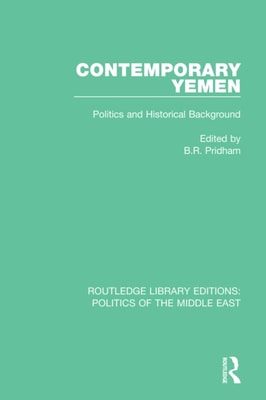
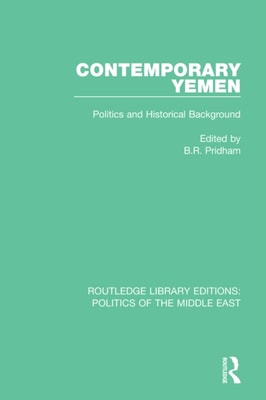
This book presents some papers presented to a symposium on contemporary Yemen held in July 1983 by Exeter University's Centre for Arab Gulf Studies in collaboration with the Universities of Aden and San'a', and deals with history, internal and international politics, and administrative subjects.
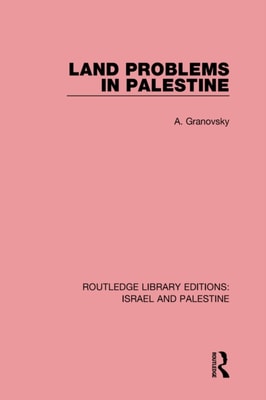
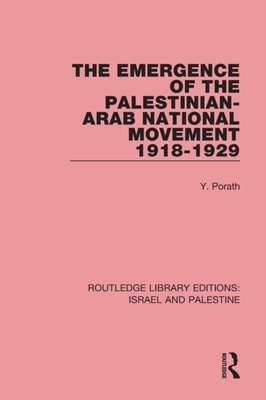
The resurgence of Palestinian nationalism in the wake of the 1967 Arab-Israeli war tended to overshadow the fact that Palestinian national consciousness is not a new phenomenon, but traces its origins back to the time when the first stirrings of nationalism were being felt in many parts of the under-developed world.
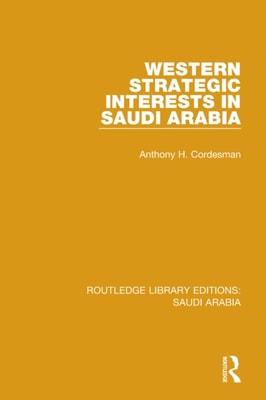
The sharp increase in both the price of crude oil and resulting revenues to Saudi Arabia has seen the rapid growth of the kingdom's international trade and a large accumulation of financial assets.
The MERI Reports on the Middle East quickly established themselves as the most authoritative and up-to-date information on the state of affairs in the region.
This detailed study of the Egyptian economic and financial development, originally published in 1935, attempts to both present a clear understanding of the environmental factors of the monetary institutions and to trace the influence which these institutions have had upon the country's economic organisation.
The organized play of the pre-school child with a group of peers in an educational atmosphere is now recognised as an important element in child development.
Changes in economic and social conditions throughout the Middle East have been profound, and perhaps nowhere has this been more evident than in the field of urban development and town planning.
The British withdrawal from the Gulf in 1971 brought to an end the British Imperial era in the history of the Trucial States and marked the birth of the United Arab Emirates.
This book, first published in 1988, compiles selected contributions to a symposium on 'The Gulf and the Arab World' held by the Centre for Arab Gulf Studies at Exeter University, UK, in July 1986.
This book, first published in 1977, discusses the Muslim contribution to mathematics during the golden age of Muslim learning from the seventh to the thirteenth century.
This report, first published in 1985, was compiled by members of the People's Democratic Republic of Yemen (South Yemen) and is an interesting historical document.
This book presents some papers presented to a symposium on contemporary Yemen held in July 1983 by Exeter University's Centre for Arab Gulf Studies in collaboration with the Universities of Aden and San'a', and deals with history, internal and international politics, and administrative subjects.
The resurgence of Palestinian nationalism in the wake of the 1967 Arab-Israeli war tended to overshadow the fact that Palestinian national consciousness is not a new phenomenon, but traces its origins back to the time when the first stirrings of nationalism were being felt in many parts of the under-developed world.