With continuing instability in Iraq, the threat of a nuclear Iran, and the ever-present reality of further terrorist attacks within its own borders, Saudi Arabia has been forced to make some hard decisions.
This is the story of a tragic confrontation between two national movements contesting the same small piece of land, a clash that has become one of the most intractable issues in modern times.
By subjecting biblical writings to a political analysis, Sicker constructs a plausible political history of the ancient Israelite states that dealt with virtually every issue faced by governments throughout subsequent history.
Blending an analysis of general political, diplomatic, and military trends with a description of how Zionist pioneers coped with ongoing social developments and challenges, Stein recounts the events that would ultimately lead to the formation of the State of Israel in May 1948.
Although the stability of the Persian Gulf region has been of rising importance since World War II, it was during the 1980s, when the Iran-Iraq War threatened to upset the balance of power in the region, that its importance became even more magnified.
In a move that would forever alter the map of the Middle East, Israel captured the West Bank, Golan Heights, Gaza Strip and Sinai Peninsula in 1967's brief but pivotal Six Day War.
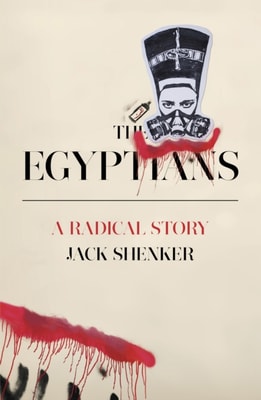
From award-winning journalist Jack Shenker, The Egyptians is the essential book about Egypt and radical politicsIn early 2011, Cairo's Tahrir Square briefly commanded the attention of the world.
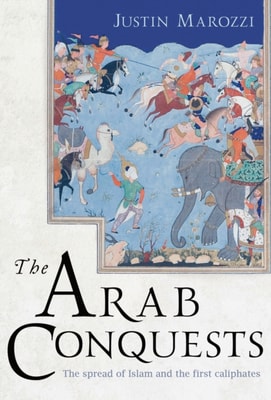
The story of the seventh- and eighth-century Muslim conquests, when armies inspired by the new religion of Islam burst out of Arabia to build the Islamic Empire.
The Iranian nuclear crisis has dominated world politics since the beginning of the century, with the country now facing increasing diplomatic isolation, talk of military strikes against its nuclear facilities and a disastrous Middle East war.
The Iranian nuclear crisis has dominated world politics since the beginning of the century, with the country now facing increasing diplomatic isolation, talk of military strikes against its nuclear facilities and a disastrous Middle East war.
In the aftermath of the deliberate destruction of cultural heritage pursued by Islamist groups like ISIS, many observers have erroneously come to associate Islamic doctrine and practice with such acts.
In the aftermath of the deliberate destruction of cultural heritage pursued by Islamist groups like ISIS, many observers have erroneously come to associate Islamic doctrine and practice with such acts.
60 per cent of Jordanians are of Palestinian origin,a statistic which has propelled Jordan into the role of both player and pawn in regional issues such as the birth of the state of Israel,the prolonged Israel-Palestine conflict, the ascent and decline of Arab nationalism and the subsequent rise of political Islam and radicalism.
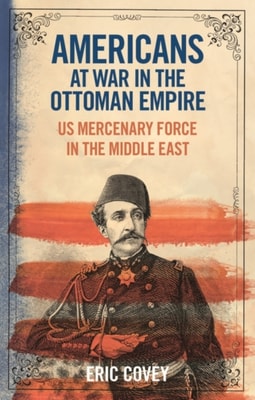
Americans at War in the Ottoman Empire examines the role of mercenary figures in negotiating relations between the United States and the Ottoman Empire in the nineteenth century.
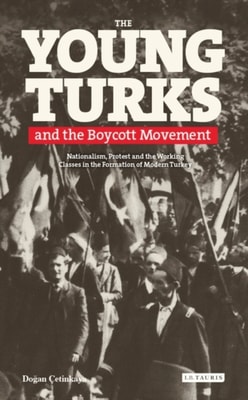
The Republican People's Party (RPP), also know as the CHP (Cumhuriyet Halk Partisi), stands as the main opposition party - one of two major political currents, second only to the Erdooan's AK Party.
When Sultan bin Salman left Earth on the shuttle Discovery in 1985, he became the first Arab, first Muslim and first member of a royal family in space.
In 1981 a young semi-professional footballer - known as `Imam Beckenbauer' for his piety and his dominant style of play - has his career cut short after a confrontation with Turkey's military junta.
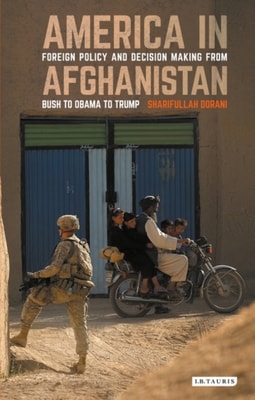
Afghanistan has been a theatre of civil and international conflict for much of the twentieth century – stability is essential if there is to be peace in the Greater Middle East.
In the mid-eighteenth century the Russian tsar sent two expeditions across the Caspian Sea in response to an extraordinary plea for assistance from the recently subjugated Kalmyk Khan.
A chance encounter diverted Abdolreza Ansari from completing his PHD in the US, and set him on a professional journey which mirrored the prolific rise and the precipitous fall of the regime of Shah Mohammad Reza Pahlavi of Iran.
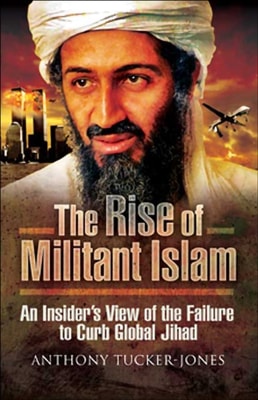
Concerns about CBRN (Chemical, Biological, Radioactive, Nuclear) weapons have featured prominently in both political debates and media reporting about the ongoing threat from al Qaeda since 9/11.