A novel approach to Israelite kinship, arguing that maternal kinship bonds played key social, economic, and political roles for a son who aspired to inherit his father’s household Upending traditional scholarship on patrilineal genealogy, Cynthia Chapman draws on twenty years of research to uncover an underappreciated yet socially significant kinship unit in the Bible: “the house of the mother.
The first contemporary analysis of Bedouin and biblical cultures sheds new light on biblical laws, practices, and Bedouin history Written by one of the world’s leading scholars of Bedouin culture, this groundbreaking book sheds new light on significant points of convergence between Bedouin and early Israelite cultures, as manifested in the Hebrew Bible.
The untold story of Israel’s diplomatic maneuvering in the wake of the Six Day War, which frustrated a possible peace settlement Israel’s victory in the June 1967 Six Day War provided a unique opportunity for resolving the decades-old Arab-Zionist conflict.
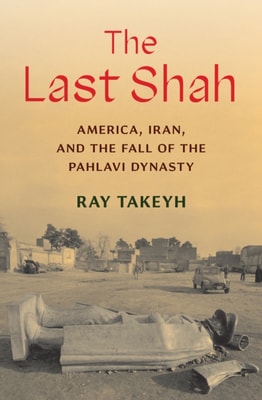
The surprising story of Iran's transformation from America's ally in the Middle East into one of its staunchest adversariesOffering a new view of one of America's most important, infamously strained, and widely misunderstood relationships of the postwar era, this book tells the history of America and Iran from the time the last shah, Mohammad Reza Pahlavi, was placed on the throne in 1941 to the 1979 revolution that brought the present Islamist government to power.
A concise and illuminating portrait of Allah from one of the world’s leading Qur’anic scholars The central figure of the Qur’an is not Muhammad but Allah.
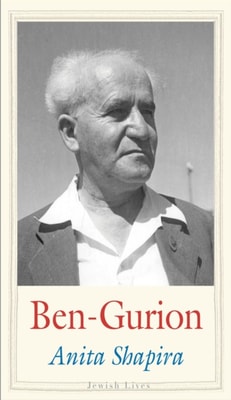
From the prizewinning Jewish Lives series, an insightful study of the inner life of the Zionist leader responsible for the creation of the state of Israel David Ben-Gurion cast a great shadow during his lifetime, and his legacy continues to be sharply debated to this day.
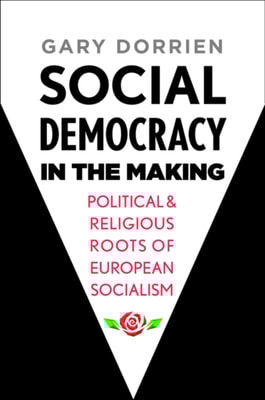
An expansive and ambitious intellectual history of democratic socialism from one of the world’s leading intellectual historians and social ethicists The fallout from twenty years of neoliberal economic globalism has sparked a surge of interest in the old idea of democratic socialism—a democracy in which the people control the economy and government, no group dominates any other, and every citizen is free, equal, and included.
An award-winning scholar's sweeping history of American secularism, from Jefferson to Trump"e;An essential book for understanding today's culture wars.
Ottoman historical writing of the 15th and 16th centuries played a significant role in fashioning Ottoman identity and institutionalizing the dynastic state structure during this period of rapid imperial expansion.
This mirror for princes sheds light on the relationship between spiritual and political authority in early modern Egypt This guide to political behavior and expediency offers advice to Sufi shaykhs, or spiritual guides, on how to interact and negotiate with powerful secular officials, judges, and treasurers, or emirs.
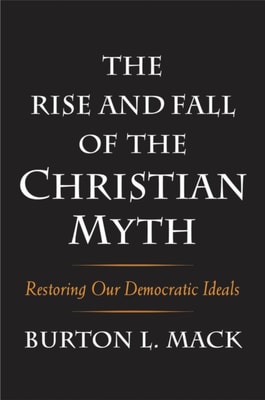
A preeminent scholar explores the evolution of the Christian worldview and argues that it no longer offers a satisfactory vision for our democratic, multicultural society This book is the culmination of a lifelong scholarly inquiry into Christian history, religion as a social institution, and the role of myth in the history of religions.
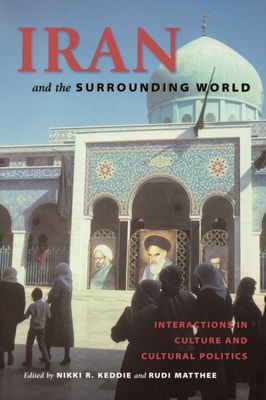
These essays examine Irans place in the world--its relations and cultural interactions with its immediate neighbors and with empires and superpowers from the beginning of the Safavid period in 1501 to the present day.
Long viewed as Spain's "e;most Moorish city,"e; Granada is now home to a growing Muslim population of Moroccan migrants and European converts to Islam.
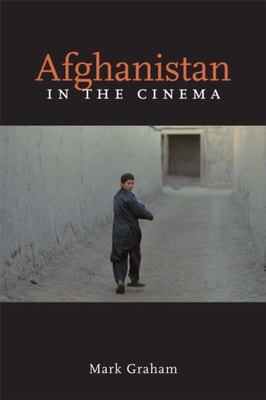
In this timely critical introduction to the representation of Afghanistan in film, Mark Graham examines the often surprising combination of propaganda and poetry in films made in Hollywood and the East.
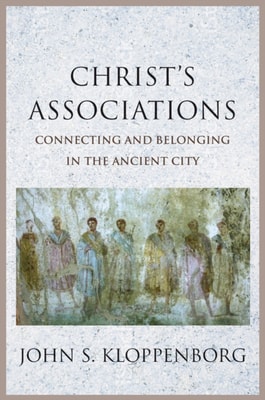
A groundbreaking investigation of early Christ groups in the ancient Mediterranean As an urban movement, the early groups of Christ followers came into contact with the many small groups in Greek and Roman antiquity.
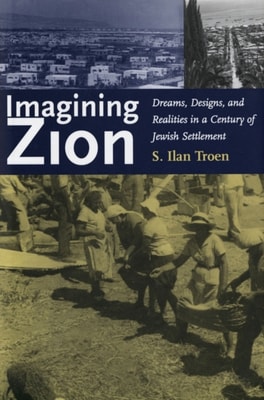
This timely book tells the fascinating story of how Zionists colonizers planned and established nearly 700 agricultural settlements, towns, and cities from the 1880s to the present.
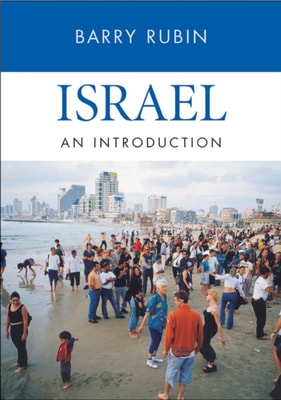
This comprehensive book provides a well-rounded introduction to Israel—a definitive account of the nation's past, its often controversial present, and much more.
New observations on the persistence of God in modern times and why “authentic” atheism is so very hard to come by How to live in a supposedly faithless world threatened by religious fundamentalism?
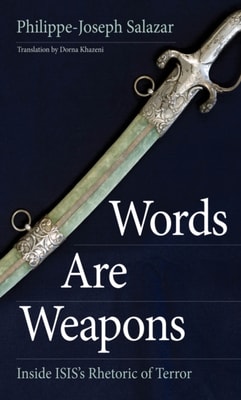
The first book to offer a rigorous, sophisticated analysis of ISIS’s rhetoric and why it is so persuasive ISIS wages war not only on the battlefield but also online and in the media.
The result of years of critical analysis of Israeli media law, this book argues that the laws governing Israeli electronic media are structured to limit the boundaries of public discourse.
This new edition of Frank Ledwidge’s eye-opening analysis of British involvement in Iraq and Afghanistan unpicks the causes and enormous costs of military failure.
An illuminating study tracing the evolution of drone technology and counterterrorism policy from the Reagan to the Obama administrationsThis eye-opening study uncovers the history of the most important instrument of U.
The Ahmadiyya Muslim community represents the followers of Mirza Ghulam Ahmad (1835-1908), a charismatic leader whose claims of spiritual authority brought him into conflict with most other Muslim leaders of the time.
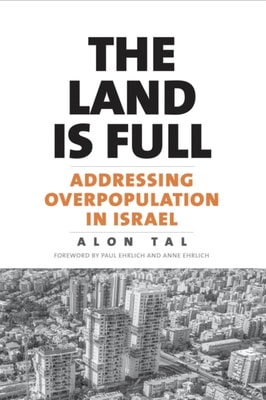
An assessment of how Israel’s extraordinary population growth undermines the country’s environment, social equity, and quality of life—and what must be done about it During the past sixty-eight years, Israel’s population has increased from one to eight million people.
Rich in detail and broad in scope, this majestic book is the first to reveal the interaction of politics and religion in France during the crucial years of the long seventeenth century.
Essential primary sources reveal the central tensions between American politics and religion throughout the nation’s history Despite the centrality of separation of church and state in American government, religion has played an important role in the nation’s politics from colonial times through the present day.
A surprisingly hopeful assessment of the prospects for human rights in the Middle East, and a blueprint for advancing them The enormous sense of optimism unleashed by the Arab Spring in 2011 soon gave way to widespread suffering and despair.
Based on a previously unexplored source, this book transforms the way we think about the formation of Jewish identity This book tells the story of the earliest Jewish diaspora in Egypt in a way it has never been told before.
A scholar’s experiences inside a contemplative working community in Israel’s Negev desert In this thoughtful and enlightening work, world renowned religion scholar Ariel Glucklich recounts his experiences at Neot Smadar, an ecological and spiritual oasis that has been thriving in the arid Southern Israeli desert for a quarter century.
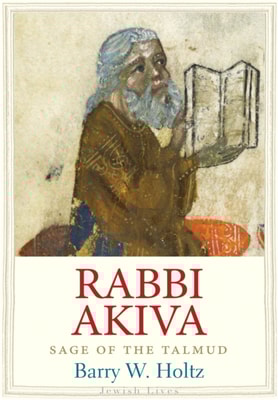
From the prizewinning Jewish Lives series, a compelling and lucid account of the life and teachings of a founder of rabbinic Judaism and one of the most beloved heroes of Jewish history Born in the Land of Israel around the year 50 C.
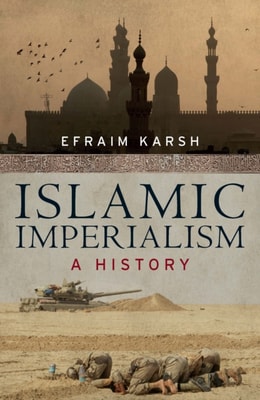
A fundamental challenge to the way we understand the history of the Middle East and the role of Islam in the region From the first Arab-Islamic Empire of the mid-seventh century to the Ottomans, the last great Muslim empire, the story of the Middle East has been the story of the rise and fall of universal empires and, no less important, of imperialist dreams.
A masterfully researched and compelling history of Iran from 1501 to 2009 This history of modern Iran is not a survey in the conventional sense but an ambitious exploration of the story of a nation.
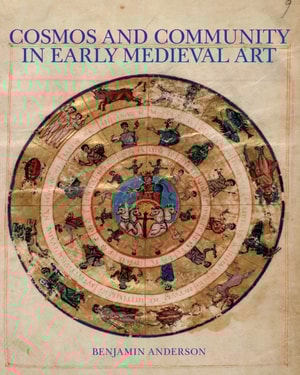
In the rapidly changing world of the early Middle Ages, depictions of the cosmos represented a consistent point of reference across the three dominant states—the Frankish, Byzantine, and Islamic Empires.
The first full account of the medieval struggle for Jerusalem, from the seventh to the thirteenth century The history of Jerusalem is one of conflict, faith, and empire.
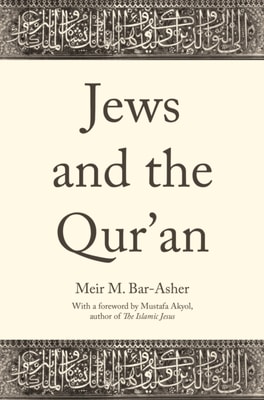
A compelling book that casts the Qur'anic encounter with Jews in an entirely new lightIn this panoramic and multifaceted book, Meir Bar-Asher examines how Jews and Judaism are depicted in the Qur'an and later Islamic literature, providing needed context to those passages critical of Jews that are most often invoked to divide Muslims and Jews or to promote Islamophobia.
In this groundbreaking book, Ilham Khuri-Makdisi establishes the existence of a special radical trajectory spanning four continents and linking Beirut, Cairo, and Alexandria between 1860 and 1914.