The first Christians to meet Muslims were not Latin-speaking Christians from the western Mediterranean or Greek-speaking Christians from Constantinople but rather Christians from northern Mesopotamia who spoke the Aramaic dialect of Syriac.
Drawing on a rich trove of documents, including correspondence not seen for 300 years, this study explores the emergence and growth of a remarkable global trade network operated by Armenian silk merchants from a small outpost in the Persian Empire.
For decades, political observers and pundits have characterized the Islamic Republic of Iran as an ideologically rigid state on the verge of collapse, exclusively connected to a narrow social base.
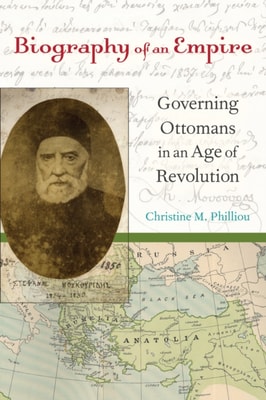
This vividly detailed revisionist history opens a new vista on the great Ottoman Empire in the early nineteenth century, a key period often seen as the eve of Tanzimat westernizing reforms and the beginning of three distinct histories-ethnic nationalism in the Balkans, imperial modernization from Istanbul, and European colonialism in the Middle East.
In this pioneering history of transportation and communication in the modern Middle East, On Barak argues that contrary to accepted wisdom technological modernity in Egypt did not drive a sense of time focused on standardization only.
For many people, the Kingdom of Saudi Arabia evokes images of deserts, camels, and oil, along with rich sheikh in white robes, oppressed women in black veils, and terrorists.
An illuminating look at the transformative role that rituals play in our political livesThe Politics of Ritual is a major new account of the political power of rituals.
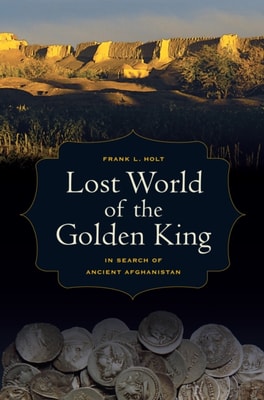
Drawing on ancient historical writings, the vast array of information gleaned in recent years from the study of Hellenistic coins, and startling archaeological evidence newly unearthed in Afghanistan, Frank L.
How a nineteenth-century lawsuit over the estate of a wealthy Tunisian Jew shines new light on the history of belongingIn the winter of 1873, Nissim Shamama, a wealthy Jew from Tunisia, died suddenly in his palazzo in Livorno, Italy.
This fast-paced and timely book from Vijay Prashad is the best critical primer to the Middle East conflicts today, from Syria and Saudi Arabia to the chaos in Turkey.
The Palestinian national movement gestated in the early decades of the twentieth century, but it was born during the Great Revolt of 193639, a period of Arab rebellion against British policy in the Palestine mandate.
An authoritative introduction to ISIS-now expanded and revised to bring events up to the presentThe Islamic State stunned the world with its savagery, destructiveness, and military and recruiting successes.
This book provides a broad history of the Seljuq Turks from their origins and early conquests in the 10th century, through the rise of empire, until its dissolution at the end of the 12th.
Sufism is often understood to be the mystical dimension of Islam, and many works have focused on the nature of "e;mystical experiences"e; and the relationship between man and God.
Balancing respect for religious conviction and the values of liberal democracy is a daunting challenge for judges and lawmakers, particularly when religious groups seek exemption from laws that govern others.
Before the intifada began, Joost Hiltermann had already looked at local organizations in the Israeli-occupied West Bank and Gaza Strip and seen there the main elements that would eventually be used to mobilize the Palestinian masses.
A definitive history of the 20th century's first major genocide on its 100th anniversaryStarting in early 1915, the Ottoman Turks began deporting and killing hundreds of thousands of Armenians in the first major genocide of the twentieth century.
Workable Sisterhood is an empirical look at sixteen HIV-positive women who have a history of drug use, conflict with the law, or a history of working in the sex trade.
On November 4, 1979, when students occupied the American Embassy in Tehran and subsequently demanded that the United States return the Shah in exchange for hostages, the deposed Iranian ruler's regime became the focus of worldwide scrutiny and controversy.
Militant Islamic believers represents a small, but significant percentage of those who embrace the Muslim religion, it is powerful, well financed, and according to their own statements, hopeful of destroying the United States who they see as the Great Satan, the usurper of Muslim lands, the pilferer of Muslim resources and the one obstacle that stands in the way of their stated goalan Islamic Caliphate controlling the entire world.
In a never-ending battle to match population growth with food and energy production, the countries of the Middle East have been frenziedly developing water resources, including international rivers and groundwate, without considering their neighbors' needs.
The purpose of the book is to revive the spirit of real Christianity in the United States, stand against our Adversary and turn from our collective moral drift.