Examines questions raised by the performance of the military institutions of France, Germany, Russia, the US, Great Britain, Japan and Italy between 1914 and 1945.
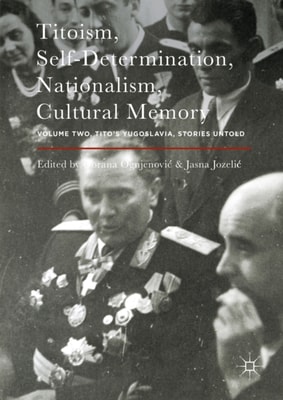
This volume provides a more detailed picture which might surprise those who thought they knew everything about Yugoslavia, as well as we are hoping to inspire others to read more about this historically social experiment that against all odds actually did exist and prospered for a while in the midst of the spiders web of the global political chaos which lasts still today.
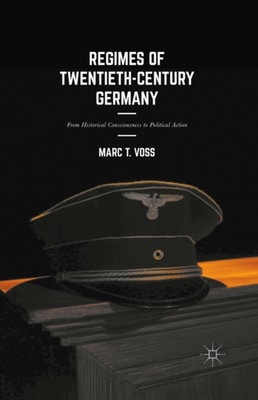
Regimes of Twentieth-Century Germany is a concise theory of and empirical study on action consciousness as an integral dimension of historical consciousness with specific emphasis on National Socialist Germany and the German Democratic Republic.
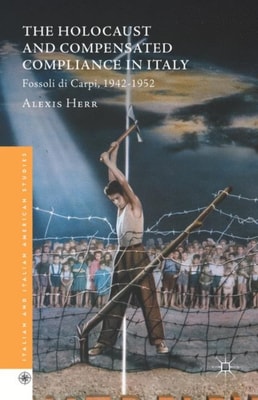
This book analyzes the role and function of an Italian deportation camp during and immediately after World War Two within the context of Italian, European, and Holocaust history.
This book chronicles a professor's experience with a group of US undergraduate students at Holocaust memorials, museums, and sites of remembrance as part of a yearly Holocaust study abroad program to Germany and Poland.
This book brings together psychoanalysis, clinical and theoretical, with history in a study of remembering as reparation: not compensation, but recognition of the actuality of perpetration and the remorseful urge to rejuvenate whatever represents this damage.
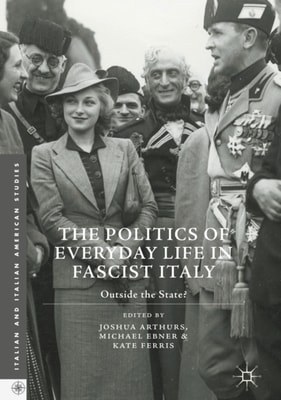
This book explores the complex ways in which people lived and worked within the confines of Benito Mussolini's regime in Italy, variously embracing, appropriating, accommodating and avoiding the regime's incursions into everyday life.
British Clandestine Activities in Romania during the Second World War is the first monograph to examine the activity throughout the entire war of SOE and MI6.
This volume focuses on the impact of the Armenian Genocide on different academic disciplines at the crossroads of the centennial commemorations of the Genocide.
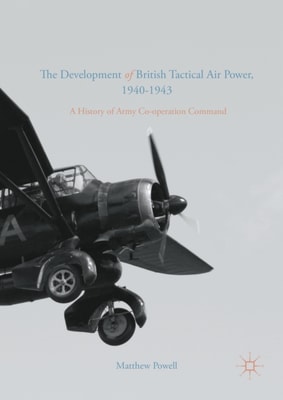
This book explores the development of tactical air power in Britain between 1940 and 1943 through a study of the Royal Air Force's Army Co-operation Command.
The sequel to Nazi Secret Warfare , which portrayed the catastrophic failure of Germany's clandestine services in Persia (Iran) during the Second World War.
This book compares female administrators who specifically chose to serve the Nazi cause in voluntary roles with those who took on such work as a progression of established careers.
The Allies and the German Problem, 1941-1949 examines Allied policymaking during the Second World War and the military occupation of postwar Germany, demonstrating how the initial unity of the Allies disintegrated during the postwar military occupation in the face of their separate goals for postwar Germany and Europe.
This book bringstogether leading experts to assess how and whether the Nazis were successful infostering collaboration to secure the resources they required during World WarII.
This volume explores post-2000s artistic engagements with Holocaust memory arguing that imagination plays an increasingly important role in keeping the memory of the Holocaust vivid for contemporary and future audiences.
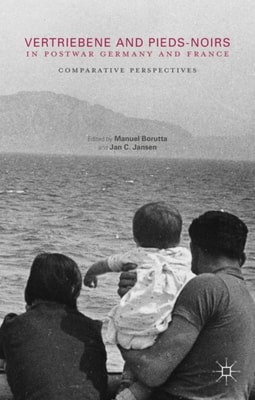
This volume compares one of the largest instances of 'ethnic cleansing' - the German expellees from the East (Vertriebene) - with the most important case of decolonization migration - the French repatriates of Algeria (pieds-noirs).
Leading international Holocaust scholars reflect upon their personal experiences and professional trajectories over many decades of immersion in the field.
Between September 1939 and June 1940, the British Expeditionary Force confronted the German threat to France and Flanders with a confused mind-set, an uncertain skills-set and an uncompetitive capability.
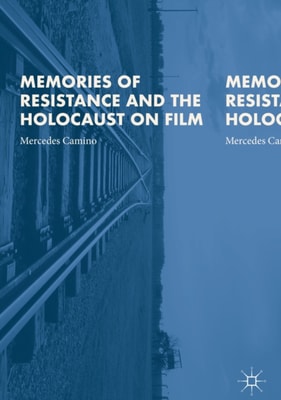
This book investigates cinematic representations of the murder of European Jews and civilian opposition to Nazi occupation from the war up until the twenty-first century.
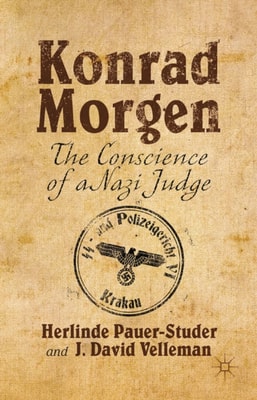
Konrad Morgen: The Conscience of a Nazi Judge is a moral biography of Georg Konrad Morgen, who prosecuted crimes committed by members of the SS in Nazi concentration camps and eventually came face-to-face with the system of industrialized murder at Auschwitz.
Ionescu examines the process of economic Romanianization of Bucharest during the Antonescu regime that targeted the property, jobs, and businesses of local Jews and Roma/Gypsies and their legal resistance strategies to such an unjust policy.
Under Italian Fascism, African-Italian mulattoes and white Italians living in Egypt posed a particular threat to the pursuit of a homogenous national identity.
This book offers a unique perspective on contemporary Polish cinema's engagement with histories of Polish violence against their Jewish neighbours during the Holocaust.
The SS Cavalry Brigade was a unit of the Waffen-SS that differed from other German military formations as it developed a 'dual role': SS cavalrymen both helped to initiate the Holocaust in the Soviet Union and experienced combat at the front.
The Holocaust Memorial Museum reveals and traces the transformation of ancient Jewish symbols, rituals, archetypes and narratives deployed in these sites.