From interpretations of the Holocaust to fascist thought and anti-fascists' responses, this book tackles topics which are rarely studied in conjunction.
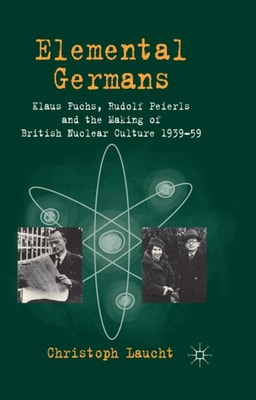
Christoph Laucht offers the first investigation into the roles played by two German-born emigre atomic scientists, Klaus Fuchs and Rudolf Peierls, in the development of British nuclear culture, especially the practice of nuclear science and the political implications of the atomic scientists' work, from the start of the Second World War until 1959.
For most of the twentieth century, Jewish and/or politically leftist European psychoanalysts rarely linked their personal trauma history to their professional lives, for they hoped their theory-their Truth-would transcend subjectivity and achieve a universality not unlike the advances in the "e;hard"e; sciences.
For most of the twentieth century, Jewish and/or politically leftist European psychoanalysts rarely linked their personal trauma history to their professional lives, for they hoped their theory-their Truth-would transcend subjectivity and achieve a universality not unlike the advances in the "e;hard"e; sciences.
Refighting the Pacific War presents the viewpoints of more than thirty historians, authors, and veterans regarding what happened and what might have happened if events in the Pacific had unfolded differently during World War II.
The Papon Affair is the definitive English-language work on a trial that is now considered to be the most significant in late twentieth-century France.
The Papon Affair is the definitive English-language work on a trial that is now considered to be the most significant in late twentieth-century France.
A new collection of essays by the internationally recognized cultural critic and intellectual historian Martin Jay that revolves around the themes of violence and visuality, with essays on the Holocaust and virtual reality, religious violence, the art world, and the Unicorn Killer, among a wide range of other topics.
A new collection of essays by the internationally recognized cultural critic and intellectual historian Martin Jay that revolves around the themes of violence and visuality, with essays on the Holocaust and virtual reality, religious violence, the art world, and the Unicorn Killer, among a wide range of other topics.
Written by a former Harvard professor of decision science and game theory, this book presents original insights on the strategies and tactics undertaken in four major battles of the Second World War.
This edited volume offers a new interpretation of the historically momentous 1952 Wassenaar negotiations between representatives of the Federal Republic of Germany, Israel, and the Jewish Claims Conference to negotiate reparations, compensation, and restitution in the aftermath of the Holocaust.
This handbook provides an overview of scholarly research on sexuality in East Central Europe for both students and academics, focusing on the Czech Republic, Hungary, Poland, and Slovakia, from the late nineteenth century to the present.
The Second World War is often seen as a period of emancipation, because of the influx of women into paid work, and because the state took steps to relieve women of domestic work.
The Second World War is often seen as a period of emancipation, because of the influx of women into paid work, and because the state took steps to relieve women of domestic work.
From extensive research, including a remarkable interview with the unrepentant chief of Hitler's Women's Bureau, this book traces the roles played by women - as followers, victims and resisters - in the rise of Nazism.
From extensive research, including a remarkable interview with the unrepentant chief of Hitler's Women's Bureau, this book traces the roles played by women - as followers, victims and resisters - in the rise of Nazism.
The fragility of the liberal democratic state after 1789 is illustrated in the history of the European Jews from the French Revolution to the Holocaust.
The fragility of the liberal democratic state after 1789 is illustrated in the history of the European Jews from the French Revolution to the Holocaust.
Drawing on interviews with the black survivors of Nazi concentration camps and archival research in North America, Europe, and Africa, this book documents and analyzes the meaning of Nazism's racial policies towards people of African descent, specifically those born in Germany, England, France, the United States, and Africa, and the impact of that legacy on contemporary race relations in Germany, and more generally, in Europe.
Drawing on interviews with the black survivors of Nazi concentration camps and archival research in North America, Europe, and Africa, this book documents and analyzes the meaning of Nazism's racial policies towards people of African descent, specifically those born in Germany, England, France, the United States, and Africa, and the impact of that legacy on contemporary race relations in Germany, and more generally, in Europe.
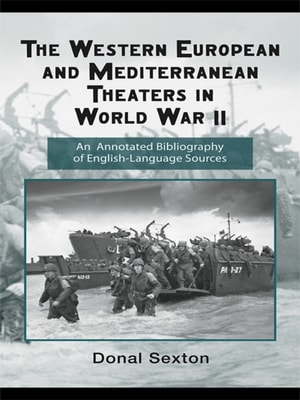
The Western European and Mediterranean Theaters in World War II is a concise, comprehensive guide for students, teachers, and history buffs of the Second World War.
The Western European and Mediterranean Theaters in World War II is a concise, comprehensive guide for students, teachers, and history buffs of the Second World War.
Supported in large part by evidence released after the collapse of the Soviet Union, this book follows the career of the Red Army from its birth in 1918 as the designated vanguard of world revolution to its affiliation in 1941 with 'the citadel of capitalism', the United States.
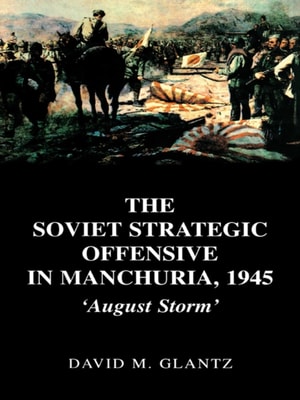
This critical examination of the final Soviet strategic offensive operation during World War II seeks to chip away at two generally inaccurate pictures many Westerners have of the war.
This book consists of extracts from key documents, along with commentary and further reading, on the 'Great Patriotic War' of the Soviet Union against Nazi Germany, 1941-45.
This book consists of extracts from key documents, along with commentary and further reading, on the 'Great Patriotic War' of the Soviet Union against Nazi Germany, 1941-45.
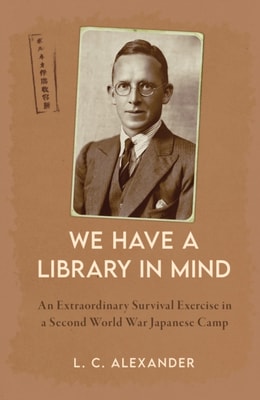
The Imperial War Museum archived Anthony Smelt's personal papers because he spent three years of the Second World War interned in Batu Lintang, a camp in Borneo.
Beginning with Marcel Ophus's documentary The Sorrow andthe Pity (1970) there has been an attempt to question the idea of a totally unified, courageous and resistant wartime France.