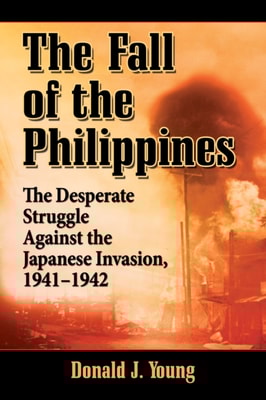
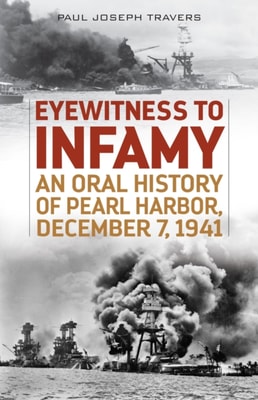
World War II began for the United States with the Japanese attack on Pearl Harbor December 7, 1941, followed by the invasion of the Philippine Islands the next day.
The story of Hitler's Wehrmachtsgefolge (armed forces auxiliaries) is less well known than that of Germany's other armed forces in World War II, such as the panzer divisions, the Luftwaffe and the Kriegsmarine.
In the five months after Pearl Harbor, the Imperial Japanese Navy won a string of victories in a campaign to consolidate control of Southeast Asia and the South Pacific.
Creating a guerrilla movement to fight the Japanese occupation of the Philippines (1942-1945) presented Colonel Wendell Fertig with some formidable challenges.
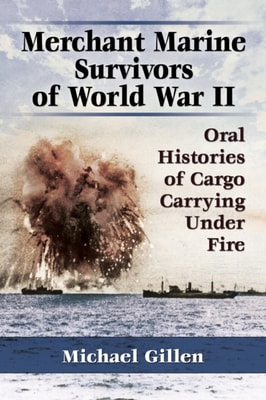
In the many historical accounts of D-Day, the Navy, Coast Guard and merchant marine, who transported troops to the invasion beaches and supported the attack, are often given scant attention.
It was not Robert Oppenheimer who built the bomb--it was engineers, chemists and young physicists in their twenties, many not yet having earned a degree.
Originally designed as a cargo and paratroop transport during World War II, the Fairchild C-82 Packet is today mainly remembered for its starring role in the Hollywood film The Flight of the Phoenix (1965).
Military historian Victor Brooks argues that the year 1943 marked a significant shift in the World War II balance of power from the Axis to Allied forces.
By the time the war clouds of Europe and Asia spilled onto the shores of the United States, the allied military found itself outmanned, outgunned and out flown.
Never to Return is the harrowing tale of the torpedoing and sinking of a Coast Guard ship and the loss of 171 Coast Guardsmen off the coast of Iceland during WWII.
From an historian and columnist in Leatherneck and Armor magazines, this is the exciting, personal account of a Marine fighter squadron in the South Pacific during the critical days of 1943 when the tide turned against the Japanese.
The Japanese attack on Pearl Harbor changed the lives of almost every American, and began the process of putting 17 million of them in uniform to fight in World War II.
Men in reserve focuses on working class civilian men who, as a result of working in reserved occupations, were exempt from enlistment in the armed forces.
In 1941 photographer Croswell Bowen joined American Field Service volunteer ambulance drivers and served alongside the British Eighth Army during World War II.
This seminal work on modern terrorism is the one book to read in order to truly understand the reasons why radical Muslims such as Osama bin Laden and his followers have declared war on America and the West.
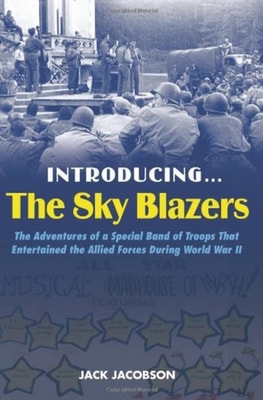
In New York City in 1939, neither eighteen-year-old Jack "e;Jake"e; Jacobson nor his comrade Murray "e;Duke"e; Davison had any intention of joining the military.
Inspired by the old African proverb: When an old man dies, a library burns to the ground, high-school student Morgan Reilly sought to preserve as many Maine libraries as he could by interviewing men and women from Maine who served in World War II and preserving their stories.
Very Special Ships is the first full-length book about the Abdiel-class fast minelayers, which were considered the fastest and most versatile to serve in the Royal Navy during World War II.
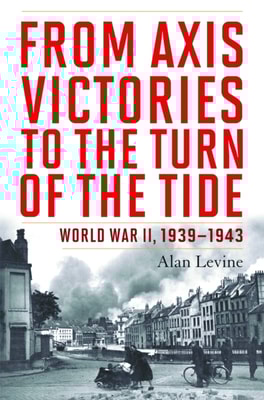
From Axis Victories to the Turn of the Tide is a history of the critical campaigns of WorldWar II that highlights the "e;visible"e; turning point battles of the war in 1942 and 1943.
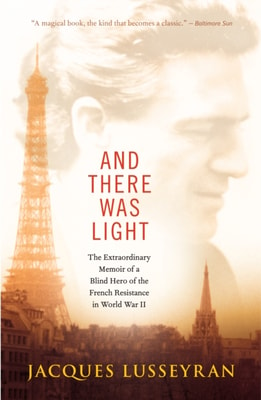
The book that helped inspire Anthony Doerrs All the Light We Cannot See An updated edition of this classic World War II memoir, chosen as one of the 100 Best Spiritual Books of the Twentieth Century, with a new photo insert and restored passages from the original French edition When Jacques Lusseyran was an eight-year-old Parisian schoolboy, he was blinded in an accident.
For the men of the Army Air Corps in early World War II, the chance of surviving the obligatory twenty-five missions without death, injury, or imprisonment was one in three.
In August 1942, Hitler directed all German state institutions to assist Heinrich Himmler, the chief of the SS and the German police, in eradicating armed resistance in the newly occupied territories of Eastern Europe and Russia.