Of Islands, Ports, and Sea Lanes,/i> explains the operational and strategic importance of the ports and sea lanes of Africa and the Indian Ocean during the Second World War.
The Battle of Kursk: The Red Army’s Defensive Operations and Counter- Offensive, July - August 1943, offers a peculiarly Soviet view of one of the Second World War’s most critical events.
Details a critical period in the Red Army's advance along the southwest strategic direction during the general offensive that followed the fighting in the area of the Kursk salient in July-August 1943.
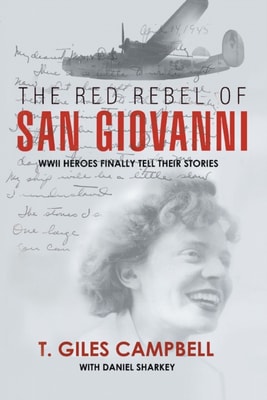
This book is largely an eye-witness account of the heavy bomber contribution to the success of the D-Day landings and therefore to the winning of the war in Europe.
Elizabeth Bowen: A Literary Life reinvents Bowen as a public intellectual, propagandist, spy, cultural ambassador, journalist, and essayist as well as a writer of fiction.
The book assembles case studies on the human dimension of the Holocaust as illuminated in the academic work of preeminent Holocaust scholar Deborah Dwork, the founding director of the Strassler Center for Holocaust and Genocide Studies, home of the first doctoral program focusing solely on the Holocaust and other genocides.
The book explores how Churchill was portrayed in the UK press during the Second World War, comparing his depictions in Scottish, Welsh, Northern Irish, and provincial English newspapers.
This book provides numerous examples that apply the modern theory of bureaucracy developed in Breton and Wintrobe (1982 and 1986) to the Nazi Holocaust.
This book is the first to bring together analyses of the full range of post-war testimony given by survivors of the Sonderkommando of Auschwitz-Birkenau.
This book elaborates Jean Amery's critique of philosophy and his discussion of some central philosophical themes in At the Mind's Limits and his other writings.
This book explores contemporary debates surrounding Poland's 'war children', that is the young victims, participants and survivors of the Second World War.
Books Across Borders: UNESCO and the Politics of Postwar Cultural Reconstruction, 1945-1951 is a history of the emotional, ideological, informational, and technical power and meaning of books and libraries in the aftermath of World War II, examined through the cultural reconstruction activities undertaken by the Libraries Section of the United Nations Educational, Scientific and Cultural Organization (UNESCO).
This book investigates the memory of the Holocaust in Sweden and concentrates on early initiatives to document and disseminate information about the genocide during the late 1940s until the early 1960s.
This book analyses the film industries and cinema cultures of Nazi-occupied countries (1939-1945) from the point of view of individuals: local captains of industry, cinema managers, those working for film studios and officials authorized to navigate film policy.
This book presents a selection of the newest research on themes amplified by the sixth annual Beyond Camps and Forced Labour conference on the post-Holocaust period, including 'displaced persons', reception and resettlement, exiles and refugees, trials and justice, reparation and restitution, and memory and testimony.
This book, part media history and part group biography, tells the story of the BBC's attempts to reach out to listeners in Nazi Germany at a time when Anglo-German relations were particularly strained.
This book is a study of the legal reckoning with the crimes of the Latvian Auxiliary Security Police and its political dimensions in the Soviet Union, West and East Germany, and the United States in the context of the Cold War.
This book offers a re-interpretation of the political history of Macau from 1937 to 1945, during which Japan and China were engulfed in the Second World War.
This book explores the attitudes of the Spanish army officer corps towards the evolution of warfare during the early decades of the twentieth century, and their influence on the armies of the Spanish Civil War.
This book contributes to the global turn in First World War studies by exploring Australians' engagements with the conflict across varied boundaries and by situating Australian voices and perspectives within broader, more complex contexts.
This book takes a timely look at histories of radical Jewish movements, their modes of Holocaust memorialisation, and their relationships with broader anti-colonial and anti-racist struggles.
This book presents the backstory of how the Catholic Church came to clarify and embrace the role of Israel in salvation history, at the behest of an unlikely personality: Jules Isaac.
In this discourse history, W J Dodd analyses the 'unquiet voices' of opponents whose contemporary critiques of Nazism, from positions of territorial and inner exile, focused on the 'language of Nazism'.