This book examines how Jewish intellectuals during and after the Second World War reinterpreted Homer's epics, the Iliad and the Odyssey, in light of their own wartime experiences, drawing a parallel between the ancient Greek genocide of the Trojans and the Nazi genocide of the Jews.
Philosophy typically ignores biographical, historical, and cultural aspects of theoriss' lives in an attempt to take a supposedly abstract and objective view of their work.
This book analyzes how Second World War heritage is being reframed in the memorial museums of the post-socialist, post-conflict states of Croatia, Bosnia and Herzegovina, and Serbia.
This book takes a timely look at histories of radical Jewish movements, their modes of Holocaust memorialisation, and their relationships with broader anti-colonial and anti-racist struggles.
This book offers a re-interpretation of the political history of Macau from 1937 to 1945, during which Japan and China were engulfed in the Second World War.
The Death of Transcendence presents a clear and compelling close reading and interpretation of the five essays included in Jean Amery's At the Mind's Limits, describing them as one continuous and progressing argument on the possibility of human society in the wake of the Holocaust.
This book explores the Holocaust exhibition opened within the Imperial War Museum (IWM) in 2000; setting out the long and often contentious debates surrounding the conception, design, and finally the opening of an important exhibition within a national museum in Britain.
This book traces the life of Maria Mia Truskier, who fled the Nazis as a young Polish Jew in early 1940 and once safely resettled in the United States, became an activist for other refugees, earning renown in the Bay Area as "e;the oldest refugee"e; of the East Bay Sanctuary Covenant.
This book is a contribution to the emerging field of research-based performance, which seeks to gain a wider audience for issues that are crucial to our understanding of history and to informing our future actions.
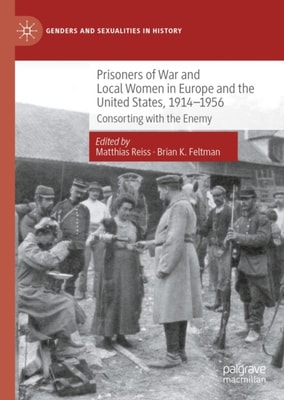
This book brings together historians from Great Britain, the United States, Germany, France, Canada, Austria, and Latvia who have worked and published on fraternisation between Prisoners of War and local women during either the First or Second World War, providing the first comparative study of this multi-faceted phenomenon in different belligerent countries.
This book explores the diverse range of practical and theoretical challenges and possibilities that digital technologies and platforms pose for Holocaust memory, education and research.
During the final years of the Second World War, a decisive change took place in the Italian left, as the Italian Communist Party (PCI) rose from clandestinity and recast itself as a mass, patriotic force committed to building a new democracy.
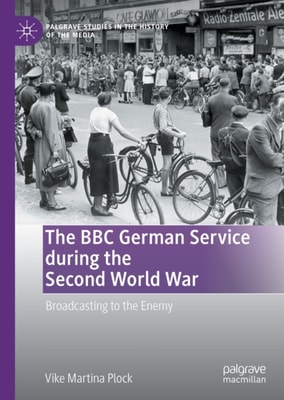
This book, part media history and part group biography, tells the story of the BBC's attempts to reach out to listeners in Nazi Germany at a time when Anglo-German relations were particularly strained.
This book discusses the impact of war on the complex interactions between various actors involved in justice: individuals and social groups on the one hand and 'the justice system' (police, judiciary and professionals working in the prison service) on the other.
Elizabeth Bowen: A Literary Life reinvents Bowen as a public intellectual, propagandist, spy, cultural ambassador, journalist, and essayist as well as a writer of fiction.
This book is a study of British official attitudes towards the Danubian countries (Hungary, Czechoslovakia, Romania and Yugoslavia) from Hitler's rise to power in 1933 to the year 1941, a period that marked serious but fruitless British political and economic efforts to unite this unruly part of Europe against Nazi ascendancy.
This book analyses the film industries and cinema cultures of Nazi-occupied countries (1939-1945) from the point of view of individuals: local captains of industry, cinema managers, those working for film studios and officials authorized to navigate film policy.
This book offers a complete narrative of the development of Nordicism, from its roots in the National Romantic movement of the late eighteenth century, through to its most notorious manifestation in Nazi Germany, and finally to the fragmented forms that still remain in contemporary society.
This book presents a selection of the newest research on themes amplified by the sixth annual Beyond Camps and Forced Labour conference on the post-Holocaust period, including 'displaced persons', reception and resettlement, exiles and refugees, trials and justice, reparation and restitution, and memory and testimony.
This book investigates the memory of the Holocaust in Sweden and concentrates on early initiatives to document and disseminate information about the genocide during the late 1940s until the early 1960s.
This book examines works of four German-Jewish scholars who, in their places of exile, sought to probe the pathology of the Nazi mind: Wilhelm Reich's The Mass Psychology of Fascism (1933), Erich Fromm's Escape from Freedom (1941), Siegfried Kracauer's From Caligari to Hitler: A Psychological History of the German Film (1947), and Erich Neumann's Depth Psychology and a New Ethic (1949).
This book analyses the actions, background, connections and the eventual trials of Hungarian female perpetrators in the Second World War through the concept of invisibility.
This book examines attitudes towards German held captive in Britain, drawing on original archival material including newspaper and newsreel content, diaries, sociological surveys and opinion polls, as well as official documentation and the archives of pressure groups and protest movements.
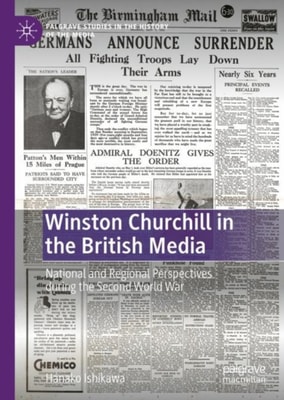
The book explores how Churchill was portrayed in the UK press during the Second World War, comparing his depictions in Scottish, Welsh, Northern Irish, and provincial English newspapers.
The book assembles case studies on the human dimension of the Holocaust as illuminated in the academic work of preeminent Holocaust scholar Deborah Dwork, the founding director of the Strassler Center for Holocaust and Genocide Studies, home of the first doctoral program focusing solely on the Holocaust and other genocides.
This book offers a unique approach to memory studies by focusing on local memory work conducted across the divide of the fall of Communism, whereas other histories have consistently used 1989 as a watershed moment.
The Palgrave Handbook of Holocaust Literature and Culture reflects current approaches to Holocaust literature that open up future thinking on Holocaust representation.
This book explores contemporary debates surrounding Poland's 'war children', that is the young victims, participants and survivors of the Second World War.