This book explores five cases of monument and public commemorative space related to World War II (WWII) in contemporary China (Mainland), Hong Kong and Taiwan, all of which were built either prior to or right after the end of the War and their physical existence still remains.
This book presents current research in the political ecology of indigenous revival and its role in nature conservation in critical areas in the Americas.
This myth-busting military biography reveals the true story of the legendary WWII German flying ace-and how his story was manipulated during the Cold War.
They Were Soldiers showcases the inspiring true stories of 49 Vietnam veterans who returned home from the "e;lost war"e; to enrich America's present and future.
Striking Back: Combat in Korea, March-April 1951 is the second book in a three-volume series about the Korean War, examining the fighting that occurred during the late winter and early spring of the war's first year.
A narrative history of the 1861 Washington Peace Conference, the bipartisan, last-ditch effort to prevent the Civil War, an effort that nearly averted the carnage that followed.
"e; When the Japanese Imperial Forces invaded the Philippine Islands at the onset of World War II, they quickly rounded up Allied citizens on Luzon and imprisoned them as enemy aliens.
This critical examination of the final Soviet strategic offensive operation during World War II seeks to chip away at two generally inaccurate pictures many Westerners have of the war.
Advocates of theNuremberg legacy emphasize the positive impact of the individualization of responsibility and the establishment of an historical record through judicial procedures forwar crimes.
This book investigates the complexities of modern urban operations-a particularly difficult and costly method of fighting, and one that is on the rise.
This book offers a complete narrative of the development of Nordicism, from its roots in the National Romantic movement of the late eighteenth century, through to its most notorious manifestation in Nazi Germany, and finally to the fragmented forms that still remain in contemporary society.
This book analyses four case studies of Holocaust memory activism in Poland, contextualized within recent debates about Polish-Jewish relations and approached through a theoretical framework informed by critical theory.
This book offers a unique perspective on contemporary Polish cinema's engagement with histories of Polish violence against their Jewish neighbours during the Holocaust.
This book traces the powerful discourses and embodied practices through which Black Caribbean women have been imagined and produced as subjects of British liberal rule and modern freedom.
This book explores the work and legacy of Professor David Cesarani OBE, a leading British scholar and expert on Jewish history who helped to shape Holocaust research, remembrance and education in the UK.
This book provides the first ever intelligence history of Iraq from 1941 to 1945, and is the third and final volume of a trilogy on regional intelligence and counterintelligence operations that includes Nazi Secret Warfare in Occupied Persia (Iran) (2014), and Espionage and Counterintelligence in Occupied Persia (Iran) (2015).
This book chronicles a professor's experience with a group of US undergraduate students at Holocaust memorials, museums, and sites of remembrance as part of a yearly Holocaust study abroad program to Germany and Poland.
This book explores the complex ways in which people lived and worked within the confines of Benito Mussolini's regime in Italy, variously embracing, appropriating, accommodating and avoiding the regime's incursions into everyday life.
This edited collection brings together cutting-edge research on British masculinities and male culture, considering the myriad ways British men experienced, understood and remembered their exploits during the Second World War, as active combatants, prisoners and as civilian workers.
The first full-length study of World War II from the Latin American perspective, this unique volume offers an in-depth analysis of the region during wartime.
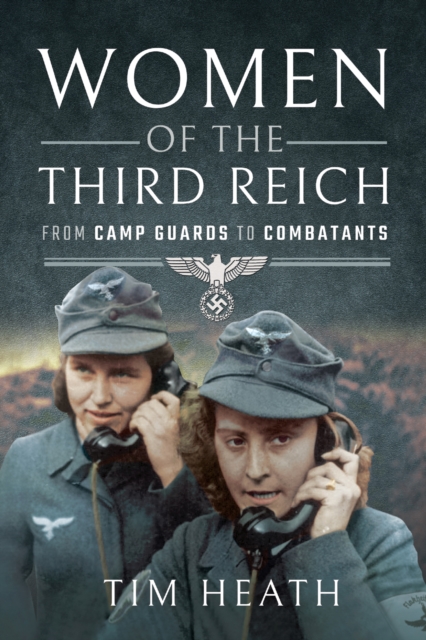
This book compares female administrators who specifically chose to serve the Nazi cause in voluntary roles with those who took on such work as a progression of established careers.
Filip Muller came to Auschwitz with one of the earliest transports from Slovakia in April 1942 and began working in the gassing installations and crematoria in May.
The Royal Naval Commandos had one of the most dangerous and the most important tasks of any in World War II - they were first on to the invasion beaches and they were the last to leave.
An SS colonel goes underground at the end of WWIIEugen Dollmann was a scholar and member of the SS whose connections among Italian society led to a posting as a liaison officer attached to Mussolini during World War II.
In September 1979, at age fifty-six, writer and artist Arturo Benvenuti fueled up his motor home and set forth on what he knew would be an emotional journey.
They left Harvard, Yale, Princeton, Michigan, and Stanford to drive ambulances on the French front, and on the killing fields of World War I they learned that war was no place for gentlemen.