In April 1917, Congress approved President Woodrow Wilson's request to declare war on the Central Powers, thrusting the United States into World War I with the rallying cry, "e;The world must be made safe for democracy.
In 1831, Prussia was consumed by two fears: the possibility of revolution resulting from the 1830 November Uprising of Poland against Russia, and a looming cholera epidemic.
Fictional war narratives often employ haunted battlefields, super-soldiers, time travel, the undead and other imaginative elements of science fiction and fantasy.
Britain's peacekeeping role in Southeast Asia after World War II was clear enough but the purpose of the Commonwealth in the region later became shadowy.
The early 20th century saw the founding of the National Security League, a nationalistic nonprofit organization committed to an expanded military, conscripted service and meritocracy.
In the fall of 1983, arguably the coldest year of the decades-long Cold War, the world's greatest superpower invaded Grenada, a Marxist-led Caribbean nation the size of Atlanta.
The German invasion of Poland in September 1939 abruptly ended author Jan Rosinski's student life, and propelled him into an activist role in the Polish resistance organization Armia Krajowa.
After the August 1945 atomic bombings of Hiroshima and Nagasaki and Japan's unconditional surrender, America's educational community quickly focused on preparing the younger generation for the atomic age.
President Bill Clinton, speaking as might any commander-in-chief, on the eve of his decision to deploy ground troops to Bosnia in 1995, declared he had "e;no responsibility more grave than putting soldiers in harm's way.
In July 1862, the directors of the Chicago Board of Trade used their significant influence to organize perhaps the most prominent Union artillery unit in the Western Theater.
Since the beginning of the 20th century, the United States has sought to achieve Admiral Alfred Thayer Mahan's vision of "e;command of the sea"e; using large battle fleets of capital ships.
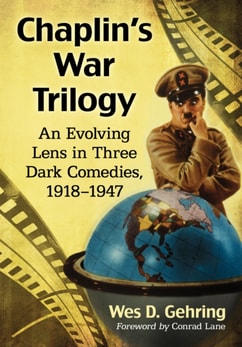
The book examines Charlie Chaplin's evolving perspective on dark comedy in his three war films, Shoulder Arms (1918), The Great Dictator (1940), and Monsieur Verdoux (1947).
This biographical dictionary catalogs the Union army colonels who commanded regiments from Missouri and the western States and Territories during the Civil War.
This detailed chronological analysis of British World War II movies from 1939 until the present explores how films projected recognizable stereotypes of British national character and how the times in which a film was made shaped its perspectives.
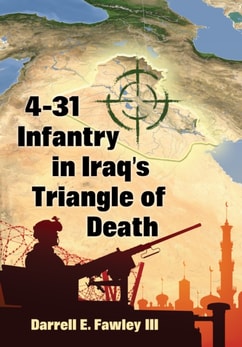
The Iraqi Triangle of Death, south of Baghdad, was a raging inferno of insurgent activity in August of 2006; by November 2007, attacks had been suppressed to such an extent as to return the area to near obscurity.
This comprehensive chronology provides coverage of every international terrorist attack covered in public literature--including newspapers, news magazines, radio, television, websites, and other media--from 2008 through 2012, plus updates on events that occurred before that period.
A former Harvard professor of decision science and game theory draws on those disciplines in this review of controversial strategic and tactical decisions of World War II.
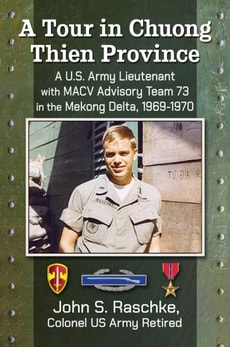
In the summer of 1969, as the Vietnam War was being turned over to the South Vietnamese, Lieutenant John Raschke arrived in Chuong Thien Province deep in the Mekong Delta, eager to have a positive impact.
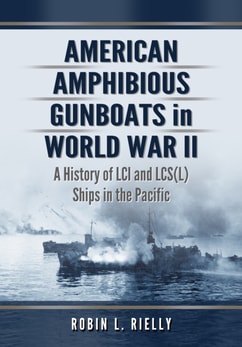
As the United States began its campaign against numerous Japanese-held islands in the Pacific, Japanese tactics required them to develop new weapons and strategies.
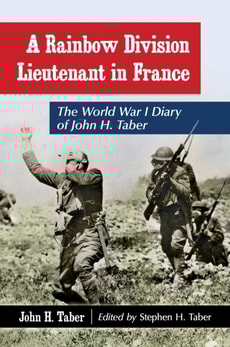
Lieutenant John Huddleston Taber was a New Yorker assigned to the 168th "e;Third Iowa"e; Infantry Regiment of the American Expeditionary Force's 42nd "e;Rainbow"e; Division during World War I.
Air warfare was a decisive component of World War II, especially in western Europe and over Japan, where Allied bombers damaged 66 of the country's largest cities.
As a first lieutenant in Bravo Company of the Third Battalion, 187th Infantry, Frank Boccia led a platoon in two intense battles in the Vietnamese mountains in April and May 1969: Dong Ngai and the grinding, 11-day battle of Dong Ap Bia--the Mountain of the Crouching Beast, in Vietnamese, or Hamburger Hill as it is popularly known.