For a week in April 1916, 2,000 Irish Volunteers rose up in armed rebellion against the British Empire in a bid to establish an independent Irish state.
The Hellenistic Period (323-31 BCE) saw the Grecian phalanx--long dominant in Mediterranean warfare--challenged by legionary formations from the rising city-state of Rome.
Nation-building efforts by the United States and the international community have led to both success and failure, overwhelming support and debilitating controversy.
Marie Marvingt (1875-1963) set the world's first women's aviation records, won the only gold medal for outstanding performance in all sports, invented the airplane ambulance, was the first female bomber pilot in history, fought in World War I disguised as a man, took part in the Resistance of World War II, was the first to survive crossing the English Channel in a balloon, worked all her life as a journalist, spent years in North Africa and invented metal skis.
Among the many German immigrants to the United States over the years, one group is unusual: former prisoners of war who had spent between one and three years on American soil and who returned voluntarily as immigrants after the war.
Published here for the first time, the Civil War combat memoir of Lieutenant Colonel James Taylor Holmes of the 52nd Ohio Volunteers presents a richly detailed firsthand account of the action on Cheatham's Hill during the June 1864 Battle of Kennesaw Mountain.
Profiling World War II veterans who became famous Hollywood personalities, this book presents biographical chapters on celebrities like Audie Murphy, "e;America's number one soldier"e;; Clark Gable, the "e;King of Hollywood"e;; Jimmy Stewart, combat pilot; Gene Autry, the "e;singing cowboy,"e; who flew the infamous Hump; the amorous Mickey Rooney; Jackie Coogan, "e;the Kid"e; who crashed gliders in the jungle; James Arness, who acquired his Gunsmoke limp in the mountains of Italy; Tony Bennett, who discovered his voice during the Battle of the Bulge; and Lee Marvin, a Marine NCO who invaded 29 islands.
Focusing on Ireland's literary and artistic response to World War I, this book explores works from a range of perspectives that intervened in Irish political and cultural discourse.
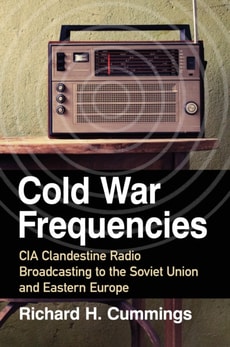
Published for the first time, the history of the CIA's clandestine short-wave radio broadcasts to Eastern Europe and the USSR during the early Cold War is covered in-depth.
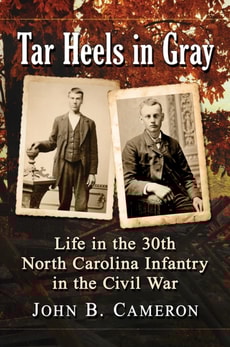
The 30th North Carolina Infantry was involved in most of the major battles in Virginia from the Seven Days through the surrender at Appomattox, and saw some of the bloodiest fighting of the American Civil War.
Spying in the United States began during the Revolutionary War, with George Washington as the first director of American intelligence and Benedict Arnold as the first turncoat.
World War II began for the United States with the Japanese attack on Pearl Harbor December 7, 1941, followed by the invasion of the Philippine Islands the next day.
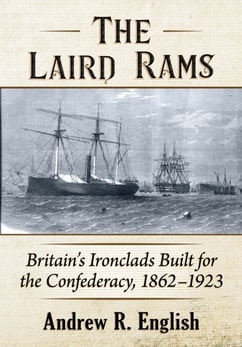
Built in Birkenhead, England, from 1862 to 1865, the "e;Laird rams"e; were two innovative armored warships intended for service with the Confederate Navy during the Civil War.
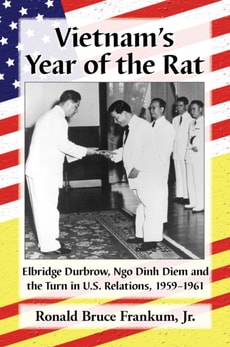
Vietnam's Year of the Rat explores the lunar New Year 1960 and the dynamic relationship between two competing groups vying for control in the Republic of Vietnam.
This book describes the clandestine missions that were defining moments in the evolution of the Mossad, including its pursuit of the Black September terrorists who murdered Israeli athletes at the 1972 Olympic Games, its acquisition on the high seas of yellowcake uranium for Israel's undeclared nuclear weapons program, and its role in bringing to justice Nazi war criminal Adolf Eichmann.
The story of Hitler's Wehrmachtsgefolge (armed forces auxiliaries) is less well known than that of Germany's other armed forces in World War II, such as the panzer divisions, the Luftwaffe and the Kriegsmarine.
Reuel Long's experiences as an MD in the emergency rooms of Flint, Michigan, prepared him for only some of what he would see in a mobile army surgical hospital.
The decolonization of Namibia was delayed from 1966 to 1989--the period of the war of independence--pitting the Namibian nationalists against the South African minority-ruled regime.
In the five months after Pearl Harbor, the Imperial Japanese Navy won a string of victories in a campaign to consolidate control of Southeast Asia and the South Pacific.
"e;Now that the United States has declared war upon the German Empire, and that men will more than likely be conscripted into the service, I shall feel embarrassed should I fail to be among the first to go to the training camp,"e; wrote Dae Hinson of Leesville, Louisiana, in April 1917.