This monograph explores the expansion of the Tablighi Jama''at, a transnational Islamic missionary movement that originated in India in the mid-nineteenth century.
This monograph explores the expansion of the Tablighi Jama''at, a transnational Islamic missionary movement that originated in India in the mid-nineteenth century.
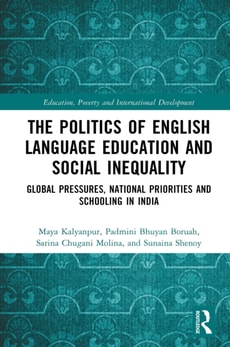
Based on policy analysis and empirical data, this book examines the problematic consequences of colonial legacies of language policies and English language education in the multilingual contexts of the Global South.
Based on policy analysis and empirical data, this book examines the problematic consequences of colonial legacies of language policies and English language education in the multilingual contexts of the Global South.
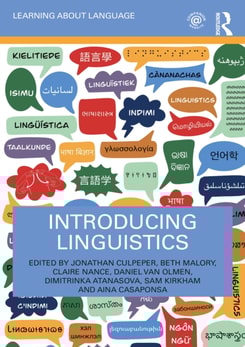
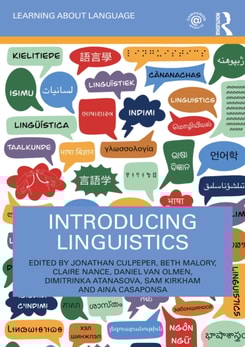
Introducing Linguistics brings together the work of scholars working at the cutting-edge of the field of linguistics, creating an accessible and wide-ranging introductory level textbook for newcomers to this area of study.
Introducing Linguistics brings together the work of scholars working at the cutting-edge of the field of linguistics, creating an accessible and wide-ranging introductory level textbook for newcomers to this area of study.
The Metaphor Compass: Directions for Metaphor Research in Language, Cognition, Communication, and Creativity provides a roadmap to navigate the recent findings and cutting-edge research conducted around the world on metaphor, focusing on the following four themes: Metaphor and Linguistic Diversity, Metaphor and Cognition, Metaphor and Communication, and Metaphor and Creativity.
The Metaphor Compass: Directions for Metaphor Research in Language, Cognition, Communication, and Creativity provides a roadmap to navigate the recent findings and cutting-edge research conducted around the world on metaphor, focusing on the following four themes: Metaphor and Linguistic Diversity, Metaphor and Cognition, Metaphor and Communication, and Metaphor and Creativity.
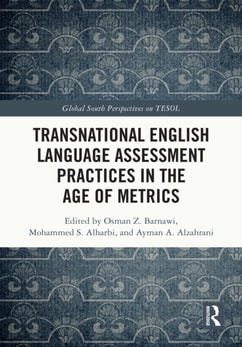
This edited volume examines how transnational English language assessment practices are envisioned, enacted, and justified by different stakeholders, including students, teachers, and universities in different geographical contexts, and what would be the multi-level consequences of such practices.
This edited volume examines how transnational English language assessment practices are envisioned, enacted, and justified by different stakeholders, including students, teachers, and universities in different geographical contexts, and what would be the multi-level consequences of such practices.