This book sheds new light on corpus-assisted translation pedagogy, an intersection of three distinct but cognate disciplines: corpus linguistics, translation and pedagogy.
This book mainly introduces a series of theory and approaches of group decision-making based on several types of uncertain linguistic expressions and addresses their applications.
This book presents a collection of original research articles that showcase the state of the art of research in corpus and computational linguistic approaches to Chinese language teaching, learning and assessment.
Adopting a multi-perspective ontological approach to language in social life, this book investigates the concept of journalistic stance, defining it as a nexus of social practice rather than simply linguistic realizations.
This book applies formal language and automata theory in the context of Tibetan computational linguistics; further, it constructs a Tibetan-spelling formal grammar system that generates a Tibetan-spelling formal language group, and an automata group that can recognize the language group.
This book discusses key issues of corpus linguistics like the definition of the corpus, primary features of a corpus, and utilization and limitations of corpora.
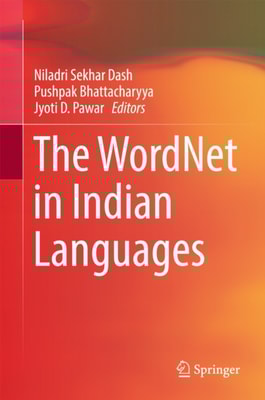
This contributed volume discusses in detail the process of construction of a WordNet of 18 Indian languages, called "e;Indradhanush"e; (rainbow) in Hindi.
With an argument for embedding nonverbal delivery in speaking assessment as a point of departure, this book seeks to validate a proposed rating scale for incorporating nonverbal delivery and other conventional dimensions into speaking assessment with a mixed-methods approach.
Healthcare-Driven Intelligent Computing Paradigms to Secure Futuristic Smart Cities presents the applications of the healthcare sector in the context of futuristic smart cities.
The subject of the present inquiry is the approach-to-the-truth research, which started with the publication of Sir Karl Popper's Conjectures and Refutations.
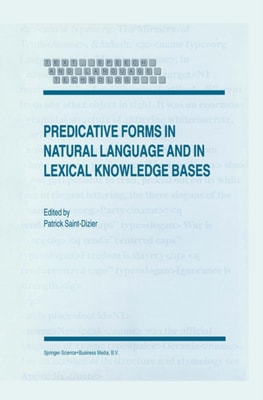
This volume is a selection of papers presented at a workshop entitled Predicative Forms in Natural Language and in Lexical Knowledge Bases organized in Toulouse in August 1996.
This book is based on contributions to the Seventh European Summer School on Language and Speech Communication that was held at KTH in Stockholm, Sweden, in July of 1999 under the auspices of the European Language and Speech Network (ELSNET).
Computational Models of Mixed-Initiative Interaction brings together research that spans several disciplines related to artificial intelligence, including natural language processing, information retrieval, machine learning, planning, and computer-aided instruction, to account for the role that mixed initiative plays in the design of intelligent systems.
Most of the books about computational (lexical) semantic lexicons deal with the depth (or content) aspect of lexicons, ignoring the breadth (or coverage) aspect.
In the late 1990s, AI witnessed an increasing use of the term 'argumentation' within its bounds: in natural language processing, in user interface design, in logic programming and nonmonotonic reasoning, in Al's interface with the legal community, and in the newly emerging field of multi-agent systems.
In this book we address robustness issues at the speech recognition and natural language parsing levels, with a focus on feature extraction and noise robust recognition, adaptive systems, language modeling, parsing, and natural language understanding.
In the last years, it was observed an increasing interest of computer scientists in the structure of biological molecules and the way how they can be manipulated in vitro in order to define theoretical models of computation based on genetic engineering tools.
In both the linguistic and the language engineering community, the creation and use of annotated text collections (or annotated corpora) is currently a hot topic.
Marcus Contextual Grammars is the first monograph to present a class of grammars introduced about three decades ago, based on the fundamental linguistic phenomenon of strings-contexts interplay (selection).
Intensional logic has emerged, since the 1960' s, as a powerful theoretical and practical tool in such diverse disciplines as computer science, artificial intelligence, linguistics, philosophy and even the foundations of mathematics.
This volume contains a selection of papers presented at a Seminar on Intensional Logic held at the University of Amsterdam during the period September 1990-May 1991.