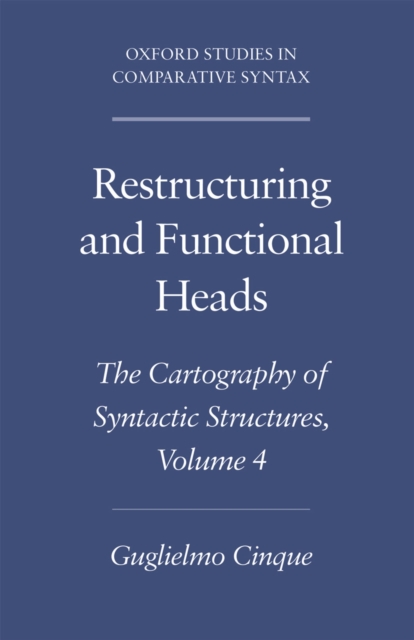
Parameters of linguistic variation were originally conceived, within the chomskyan Principles and Parameters Theory, as UG-determined options that were associated with grammatical principles and had a rich deductive structure.
In this book, HinterhA lzl provides a comprehensive study of three salient phenomena of West Germaic, namely scrambling, remnant movement and restructuring, and discusses their interrelatedness.
Despite the humble origins of its name (Anglo Saxon for "e;the speck at the head of a boil"e;), the dot has been one of the most versatile players in the history of written communication, to the point that it has become virtually indispensable.
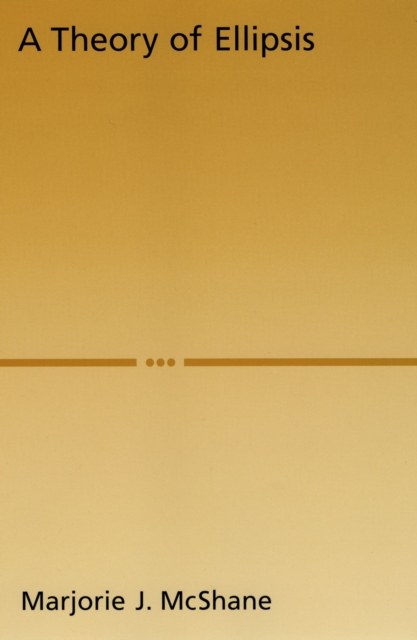
Ellipsis is the non-expression of one or more sentence elements whose meaning can be reconstructed either from the context or from a person's knowledge of the world.
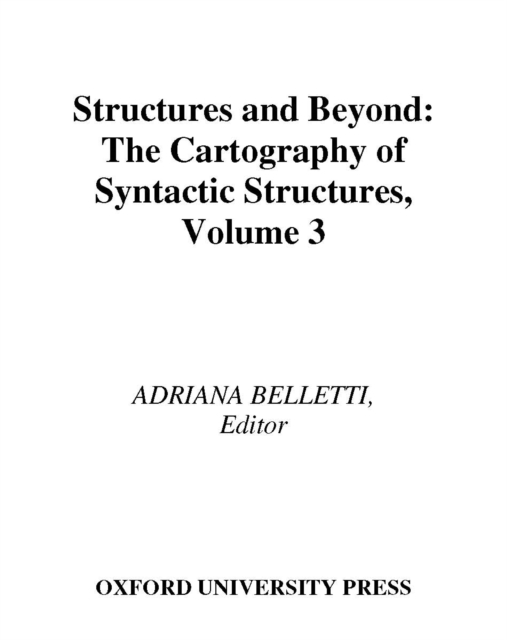
This volume presents the first results of a long-term research project, funded by the Italian government, which aims at mapping out the fine functional structure of sentences, nominal phrases, and other major phrases making up sentences.
Language Between Description and Prescription is an empirical, quantitative and qualitative study of nineteenth-century English grammar writing, and of nineteenth-century language change.
Cartography is a research program within syntactic theory that studies the syntactic structures of a particular language in order to better understand the semantic issues at play in that language.
The strikingly unrestricted syntactic distribution of nouns in many Bantu languages often leads to proposals that syntactic case does not play an active role in the grammar of Bantu.
Cartography is a research program within syntactic theory that studies the syntactic structures of a particular language in order to better understand the semantic issues at play in that language.
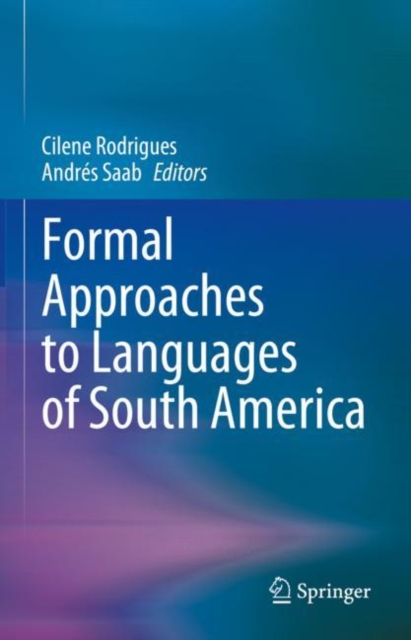
Over the past twenty years or so, the work on Japanese within generative grammar has shifted from primarily using contemporary theory to describe Japanese to contributing directly to general theory, on top of producing extensive analyses of the language.
Nominal Arguments in Language Variation investigates nominal arguments in classifier languages, refuting the long-held claim that classifier languages do not have overt article determiners.
Nominal Arguments in Language Variation investigates nominal arguments in classifier languages, refuting the long-held claim that classifier languages do not have overt article determiners.
In our everyday speech we represent events and situations, but we also provide commentary on these representations, situating ourselves and others relative to what we have to say and situating what we say in larger contexts.
This book uncovers properties of focus association with 'only' by examining the interaction between the particle and bare (or "e;evaluative"e;) gradable terms.
This book contains papers that were written to honor Professor Lyn Frazier on the occasion of her retirement from the University of Massachusetts Amherst.
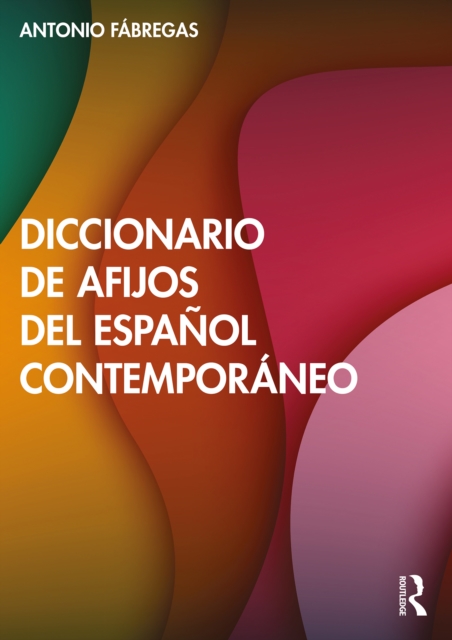
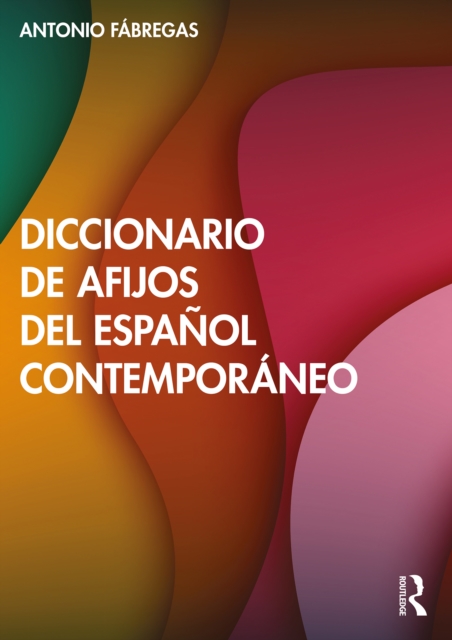
El Diccionario de afijos del espanol contemporaneo es el primer estudio completo y sistematico de los morfemas que el espanol utiliza para la formacion de palabras.
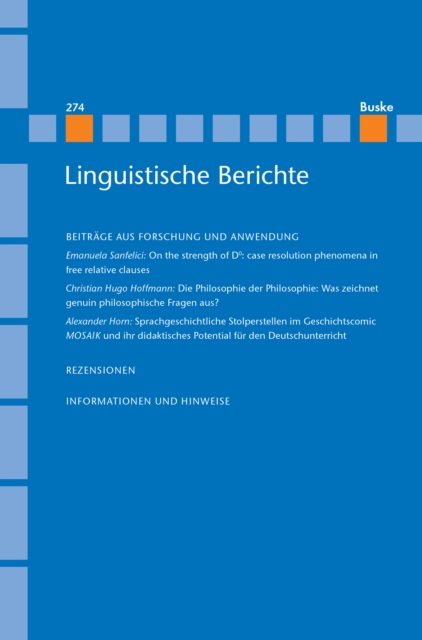
Beiträge aus Forschung und Anwendung– Emanuela Sanfelici: On the strength of D0: case resolution phenomena in free relative clausesAbstract: This paper proposes a novel account of free relative clauses (RCs), which associates case resolution patterns to the typology of D0 heads à la Longobardi (1994), Guardiano & Longobardi (2005).
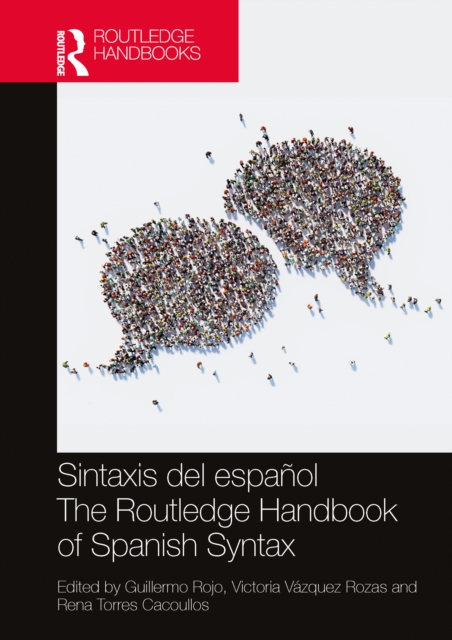
El volumen Sintaxis del espanol/The Routledge Handbook of Spanish Syntax proporciona una vision general de los temas fundamentales de la sintaxis del espanol, basada en datos extraidos de corpus textuales, sensible a los fenomenos de variacion y conectada con otros componentes de la lengua.
The Syntax of Vietnamese Tense, Aspect, and Negation investigates familiar grammatical phenomena including Tense, Aspect, and Negation in a theoretically understudied language, Vietnamese.
Long and Imamura examine language contact phenomena in the Asia Pacific region in the context of early 20th-century colonial history, focusing on the effects the Japanese language continues to have over island societies in the Pacific.
El Diccionario de afijos del espanol contemporaneo es el primer estudio completo y sistematico de los morfemas que el espanol utiliza para la formacion de palabras.
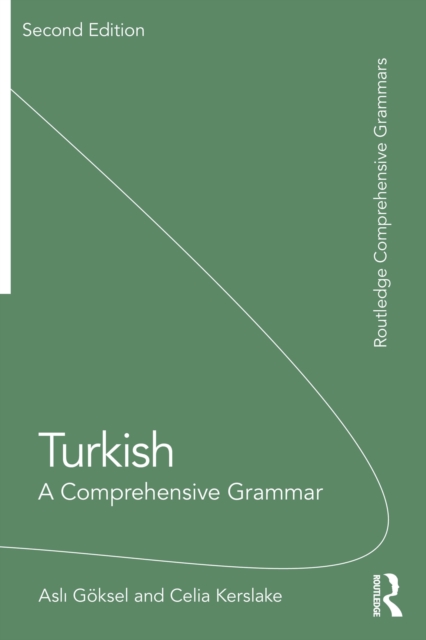
Turkish: A Comprehensive Grammar has been extensively revised in this second edition to provide a complete reference guide to modern Turkish grammar, presenting an accessible description of the language with a thorough description of the sound system, intonation patterns, word structure and sentence structure of Turkish.
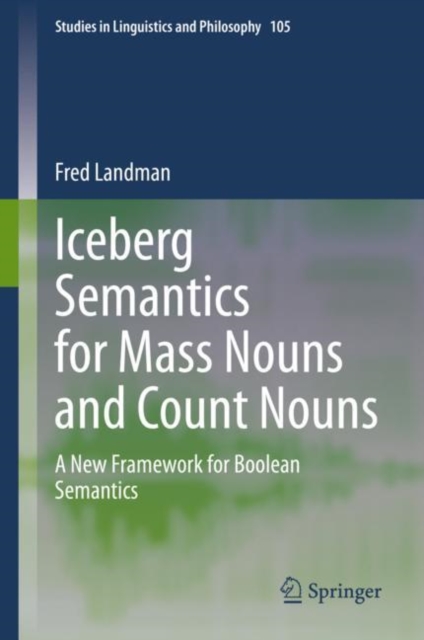
Iceberg semantics is a new framework of Boolean semantics for mass nouns and count nouns in which the interpretation of a noun phrase rises up from a generating base and floats with its base on its Boolean part set, like an iceberg.
This book makes a novel contribution to our understanding of Romance SE constructions by combining both diachronic and synchronic theoretical perspectives along with a range of empirical data from different languages and dialects.
This handbook provides innovative and comprehensive coverage of research on the second language acquisition (SLA) of morphosyntax, semantics, and the interface between the two.
Drawing on Systemic Functional Linguistics (SFL), this book introduces readers to the methods for analysing discourse/texts written and spoken in the Chinese language.
This volume presents the first linguistic and philological analysis, and edition (with English translation) of a fifteenth-century vernacular manuscript from Renaissance Italy, written by an author from the city of Cremona, in northern Italy.
This volume presents the first linguistic and philological analysis, and edition (with English translation) of a fifteenth-century vernacular manuscript from Renaissance Italy, written by an author from the city of Cremona, in northern Italy.
This book offers an engaging exploration of Chinese tones, charting their historical origins, diverse expressions across dialects, and their pivotal role in shaping Chinese music and poetry.
This book offers an engaging exploration of Chinese tones, charting their historical origins, diverse expressions across dialects, and their pivotal role in shaping Chinese music and poetry.