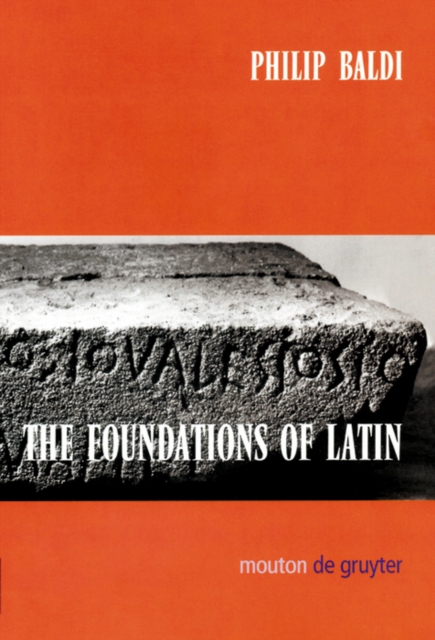
This volume provides an up-to-date account of the linguistic evolution of Latin, from its origins in the Proto-Indo-European ancestral language until the end of the second century CE.
This volume brings together articles that are focused on segmental, syllabic and morphological aspects of creole words, thus contributing to the ongoing debates about the nature of phonology and morphology and their role in emergence and development of these languages.
The Glot International State-of-the-Article books constitute the ideal solution for every-one who wants to have a good idea of what the others are doing but does not have time to follow the developments in all other parts of the field on a day to day basis.
This book will be of special interest to the general reader concerned with the issue of language in the United States, as well as the language specialist and sociolinguist.
This book provides the first systematic descriptive analysis of the phonological system of Romanian, one of the less studied Romance languages, from the perspective of recent phonological theory.
This volume consists of nine articles dealing with topics in distinctive feature theory in various typologically diverse languages, including Acehnese, Afrikaans, Basque, Dutch, Finnish, French, German, Hungarian, Japanese, Korean, Navajo, Portuguese, Tahltan, Terena, Tswana, Tuvan, and Zoque.
Subjectification is a widespread phenomenon and has emerged as a most pervasive tendency in diachronic semantic change (Traugott) and in synchronic semantic extension (Langacker).
Covering linguistic research on empty categories over more than three decades, this monograph presents the result of an in-depth syntactic and focus-theoretical investigation of ellipsis in generative grammar.
No detailed description available for "e;The Determination of Stages in the Historical Development of the Germanic Languages by Morphological Criteria"e;.