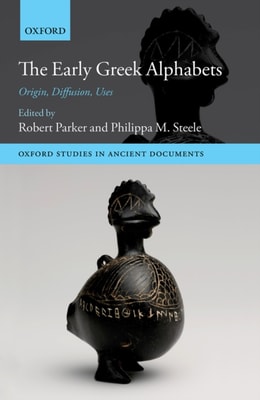
The birth of the Greek alphabet marked a new horizon in the history of writing, as the vowelless Phoenician alphabet was borrowed and adapted to write vowels as well as consonants.
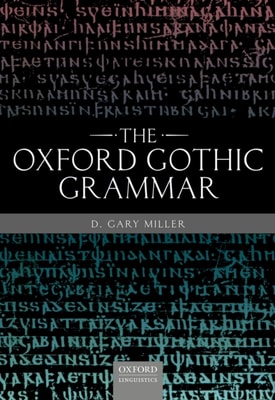
This volume provides a comprehensive reference grammar of Gothic, the earliest attested language of the Germanic family (apart from runic inscriptions), dating to the fourth century.
Chinese Writing and the Rise of the Vernacular in East Asia is a wide-ranging study of vernacularization in East Asia - not only China, Japan, Korea, and Vietnam, but also societies that no longer exist, such as the Tangut and Khitan empires.
Chinese Writing and the Rise of the Vernacular in East Asia is a wide-ranging study of vernacularization in East Asia - not only China, Japan, Korea, and Vietnam, but also societies that no longer exist, such as the Tangut and Khitan empires.
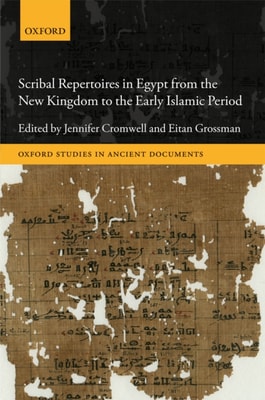
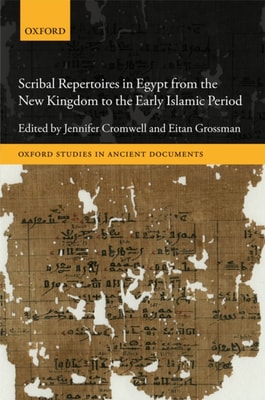
Scribal Repertoires in Egypt from the New Kingdom to the Early Islamic Period deals with the possibility of glimpsing pre-modern and early modern Egyptian scribes, the actual people who produced ancient documents, through the ways in which they organized and wrote those documents.
In addition to Phoenician, Greek, and Latin, at least four writing systems were used between the fifth century BCE and the first century CE to write the indigenous languages of the Iberian peninsula (the so-called Palaeohispanic languages): Tartessian, Iberian, Celtiberian, and Lusitanian.
In addition to Phoenician, Greek, and Latin, at least four writing systems were used between the fifth century BCE and the first century CE to write the indigenous languages of the Iberian peninsula (the so-called Palaeohispanic languages): Tartessian, Iberian, Celtiberian, and Lusitanian.
This book narrates the history of English spelling from the Anglo-Saxons to the present-day, charting the various changes that have taken place and the impact these have had on the way we spell today.
This book narrates the history of English spelling from the Anglo-Saxons to the present-day, charting the various changes that have taken place and the impact these have had on the way we spell today.
This book traces the history of language technology from writing - the first technology specifically designed for language - to digital speech and other contemporary language systems.
This book traces the history of language technology from writing - the first technology specifically designed for language - to digital speech and other contemporary language systems.
The Oxford History of the Irish Book is a major new series that charts the development of the book in Ireland from its origins within an early medieval manuscript culture to its current incarnation alongside the rise of digital media in the twenty-first century.
Scribal Repertoires in Egypt from the New Kingdom to the Early Islamic Period deals with the possibility of glimpsing pre-modern and early modern Egyptian scribes, the actual people who produced ancient documents, through the ways in which they organized and wrote those documents.
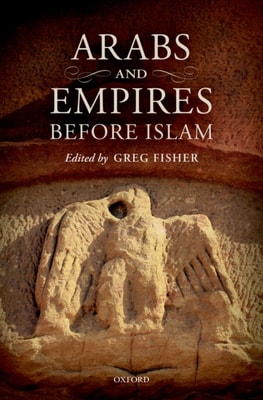
Arabs and Empires before Islam illuminates the history of the Arabs before the emergence of Islam, collating nearly 250 translated extracts from an extensive array of ancient sources.
Known from ancient authors such as Herodotus, Thucydides, and Plato, and more than 2,500 inscriptions, proxeny (a form of public guest-friendship) is the best attested interstate institution of the ancient world.
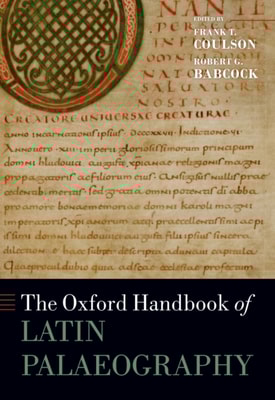
Latin books are among the most numerous surviving artifacts of the Late Antique, Mediaeval, and Renaissance periods in European history; written in a variety of formats and scripts, they preserve the literary, philosophical, scientific, and religious heritage of the West.
This comprehensive Chinese character workbook can be used with any textbook or on its own to dramatically enhance your Mandarin reading and writing skills!
This workbook is designed for use with the Elementary Mandarin Chinese Textbook and offers a wealth of carefully-designed practice activities to help you solidify every aspect of your Chinese skills in listening, speaking, reading, and writing.