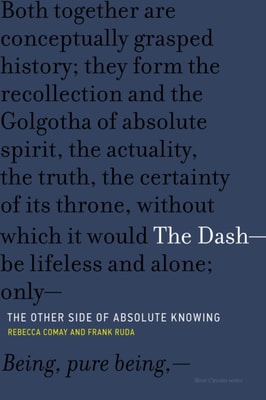
An argument that what is usually dismissed as the “mystical shell” of Hegel''s thought—the concept of absolute knowledge—is actually its most “rational kernel.
A phenomenological conception of language, drawing on Heidegger, Merleau-Ponty, and Wittgenstein, with implications for both the philosophy of language and current cognitive science.
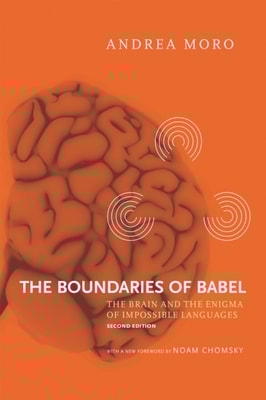
The new edition of a pioneering book that examines research at the intersection of contemporary theoretical linguistics and the cognitive neurosciences.
An introduction to philosophy of language through systematic and accessible explanations of ten classic texts by such thinkers as Frege, Kripke, Russell, and Putnam.
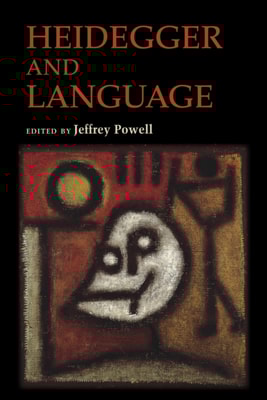
The essays collected in this volume take a new look at the role of language in the thought of Martin Heidegger to reassess its significance for contemporary philosophy.
Navigating a diversity of religious myths and worldviews in both conventional and nuanced secular ways, this edited volume explores transdisciplinary common knowledge and global citizenship ideology through the lens of spirituality, depth hermeneutics, and multimodality.
That knowledge about the world and self is imparted through narrative is widely accepted; the techniques used to construct this knowledge have received less attention.
Wittgenstein's Copernican Revolution is concerned with how one is to conceive of the relation between language and reality without embracing Linguistic Realism and without courting any form of Linguistic Idealism either.
The author offers a new assessment of the influence of the Vienna Circle on language study, and considers its relevance to the debate in present-day linguistics about the relative merits of 'intuitive' and 'real life' sources of data.
The articles in this collection focus attention on the concept of literature and on the relationship between this concept and the concepts of a literary work and a literary text.
Norris presents a series of closely linked chapters on recent developments in epistemology, philosophy of language, cognitive science, literary theory, musicology and other related fields.
The main argument of this book is that the notion of truth plays no role in speaker-hearers' interpretation of linguistic utterances and that it is not needed for theoretical accounts of linguistic meaning either.
Far from being rhetorical ornaments, metaphors play a central role in public discourse, as they shape the structure of political categorisation and argumentation.
This historically-informed critical assessment of Dummett's account of abstract objects, examines in detail some of the Fregean presuppositions of Dummett's account whilst also engaging with phenomenological approaches and recent work on the problem of abstract entities.
Language Use offers a philosophical examination of the basic conceptual framework of pragmatic theory, and contrasts this framework with detailed descriptions of our everyday practices of language use.
In a systematic presentation of Johnson's views on language, Johnson on Language: An Introduction addresses the problems inherent in the formation of style, as Johnson saw them, but also contains a detailed discussion of his opinions concerning the proper responsibilities of the lexicographer.
This book documents the changing representation of subjectivity in Medieval and Early Modern English drama by intertextually exploring discourses of 'self-speaking', including soliloquy.
This book explores implications of the modern view of central banks rising from the proposition that words have no meaning beyond their use in a particular context and setting.
This volume brings together twelve papers by linguists and philosophers contributing novel empirical and formal considerations to theorizing about vagueness.
In the last 15 years there has been a change in direction in our understanding of Wittgenstein; the 'resolute' reading of him places great emphasis on his therapeutic intent and argues that the aim of Wittgenstein's thought is to show how language functions.
Leading scholars in the field offer new ways of looking at Wittgenstein's papers as well as clear, comprehensive and original philosophical interpretations of them.
Innovative young philosophers present new research articles on a variety of contemporary issues including relation between language and thought, normativity of language, prospects for a naturalistic account of language, nature of linguistic understanding, semantics of proper names and expressive terms, a contemporary construal of analytic truth