Paul Grice (1913-1988) is best known for his psychological account of meaning, and for his theory of conversational implicature, although these form only part of a large and diverse body of work.
In this multi-disciplinary volume, comprising the work of several established scholars from different countries, central concepts associated with the work of the Bakhtin Circle are interrogated in relation to intellectual history, language theory and an understanding of new media.
Can language directly access what is true, or is the truth judgment affected by the subjective, perhaps even solipsistic, constructs of reality built by the speakers of that language?
From Plato's contempt for "e;the madness of the multitude"e; to Kant's lament for "e;the great unthinking mass,"e; the history of Western thought is riddled with disdain for ordinary collective life.
When social scientists and social theorists turn to the work of philosophers for intellectual and practical authority, they typically assume that truth, reality, and meaning are to be found outside rather than within our conventional discursive practices.
"e;We frequently see one idea appear in one discipline as if it were new, when it migrated from another discipline, like a mole that had dug under a fence and popped up on the other side.
Spanning the centuries, from the seventeenth to the twentieth, and ranging across cultures, from England to Mexico, this collection gathers together important statements on the function and feasibility of literary translation.
Sir Peter Strawson (1919-2006) was one of the leading British philosophers of his generation and an influential figure in a golden age for British philosophy between 1950 and 1970.
The relative merits and demerits of historically prominent views about truth, such as the correspondence theory, coherentism, pragmatism, verificationism, and instrumentalism have been subject to much attention, and have fueled the long-lived debate over which of these views is the most plausible.
The divide between liberal and postliberal theology is one of the most important and far-reaching methodological disputes in twentieth-century theology.
Jody Azzouni argues that we involuntarily experience certain physical items, certain products of human actions, and certain human actions themselves as having meaning-properties.
Winner of the Award for Excellence in the Study of Religion: Textual Studies from the American Academy of ReligionFakhr al-Din al-Razi (1148 - 1210) wrote prolifically in the disciplines of theology, Quranic exegesis, and philosophy.
Japanese philosophy is now a flourishing field with thriving societies, journals, and conferences dedicated to it around the world, made possible by an ever-increasing library of translations, books, and articles.
Simulation and Similarity is an account of modeling and idealization in modern scientific practice, focusing on concrete, mathematical, and computational models.
This important new book is the first of a series of volumes collecting the essential articles by the eminent and highly influential philosopher Saul A.
In popular and academic literature, jihad is predominantly assumed to refer exclusively to armed combat, and martyrdom in the Islamic context is understood to be invariably of the military kind.
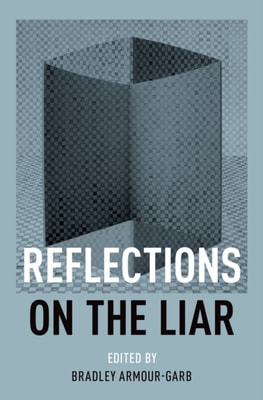
In recent years there have been a number of books-both anthologies and monographs-that have focused on the Liar Paradox and, more generally, on the semantic paradoxes, either offering proposed treatments to those paradoxes or critically evaluating ones that occupy logical space.
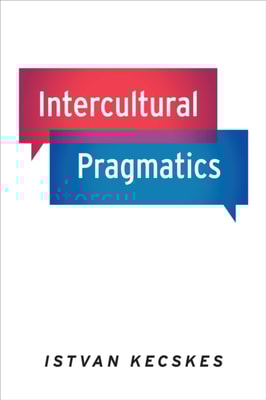
Intercultural Pragmatics studies how language systems are used in social encounters between speakers who have different first languages and cultures, yet communicate in a common language.
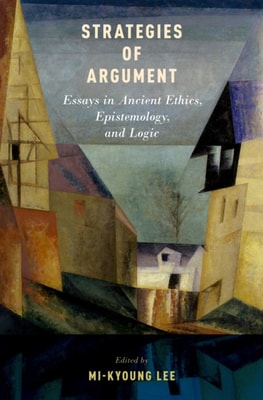
This volume features fifteen new papers by an international group of scholars in ancient philosophy, with a particular focus on new work in ancient Greek and Roman ethics, epistemology, logic, and science.
Ordinary language and scientific language enable us to speak about, in a singular way (using demonstratives and names), what we recognize not to exist: fictions, the contents of our hallucinations, abstract objects, and various idealized but nonexistent objects that our scientific theories are often couched in terms of.
Cognitive Systems and the Extended Mind surveys philosophical issues raised by the situated movement in cognitive science, that is, the treatment of cognitive phenomena as the joint products of brain, body, and environment.
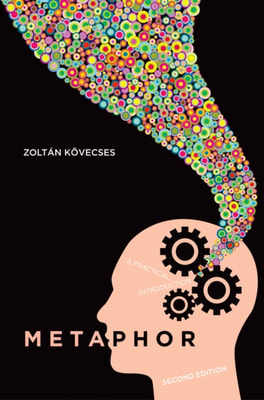
Combining up-to-date scholarship with clear and accessible language and helpful exercises, Metaphor: A Practical Introduction is an invaluable resource for all readers interested in metaphor.
For centuries, philosophers have been puzzled by the fact that people often respect moral obligations as a matter of principle, setting aside considerations of self-interest.
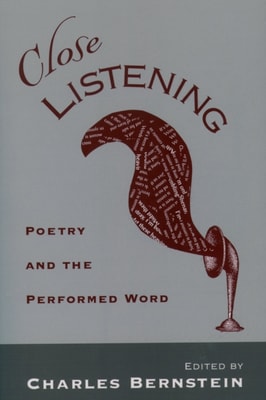
Close Listening brings together seventeen strikingly original essays, especially written for this volume, on the poetry reading, the sound of poetry, and the visual performance of poetry.
"e;Language ideologies"e; are cultural representations, whether explicit or implicit, of the intersection of language and human beings in a social world.
This important new book is the first of a series of volumes collecting the essential articles by the eminent and highly influential philosopher Saul A.
Keith Donnellan is one of the major figures in 20th century philosophy of language and mind, a key member of the highly influential group that altered the course of philosophy of language and mind around 1970.
Eli Hirsch has contributed steadily to metaphysics since his ground-breaking (and much cited) work on identity through time (culminating in the 1982 OUP book The Concept of Identity).
Ordinary language and scientific language enable us to speak about, in a singular way (using demonstratives and names), what we recognize not to exist: fictions, the contents of our hallucinations, abstract objects, and various idealized but nonexistent objects that our scientific theories are often couched in terms of.