The metalinguistic dimension refers to the way in which learners bring to bear knowledge about language into their learning of a second language, the "L2".
Within foreign language education contexts across the globe, inadequate attention has been paid to documenting the dynamics of identity development, negotiation and management.
With globalization and the ever-increasing migration of professionals, issues related to learning an additional language and culture in professional contexts are prominent in many contemporary societies.
Within foreign language education contexts across the globe, inadequate attention has been paid to documenting the dynamics of identity development, negotiation and management.
The metalinguistic dimension refers to the way in which learners bring to bear knowledge about language into their learning of a second language, the "L2".
Shunning polemicism and fashioning a new agenda for a critically informed yet practically orientated approach, this book explores aspects of multilingual education in the People's Republic of China (PRC).
Digitalised learning with its promise of autonomy, enhanced learner choice, independence and freedom, is an intuitive and appealing construct but closer examination reveals it to be a rather simplistic proposition, raising the following questions.
This edited volume is dedicated to the exploration of English language acquisition and development outside of the largely monolingual environments of North America, the United Kingdom and Australia.
Teachers in any subject area must have a basic understanding of how language is learned and used in educational contexts because language impacts teaching and learning across all subjects.
Processing Instruction is an approach to grammar instruction for second language learning, contrasting with traditional grammar instruction in its focus on structured input rather than learners' output.
Processing Instruction is an approach to grammar instruction for second language learning, contrasting with traditional grammar instruction in its focus on structured input rather than learners' output.
Contemporary Computer-Assisted Language Learning (CALL) is a comprehensive, one-volume work written by leading international figures in the field focusing on a wide range of theoretical and methodological issues.
The popular notion of how children come to speak their first language is that their parents teach them words, then phrases, then sentences, then longer utterances.
Writing development has been a key area of research in applied linguistics for some time but most work has focused on children's writing at particular ages, for example, at the early primary, late primary or secondary stage.
This book presents an analysis of the difficulties faced by native speakers of English in the learning of Romance languages and in so doing proposes a comprehensive model of the acquisition of tense-aspect marking.
This book serves as a comprehensive reference resource for current and prospective English language teachers, students of TESOL, academics, and other professionals working within the field of Teaching English as a Second or Other Language (TESOL).
This volume presents a comprehensive look at the phenomenon of formulaic language (multi-word units believed to be mentally stored and retrieved as single units) and its role in fluent speech production.
This edited volume is dedicated to the exploration of English language acquisition and development outside of the largely monolingual environments of North America, the United Kingdom and Australia.
The zero article is a staple element of any description of English article usage from advanced research publications down to student grammars, but there has been very little inquiry into its meaning and its other properties.
Key Terms in Second Language Acquisition includes definitions of key terms within second language acquisition, and also provides accessible summaries of the key issues within this complex area of study.
Contemporary Computer-Assisted Language Learning (CALL) is a comprehensive, one-volume work written by leading international figures in the field focusing on a wide range of theoretical and methodological issues.
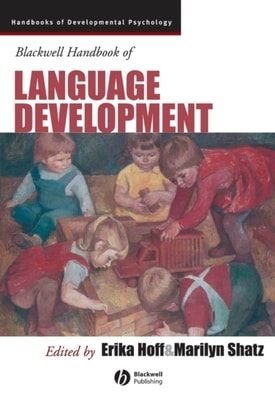
The Blackwell Handbook of Language Development provides a comprehensive treatment of the major topics and current concerns in the field; exploring the progress of 21st century research, its precursors, and promising research topics for the future.
This skills-oriented handbook for English Medium Instruction (EMI) learners provides students with a toolbox of strategies and approaches to maximise their performance in their courses.