Theatrical Speech Acts: Performing Language explores the significance and impact of words in performance, probing how language functions in theatrical scenarios, what it can achieve under particular conditions, and what kinds of problems may arise as a result.
This interdisciplinary collection brings together leading and emerging scholars of discourse, conceptualizing how discursive practices shape social, political, and even material realities today.
This interdisciplinary collection brings together leading and emerging scholars of discourse, conceptualizing how discursive practices shape social, political, and even material realities today.
Geordie Stylizations is a short-focused research work which builds on the renovated interest on the nexus between accent-identity-prestige-prejudice, offering an analysis of celebrities' use of the Geordie variety in a series of public performances as a reflection instrument for scholars, but also for neophyte readers with an interest in Sociolinguistics, Pragmatics, Celebrity Studies, Cultural Studies, Anthropology, Sociology and Gender Studies.
Geordie Stylizations is a short-focused research work which builds on the renovated interest on the nexus between accent-identity-prestige-prejudice, offering an analysis of celebrities' use of the Geordie variety in a series of public performances as a reflection instrument for scholars, but also for neophyte readers with an interest in Sociolinguistics, Pragmatics, Celebrity Studies, Cultural Studies, Anthropology, Sociology and Gender Studies.
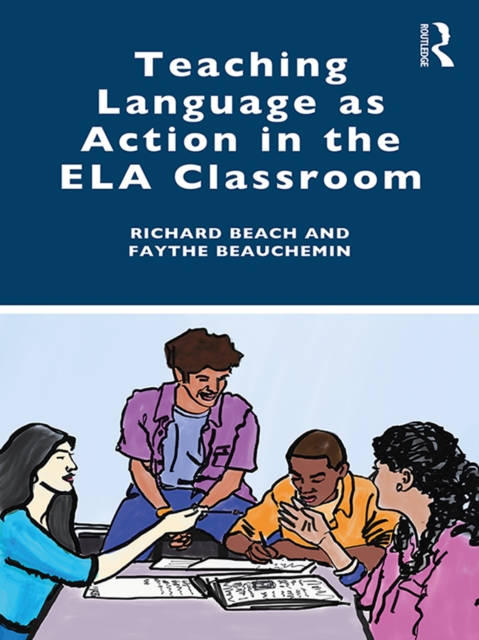
This book explores English language arts instruction from the perspective of language as "e;social actions"e; that students and teachers enact with and toward one another to create supportive, trusting relations between students and teachers, and among students as peers.
This book explores English language arts instruction from the perspective of language as "e;social actions"e; that students and teachers enact with and toward one another to create supportive, trusting relations between students and teachers, and among students as peers.
This book reports on an empirical study of oral feedback practices in doctoral supervision meetings, observing supervisors' and students' conduct to enable a new understanding of the social organisation of doctoral research supervision.
While the literature on either contrastive linguistics or discourse analysis has grown immensely in the last twenty years, very little of it has ventured into fusing the two perspectives.
How to Do Discourse Analysis provides a comprehensive toolkit for conducting discourse analysis, offering 26 practical tools to examine how language is used to construct meaning, enact identities, and shape social realities.
Anyone who has heard of chiasmus is likely to think of it as no more than a piece of rhetorical playfulness, at times challenging, though useful for supplying a memorable sententious note or for performing a pirouette of syntax and thought.
The main focus of this book is the investigation of linguistic variation in Spanish, considering spoken and written, specialised and non-specialised registers from a corpus linguistics approach and employing computational updated tools.
The topic of communication in elderly care is becoming ever more pressing, with an aging world population and burgeoning numbers of people needing care.
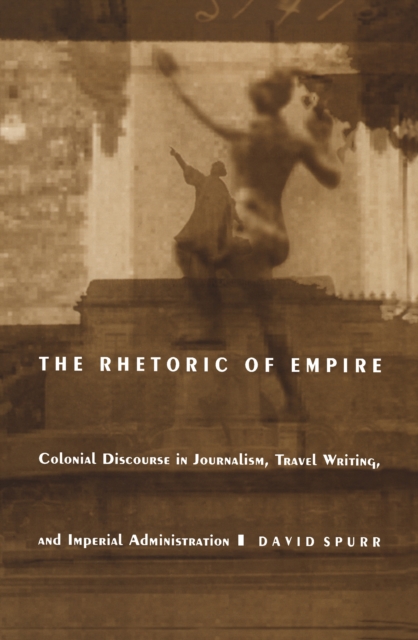
The white man's burden, darkest Africa, the seduction of the primitive: such phrases were widespread in the language Western empires used to talk about their colonial enterprises.
Edna Andrews clarifies and extends the work of Roman Jakobson to develop a theory of invariants in language by distinguishing between general and contextual meaning in morphology and semantics.
Essays that show what a broad conception of rhetoric means and does in relation to practice Rhetoric is the art of emphasis, in the ancient sense of bringing to light or obscuring in shadow, and it is both a practice and a theory about that practice.
WINNER OF THE NATIONAL COMMUNICATION ASSOCIATION'S 2023 HOCHMUTH-NICHOLS AWARD A definitive rhetorical history of conservative populism, exposing how identity, victimhood, and populist appeals have shaped-and constrained-modern American conservatism.
A study that challenges our notions about citizenship and judgment by considering the place of children in historical and contemporary legal discourse.
Investigates the rhetorical practices used by contemporary evangelical Christian women to confront theological and cultural issues that stymie deliberation within their communities While often perceived as an insular enclave with a high level of in-group agreement about political and social issues, predominantly white evangelicalism includes prominent voices urging deliberation about appropriate responses to sexual abuse, domestic violence, and the discourses surrounding these traumas.
Examines public discourse from the Progressive Era over the state's right to regulate women's bodies and their reproduction When Justice Oliver Wendell Holmes determined in 1927 that sterilization was a legitimate means of safeguarding the nation's health, he was asserting the state's right to regulate the production of the national body.
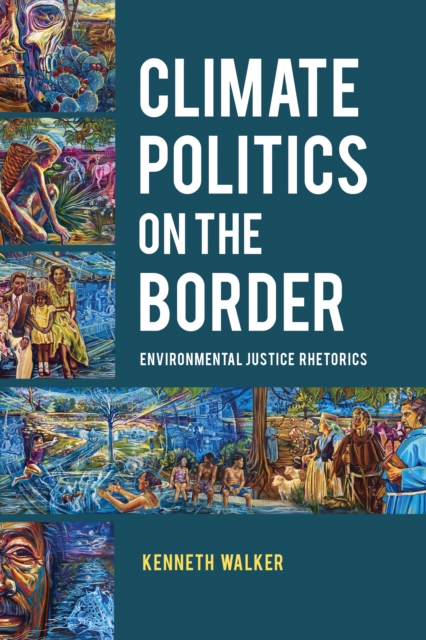
Explores the ways climate change and extreme weather are negotiated politically in a border community As a borderland city with generations of slow violence and extreme weather events like flash flooding and intense heat waves, San Antonio, Texas, speaks directly to global issues in climate politics.
How southern universities continue to wrestle with the words and symbols that embody and perpetuate Old South traditions The US South is a rhetorical landscape that pulsates with division, a place where words and symbols rooted in a deeply problematic past litter the ground and contaminate the soil.
Probes the development of information management after World War II and its consequences for public memory and human agency We are now living in the richest age of public memory.
Winner of the 2021 Conference on College Composition and Communication Lavender Rhetorics Award for Excellence in Queer Scholarship Analyzes the rhetoric of contemporary sex panics to expose how homophobia, heterosexism, and transphobia define public, political, and scholarly preoccupations with sexuality and gender In Sex Panic Rhetorics, Queer Interventions, Ian Barnard makes the counter-intuitive argument that contemporary "e;sex panics"e; are undergirded by queerphobia, even when the panics in question don't appear to have much to do with queerness.
The rhetoric of contemporary food production and consumption with a focus on social boundaries The rhetoric of food is more than just words about food, and food is more than just edible matter.
How writers, activists, and artists without power resist dominant social, cultural, and political structures through the deployment of unconventional means and materials In Lives, Letters, and Quilts: Women and Everyday Rhetorics of Resistance, Vanessa Kraemer Sohan applies a translingual and transmodal framework informed by feminist rhetorical practice to three distinct case studies that demonstrate women using unique and effective rhetorical strategies in political, religious, and artistic contexts.
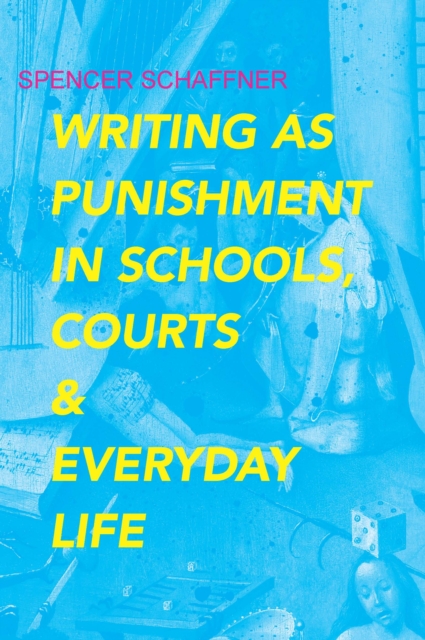
A probing and prescient consideration of writing as an instrument of punishment Writing tends to be characterized as a positive aspect of literacy that helps us to express our thoughts, to foster interpersonal communication, and to archive ideas.
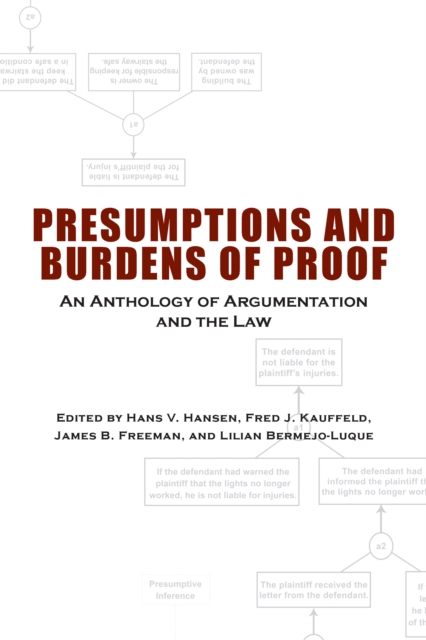
An anthology of the most important historical sources, classical and modern, on the subjects of presumptions and burdens of proof In the last fifty years, the study of argumentation has become one of the most exciting intellectual crossroads in the modern academy.
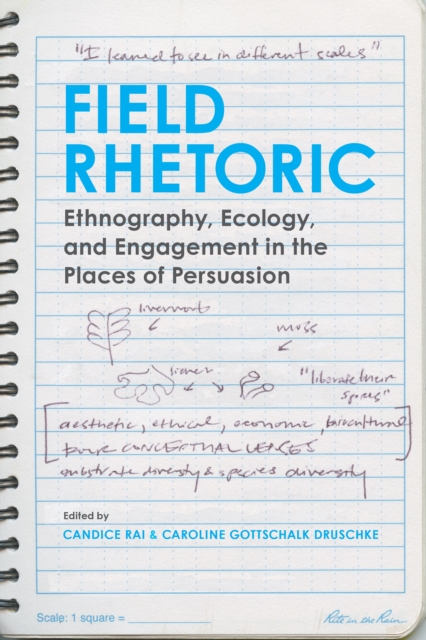
A survey of the innovative scholarship emerging at the intersections of rhetoric, and fieldwork A variety of research areas within rhetorical studies-including everyday and public rhetorics, space and place-based work, material and ecological approaches, environmental communication, technical communication, and critical and participatory action research, among others-have increasingly called for ethnographic fieldwork that grounds the study of rhetoric within the contexts of its use and circulation.
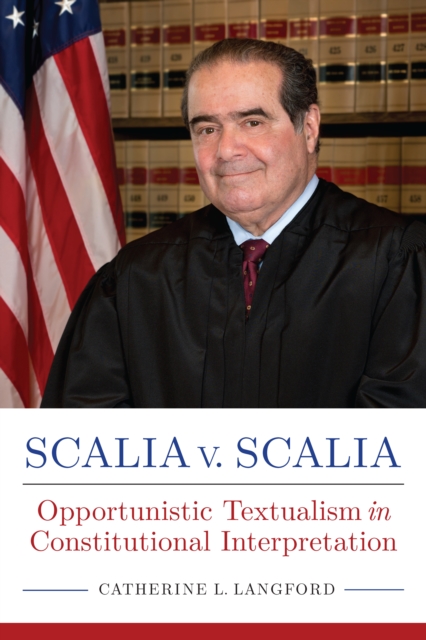
An analysis of the discrepancy between the ways Supreme Court Justice Antonin Scalia argued the Constitution should be interpreted versus how he actually interpreted the law Antonin Scalia is considered one of the most controversial justices to have been on the United States Supreme Court.
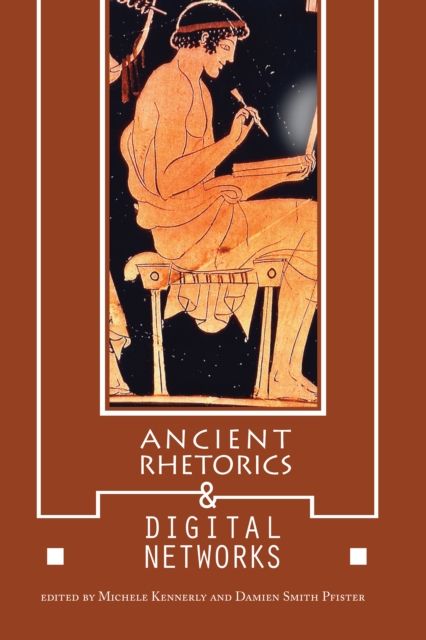
An examination of two seemingly incongruous areas of study: classical models of argumentation and modern modes of digital communication What can ancient rhetorical theory possibly tell us about the role of new digital media technologies in contemporary public culture?