"e;Language ideologies"e; are cultural representations, whether explicit or implicit, of the intersection of language and human beings in a social world.
Eloquence in Trouble captures the articulation of several troubled lives in Bangladesh as well as the threats to the very genres of their expression, lament in particular.
Uncovering the structures and functions of conversational narratives uttered within natural social networks, Laine Berman shows how working-class Javanese women discursively construct identity and meaning within the rigid constraints of an hierarchical social order.
A major concern in current anthropological thinking is that the method of recording or translating into writing a society's cultural expressions--dance, rituals, pottery, the social use of space, et al--cannot help but fundamentally alter the meaning of the living words and deeds of the culture in question.
The media frenzy surrounding the 1996 resolution by the Oakland School Board brought public attention to the term "e;Ebonics"e;, however the idea remains a mystery to most.
Clear and accessible, this book is the first qualitative analysis of the complex conversations that occur between breast cancer patients and their oncologists.
Carol Myers-Scotton has edited a collection of essays that covers the choice of one style of English over another in everything from Bible translations to "e;surprise in poetry"e; to supervisor-worker interactions on the automobile assembly line.
A text that will appeal to any reader interested in the relation of language to the law, or vice versa, Ideological Diversity in Courtroom Discourse focuses on the guilty plea as both a distinct procedure and a dialogue constrained by boundaries.
In this linguistic study of law school education, Mertz shows how law professors employ the Socratic method between teacher and student, forcing the student to shift away from moral and emotional terms in thinking about conflict, toward frameworks of legal authority instead.
The 1975 publication of Robin Tolmach Lakoff's Language and Woman's Place, is widely recognized as having inaugurated feminist research on the relationship between language and gender, touching off a remarkable response among language scholars, feminists, and general readers.
Japanese Language, Gender and Ideology is a collection of previously unpublished articles by established as well as promising young scholars in Japanese language and gender studies.
Antibiotics will soon no longer be able to cure common illnesses such as strep throat, sinusitis and middle ear infections as they have done for the last 60 years.
In this book, Chase Hensel examines how Yup'ik Eskimos and non-natives construct and maintain gender and ethnic identities through strategic talk about hunting, fishing, and processing.
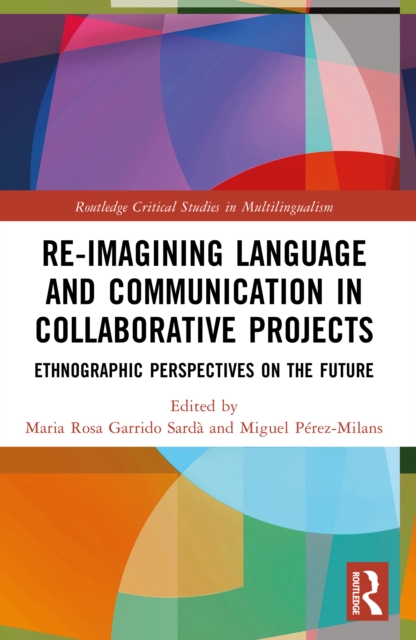
This collection re-imagines language and communication through an ethnographic sociolinguistic lens, foregrounding perspectives on collective projects that grapple with the relationship between past, present, and future towards confronting structural inequalities.
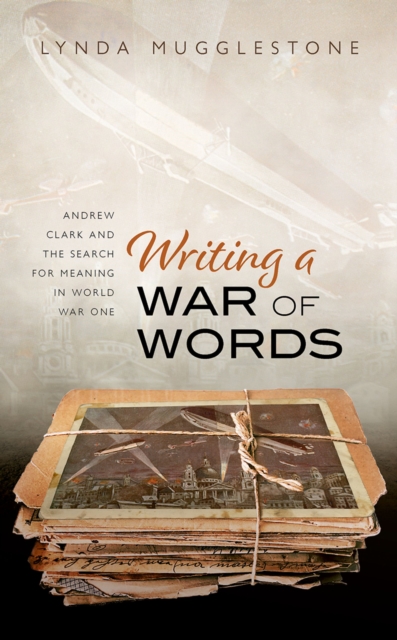
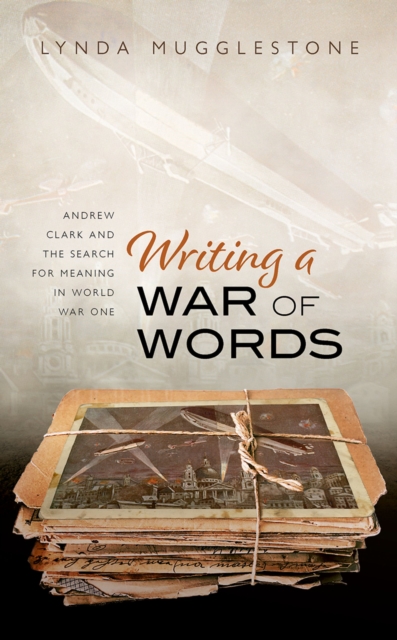
Writing a War of Words is the first exploration of the war-time quest by Andrew Clark - a writer, historian, and volunteer on the first edition of the Oxford English Dictionary - to document changes in the English language from the start of the First World War up to 1919.
Writing a War of Words is the first exploration of the war-time quest by Andrew Clark - a writer, historian, and volunteer on the first edition of the Oxford English Dictionary - to document changes in the English language from the start of the First World War up to 1919.
This volume explores the multiple aspects of morphological complexity, investigating primarily whether certain aspects of morphology can be considered more complex than others, and how that complexity can be measured.
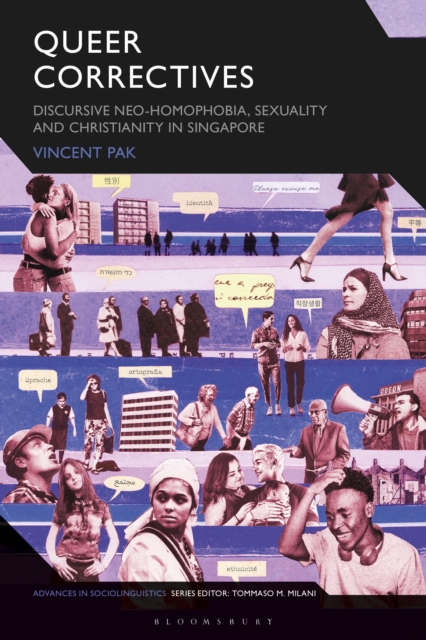
Queer Correctives explores Christian discourses of sex and sexuality in Singapore to argue that metanoia, the theological concept of spiritual transformation, can be read as a form of neo-homophobia that coaxes change in the queer individual.
This volume offers a wide-range of case studies on variation and change in the sub-family of the Romance languages that includes French and Occitan: Gallo-Romance.
In 1578, the Anglo-Italian author, translator, and teacher John Florio wrote that English was 'a language that wyl do you good in England, but passe Dover, it is woorth nothing'.
In 1578, the Anglo-Italian author, translator, and teacher John Florio wrote that English was 'a language that wyl do you good in England, but passe Dover, it is woorth nothing'.
This book explores the semantics and pragmatics of honorifics, expressions that indicate the degree of formality that a speaker feels is required in interacting with another person.
This volume provides the most comprehensive treatment of phonological weight to date, bringing together traditional notions of categorical, rime-based weight and new developments in statistical prosodic phonology.
This volume brings together experts from a wide range of disciplines to define and describe tabooed words and language and to investigate the reasons and beliefs behind them.