This volume responds to a growing interest in the language of legal settings by situating the study of language and law within contemporary theoretical debates in discourse studies, linguistic anthropology, and sociolinguistics.
In response to increased focus on the protection of intangible cultural heritage across the world, Music Endangerment offers a new practical approach to assessing, advocating, and assisting the sustainability of musical genres.
Dueling Discourses offers qualitative and quantitative analyses of the linguistic and discursive forms utilized by opposing lawyers in their closing arguments during criminal trials.
This book presents a study of interpreter-mediated interaction in New York City small claims courts, drawing on audio-recorded arbitration hearings and ethnographic fieldwork.
Confronting the Death Penalty: How Language Influences Jurors in Capital Cases probes how jurors make the ultimate decision about whether another human being should live or die.
Adding a new introduction and two previously unpublished papers, Discourse and Practice: New Tools for Critical Discourse Analysis brings together van Leeuwen's methodological work on discourse analysis of the last 15 years.
The vocabulary of wine is large and exceptionally vibrant -- from straight-forward descriptive words like "e;sweet"e; and "e;fragrant"e;, colorful metaphors like "e;ostentatious"e; and "e;brash"e;, to the more technical lexicon of biochemistry.
This is a practical guide for both beginning and established linguists who have been asked by lawyers to address the language issues in their civil and criminal cases.
Recent advances in our understanding of the human brain suggest that adolescence is a unique period of development during which both environmental and genetic influences can leave a lasting impression.
Talk That Counts is a sociolinguistic study of variation in discourse employing quantitative methods to explore age, gender, and social class differences in the use of features such as you know, I mean, adverbs, and pronouns.
Controversy over gendered pronouns, for example using the generic "e;he,"e; has been a staple of feminist arguments about patriarchal language over the last 30 years, and is certainly the most contested political issue in Western feminist linguistics.
Our understanding of the nature and processing of figurative language is central to several important issues in cognitive science, including the relationship of language and thought, how we process language, and how we comprehend abstract meaning.
Japan and the United States are in closer contact politically and economically than ever before, yet in many ways our nations are as far from mutual understanding as ever.
This provocative new work on children's development in context presents recent theoretical developments and research findings that have been generated by sociocultural theory.
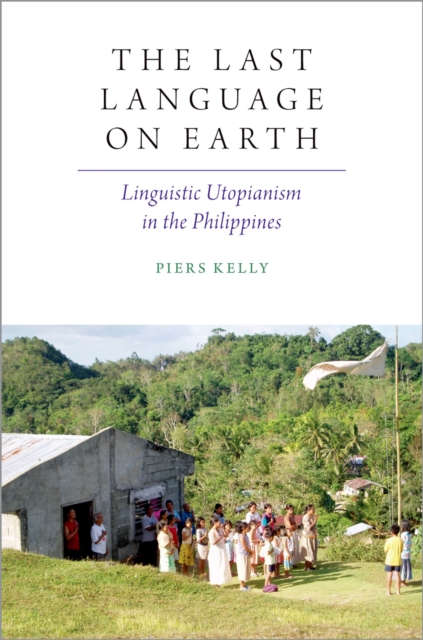
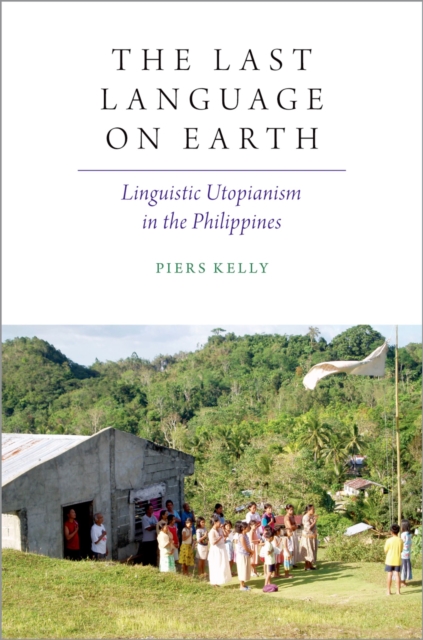
The Last Language on Earth is an ethnographic history of the disputed Eskayan language, spoken today by an isolated upland community living on the island of Bohol in the southern Philippines.
The Last Language on Earth is an ethnographic history of the disputed Eskayan language, spoken today by an isolated upland community living on the island of Bohol in the southern Philippines.
South Asia presents the linguist with a bewildering variety of regional dialects, social dialects, formal and informal registers, literary standards, languages, writing systems, and language families.
Seven million youngsters--one in four adolescents--have only limited potential for becoming productive adults because they are at high risk for encountering serious problems at home, in school, or in their communities.
All adult speakers in Western cultures have life stories argues Charlotte Linde, and the ways in which these life stories are formed and exchanged with others have a powerful effect on all of us.
The author of the best-selling You Just Don't Understand, Deborah Tannen, has collected twelve papers about gender-related patterns in conversational interaction.
Therapeutic Ways with Words provides a unique glimpse into language use in psychotherapy, an important speech event which has previously been shrouded in mystery.
This collection brings together several perspectives on language varieties defined according to their contexts of use--what are variously called registers, sublanguages, or genres.
This book develops the dual themes that languages can differ widely in their vocabularies, and are also sensitive indices to the cultures to which they belong.
Nancy Ainsworth-Vaughn studied stories, topic control, "e;true"e; questions, and rhetorical questions in 101 medical encounters in US private-practice settings.
Between early childhood and adulthood, language acquisition is succeeded by a bloom of repertoire for managing interaction, a growing sensitivity to the relation of language and society, an expanding ability to wield power through the strategic use of language, and an increasing sophistication in framing speech activities.
Based upon 14 months of ethnographic fieldwork among the Mopan Maya in Belize, Eve Danziger examines the semantic complexity of particular kinship terms used among Mopan women and children and shows that a culture-specific analysis of their terms is superior to other non-ethnographically-based methods.
Linguists who have studied simplified varieties of a given language, such as pidgins or the language of care-givers, have tended to explain similarities in their structure by the fact that they use the same mechanisms of simplification.
Puckett takes a new look at the relationship between language, society, and economics by examining how people talk about work in a rural Appalachian community.
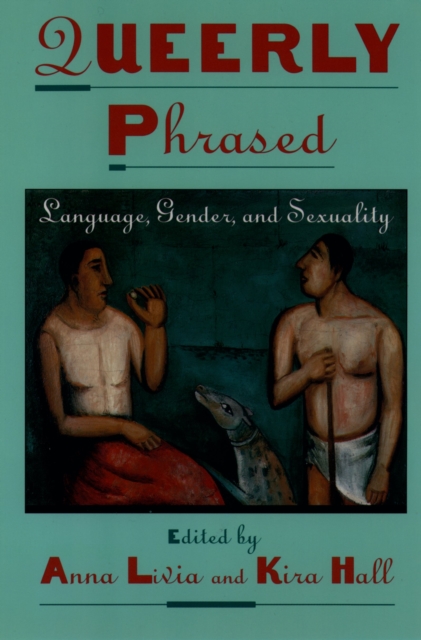
This pioneering collection of previously unpublished articles on lesbian, gay, bisexual, and transgender language combines queer theory and feminist theory with the latest thinking on language and gender.