The purpose of this book is to contribute to our understanding of genre and genre variation in the Japanese language in order to bring to consciousness the nature of Japanese culture and the presuppositions, norms and values found within Japanese society.
This unique volume brings together various academic voices and critical reflections on discursive manifestations of hate and radicalism in contemporary public discourses.
This volume explores potential paths in historical sociolinguistics, with a particular focus on the inter-related areas of methodological innovations, hitherto un- or under-explored textual resources, and theoretical advancements and challenges.
At a time when globalization and the advent of the internet have accelerated the spread and diversification of English varieties worldwide, this book provides a constructive assessment of the theoretical models that best account for the development and use of Englishes in the early 21st century.
With most studies on grammatical variation concentrating on the synchronic level, a systematic investigation of long-term grammatical variation within the context of language change, i.
Focusing on the multi-faceted topic of Eurolects, this volume brings together knowledge and methodologies from various disciplines, including sociolinguistics, legal linguistics, corpus linguistics, and translation studies.
Conversational Humour and (Im)politeness is the first systematic study that offers a socio-pragmatic perspective on humorous practices such as teasing, mockery and taking the piss and their relation to (im)politeness.
The present volume brings together leading scholars studying language change from a variety of sociolinguistic perspectives, complementing and enriching the existing literature by providing readers with a kaleidoscopic perspective of aspects of change in English from around 1700 until the present day.
This volume contains a selection from papers presented at the 9th International Conference on Language Variation in Europe (ICLaVE 9), which was held at the University of Malaga (Spain), from June 6 to 9, 2017.
This interdisciplinary volume explores the unique role of the sociohistorical factors of isolation and contact in motivating change in the varieties of Spanish worldwide.
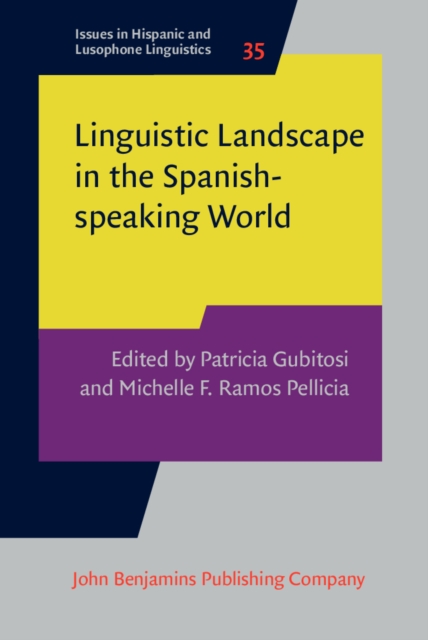
Linguistic Landscape in the Spanish-speaking World is the first book dedicated to languages in the urban space of the Spanish-speaking world filling a gap in the extensive research that highlights the richness and complexity of Spanish Linguistic Landscapes.
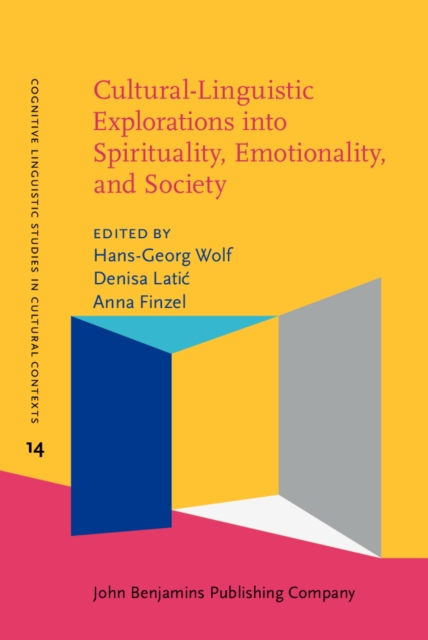
This book offers Cultural-Linguistic explorations into the diverse Lebenswelten of a wide range of cultural contexts, such as South Africa, Hungary, India, Nigeria, China, Romania, Iran, and Poland.
This book examines the various patterns of nominal and pronominal address used in Jamaica and Trinidad, the two most populous islands of the English-speaking Caribbean.
As the first collective volume to focus exclusively on corpus-based approaches to register variation, this book provides an exhaustive account of the range and depth of possibilities that the domain of register variation in English has to offer.
This book stems from the joint effort of 25 research teams across Europe, representing a dozen disciplines from the social sciences and humanities, resulting in a radically novel perspective to the challenges of multilingualism in Europe.
Due to the Treaty of Trianon - which was signed at the end of World War 1 in 1920 - Hungary lost two thirds of its former territory, as well as the inhabitants of these areas.
The analysis of language attitudes is important not only because attitudes can affect language maintenance and language change but also because such reflections and discussions can bring light to social, cultural, political and educational matters that require an interdisciplinary approach.
The multiplicity of parallel identities that make up our personalities is a phenomenon in which our individual identitary choices merge with diverse collective identities.
The papers in this volume address the interplay of factors underlying the formation of intermediate varieties in the 'dialect-standard' landscape of present-day Europe.
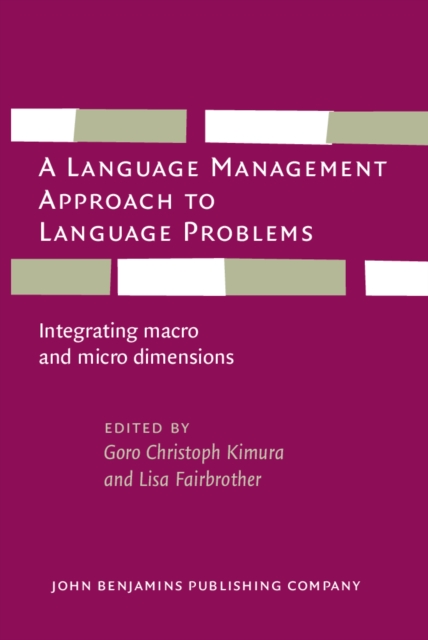
In recent years there has been increased interest in examining the treatment of language problems across different levels of society, ranging from individual interactional issues to language policy and planning at the national or supra-national level.
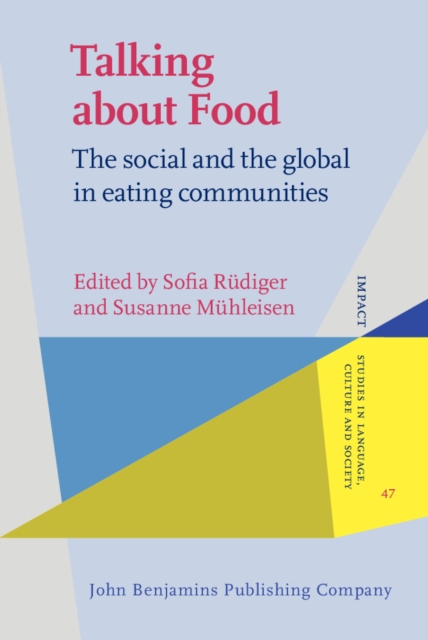
All humans eat and all humans speak - activities which in social life often, but not always, co-occur: We talk while eating and drinking with others, but food is also a prominent literal and metaphorical discursive topic which contributes to establishing communities and identities.
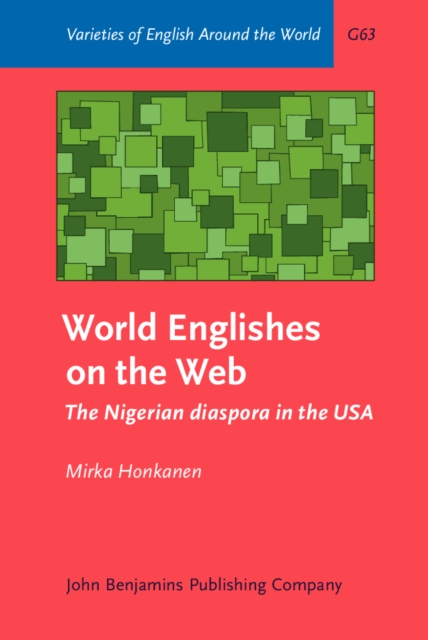
World Englishes on the Web focuses on linguistic practices at the intersection of international migration and social media, examining the language repertoires of Nigerians living in the United States, and their negotiations of identity and authenticity on a Nigerian web forum.
Language is a social space, an aesthetic, a form of play and communication, a geographical reference, a jouissance, a producer of numerous social and personal identities.
The chapters in this collection, authored by renowned scholars, address a gap in the literature by focusing on the consequences that outsourcing, among other globalized economic practices, and remediation by new technologies have had on the service encounters genre (SE).
This book explores socio-cultural meanings of 'self' in the Chinese language through analysing a range of conversations among Chinese immigrants to Australia qualitatively on the topics of individuality, social relationships and collective identity.
If, as we believe, the history of languages is the history of the construction of an ideal artefact that permits a specific interpretation of the linguistic reality and helps to approve and assimilate a certain zone of diversity, enabling the accumulation of collective historical knowledge and making us identify it with a social community and a territory, then it must be agreed that languages are extremely complex entities.
Focusing on language contact involving Russian, and the linguistic varieties that emerged from that contact in different social settings, this book analyzes issues and methodologies in reconstructing both the linguistic effects of language contact and the social contexts of usage.
Chen proposes a disciplinary literacy (DL) approach to Content and Language Integrated Learning (CLIL) planning and teaching in her book, in answer to concerns expressed by some about the growth of CLIL internationally in recent decades.