This volume contributes to a better understanding of both psycho- and sociolinguistic levels of multilingualism and their interplay in development and use.
This book offers an in-depth analysis of the case of Corbett v Corbett, a landmark in terms of law's engagement with sexual identity, marriage, and transgender rights.
This book presents a case study of the proliferation of at risk-language in The Times news coverage from 1785 to 2009, illuminating the changing social experience of risk.
This book takes an innovative view of language and politics, charting the terrain of political identities and discourses in New Zealand through detailed linguistic analysis of interactions with its voters.
This book brings together a collection of critical essays that challenge the existing dogma of leisure as an unmitigated social good, in order to examine the commodification and marketisation of leisure across a number of key sites.
This book presents the original concept of the 'dispositif of age', combining post-Foucauldian analytics of the dispositif, discourse and governmentality with the historical semantics of Reinhart Koselleck to explore the functions of the notion of youth in the regulation of social life.
This book investigates the sociolinguistic dimension of the internationalisation of higher education, examining the linguistic tensions and ambiguities experienced by universities around the world, particularly in non-anglophone contexts.
This book draws on visual data, ranging from advertisements to postage stamps to digital personal photography, to offer a complex interpretation of the different social functions realised by these texts as semiotic artefacts.
This edited collection presents a study of innovation in teaching, learning, assessment and teacher development practices in the Middle East and North Africa (MENA).
This book investigates the ways in which context shapes how cognitive challenges and strengths are navigated and how these actions impact the self-esteem of individuals with dementia and their conversational partners.
This book presents a collection of academic essays that take a fresh look at content and body transformation in the new media, highlighting how old hierarchies and canons of analysis must be revised.
This book examines the nature of human language and the ideology of linguistic legitimacy - the common set of beliefs about language differences that leads to the rejection of some language varieties and the valorization of others.
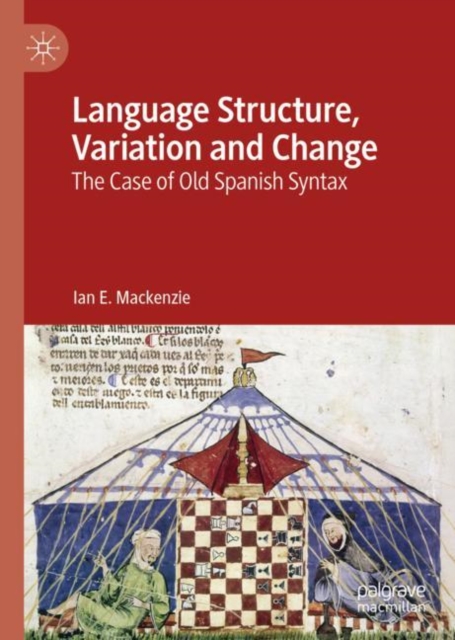
This book offers an original account of the dynamics of syntactic change and the evolving structure of Old Spanish that combines rigorous manuscript-based investigation, quantitative analysis and a syntactic approach grounded in Minimalist thinking.
This Handbook maps the contours of an exciting and burgeoning interdisciplinary field concerned with the role of language and languages in situations of conflict.
This book concisely describes ways in which today's standard British English speech differs from the upper-class accent of the last century, Received Pronunciation, which many now find old-fashioned or even comic.
Using a phenomenological and multi-sited ethnographic approach, this book focuses on children's uses of digital media in three sites-London, Casablanca and Beirut-and situates the study of Arab children and screen media within a wider frame, making connections between local, regional and global media content.
This book looks closely at Yi bilingual education practice in the southwest of China from an educationalist's perspective and, in doing so, provides an insight toward our understanding of minority language maintenance and bilingual education implementation in China.
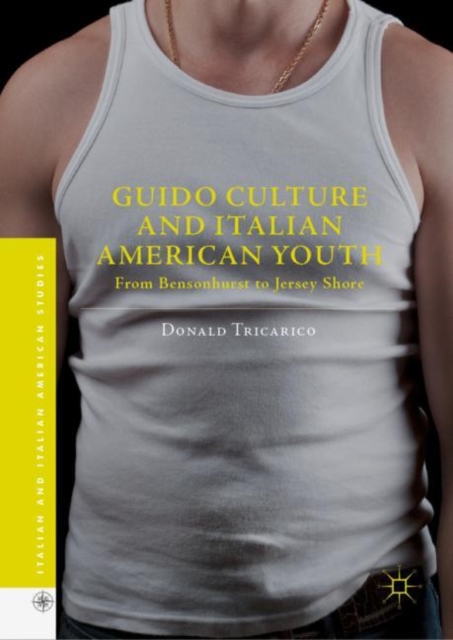
From Saturday Night Fever to Jersey Shore, Italian American youth in New York City have appropriated-and been appropriated by-popular American culture.
In this book David Block draws on analytical techniques from Critical Discourse Studies to critically investigate truth, truths, the propagation of ignorance and post-truth.
The five research reports that constitute this monograph are a fruit of the collaboration between the Council for the Development of Social Science Research in African (CODESRIA) and the Social Science Research Council (SSRC), two institutions with a longstanding interest in the study of youth and social transformations in Africa.