Since the Second World War, the international community has sought to prevent the repetition of destructive far-right forces by establishing institutions such as the United Nations and by adopting documents such as the Universal Declaration of Human Rights.
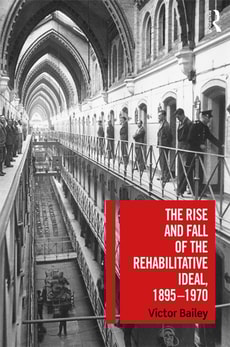
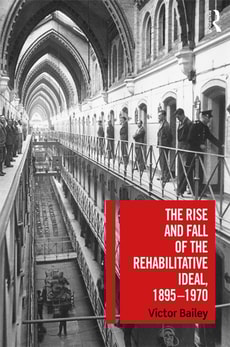
Spanning almost a century of penal policy and practice in England and Wales, this book is a study of the long arc of the rehabilitative ideal, beginning in 1895, the year of the Gladstone Committee on Prisons, and ending in 1970, when the policy of treating and training criminals was very much on the defensive.
This book interrogates the sharp contrast that emerged between demands of the norms of international rule of law and the interests of conflict resolution at a local level in northern Uganda.
Since the Second World War, the international community has sought to prevent the repetition of destructive far-right forces by establishing institutions such as the United Nations and by adopting documents such as the Universal Declaration of Human Rights.
Spanning almost a century of penal policy and practice in England and Wales, this book is a study of the long arc of the rehabilitative ideal, beginning in 1895, the year of the Gladstone Committee on Prisons, and ending in 1970, when the policy of treating and training criminals was very much on the defensive.
This book interrogates the sharp contrast that emerged between demands of the norms of international rule of law and the interests of conflict resolution at a local level in northern Uganda.
Sentencing Policies and Practices in the 21st Century focuses on the evolution and consequences of sentencing policies and practices, with sentencing broadly defined to include plea bargaining, judicial and juror decision making, and alternatives to incarceration, including participation in problem-solving courts.
Sentencing Policies and Practices in the 21st Century focuses on the evolution and consequences of sentencing policies and practices, with sentencing broadly defined to include plea bargaining, judicial and juror decision making, and alternatives to incarceration, including participation in problem-solving courts.
This book explores the relationship between the Responsibility to Protect (R2P) and the International Criminal Court (ICC), challenging the assumption that they are always mutually reinforcing or complementary, and examining instead the many tensions which arise between the immediate imperative of saving lives, and the more long-term prospect of punishing perpetrators and preventing future conflicts through deterrence.
This fully revised and expanded edition considers the meaning of 'vulnerability' - a key concept in early intervention - and the relationship between vulnerability and the individual, communities and society.
This book explores the concept of punishment: its meaning and significance, not least to those subject to it; its social, political and emotional contexts; its role in the criminal justice system; and the difficulties of bringing punishment to an end.
This fully revised and expanded edition considers the meaning of 'vulnerability' - a key concept in early intervention - and the relationship between vulnerability and the individual, communities and society.
This book explores the concept of punishment: its meaning and significance, not least to those subject to it; its social, political and emotional contexts; its role in the criminal justice system; and the difficulties of bringing punishment to an end.
This book explores the relationship between the Responsibility to Protect (R2P) and the International Criminal Court (ICC), challenging the assumption that they are always mutually reinforcing or complementary, and examining instead the many tensions which arise between the immediate imperative of saving lives, and the more long-term prospect of punishing perpetrators and preventing future conflicts through deterrence.
This book explores the nature and scope of the provision requiring States to 'ensure respect' for international humanitarian law (IHL) contained within Common Article 1 of the 1949 Geneva Conventions.
This book explores the nature and scope of the provision requiring States to 'ensure respect' for international humanitarian law (IHL) contained within Common Article 1 of the 1949 Geneva Conventions.
This book traces the position of the United States of America on aggression, beginning with the Declaration of Independence up to 2020, covering the four years of the Trump Administration.
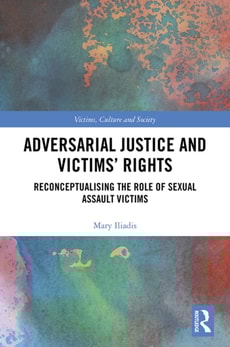
Adversarial Justice and Victims' Rights explores the extent to which reforms that offer victims enhanced rights to information and participation across England and Wales, Ireland and South Australia can address sexual assault victims' procedural and substantive justice concerns.
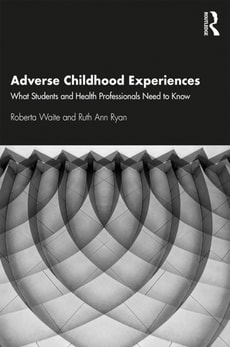
This guide provides healthcare students and professionals with a foundational background on adverse childhood experiences (ACEs) - traumatic early life experiences, which can have a profound impact on health in later life.
This book traces the position of the United States of America on aggression, beginning with the Declaration of Independence up to 2020, covering the four years of the Trump Administration.
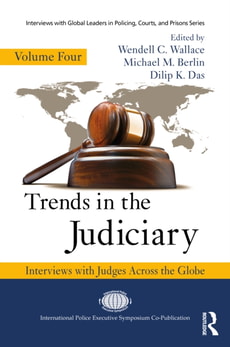
Trends in the Judiciary: Interviews with Judges from Across the Globe, Volume Four, provides insights into the lives, working environments, and social milieus of a select group of judges.
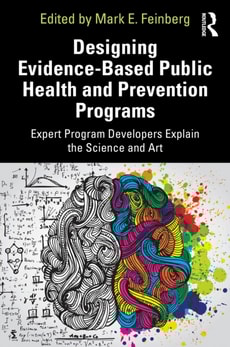
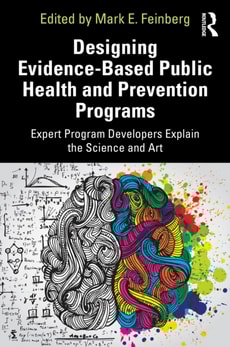
Demonstrating that public health and prevention program development is as much art as science, this book brings together expert program developers to offer practical guidance and principles in developing effective behavior-change curricula.
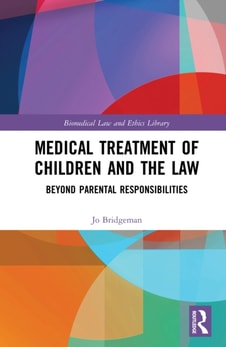
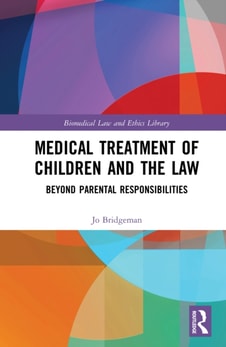
The high profile cases of Charlie Gard, Alfie Evans, and Tafida Raqeeb raised the questions as to why the state intrudes into the exercise of parental responsibility concerning the medical treatment of children and why parents may not be permitted to decide what is in the best interests of their child.
Adversarial Justice and Victims' Rights explores the extent to which reforms that offer victims enhanced rights to information and participation across England and Wales, Ireland and South Australia can address sexual assault victims' procedural and substantive justice concerns.
This guide provides healthcare students and professionals with a foundational background on adverse childhood experiences (ACEs) - traumatic early life experiences, which can have a profound impact on health in later life.
The high profile cases of Charlie Gard, Alfie Evans, and Tafida Raqeeb raised the questions as to why the state intrudes into the exercise of parental responsibility concerning the medical treatment of children and why parents may not be permitted to decide what is in the best interests of their child.
Demonstrating that public health and prevention program development is as much art as science, this book brings together expert program developers to offer practical guidance and principles in developing effective behavior-change curricula.
Trends in the Judiciary: Interviews with Judges from Across the Globe, Volume Four, provides insights into the lives, working environments, and social milieus of a select group of judges.
In 2014, Conrad Roy committed suicide following encouragement from his long-distance girlfriend, Michelle Carter, in what has become known as the Texting Suicide case.
In 2014, Conrad Roy committed suicide following encouragement from his long-distance girlfriend, Michelle Carter, in what has become known as the Texting Suicide case.
Most discourses on victims in international criminal justice take the subject of victims for granted, as an identity and category existing exogenously to the judicial process.
Philosophers, legal scholars, criminologists, psychiatrists, and psychologists have long asked important questions about punishment: What is its purpose?
Philosophers, legal scholars, criminologists, psychiatrists, and psychologists have long asked important questions about punishment: What is its purpose?