This book presents original research that examines the growth of international investment agreements as a means to attract foreign direct investment (FDI) and considers how this affects the ability of capital-importing countries to pursue their development goals.
This book presents original research that examines the growth of international investment agreements as a means to attract foreign direct investment (FDI) and considers how this affects the ability of capital-importing countries to pursue their development goals.
This collection explores the analytical, empirical and normative components that distinguish socio-legal approaches to international economic law both from each other, and from other approaches.
Increasingly, transnational corporations, developed countries and private actors are broadening the boundaries of their investments into new territories, in search of a higher return on capital.
Increasingly, transnational corporations, developed countries and private actors are broadening the boundaries of their investments into new territories, in search of a higher return on capital.
Although a State's treatment of foreign investors has long been regulated by international law, it is only recently that international investment law has emerged as an independent discipline in its own right.
Although a State's treatment of foreign investors has long been regulated by international law, it is only recently that international investment law has emerged as an independent discipline in its own right.
This collection of essays by international lawyers and moral philosophers arises from a prestigious multi-disciplinary conference to commemorate the 150th anniversary of the repeal of the Corn Laws in 1846.
This collection of essays by international lawyers and moral philosophers arises from a prestigious multi-disciplinary conference to commemorate the 150th anniversary of the repeal of the Corn Laws in 1846.
This book explores the significance of the establishment of the World Trade Organisation (WTO), as well as some of the issues brought into sharper focus by the Seattle demonstrations of 1999.
This book explores the significance of the establishment of the World Trade Organisation (WTO), as well as some of the issues brought into sharper focus by the Seattle demonstrations of 1999.
The trade conflicts that the EU has faced within the EU or WTO context demonstrate that the question of how to balance trade and other societal values in situations of uncertainty has not been solved by the regulatory model evolved by the EU in the aftermath of the BSE crisis - one which privileges processes of depoliticisation and scientification.
The trade conflicts that the EU has faced within the EU or WTO context demonstrate that the question of how to balance trade and other societal values in situations of uncertainty has not been solved by the regulatory model evolved by the EU in the aftermath of the BSE crisis - one which privileges processes of depoliticisation and scientification.
In Globalising Intellectual Property Rights, Matthews looks at various aspects of the TRIPS Agreement: agenda-setting, legal interpretation, implementation, enforcement and revision - from the viewpoint of global business interests and developing countries.
In Globalising Intellectual Property Rights, Matthews looks at various aspects of the TRIPS Agreement: agenda-setting, legal interpretation, implementation, enforcement and revision - from the viewpoint of global business interests and developing countries.
This book draws together key issues resulting from the World Trade Organisation's planned 'Millennium Round' and the hope that it will lead to freer trade as we begin this new century.
Beginning with a detailed discussion of the World Trade Organisation and the Uruguay Round and its achievements, this book delves into the causal factors behind the failure to launch the new round of multilateral trade negotiations in Seattle in December 1999.
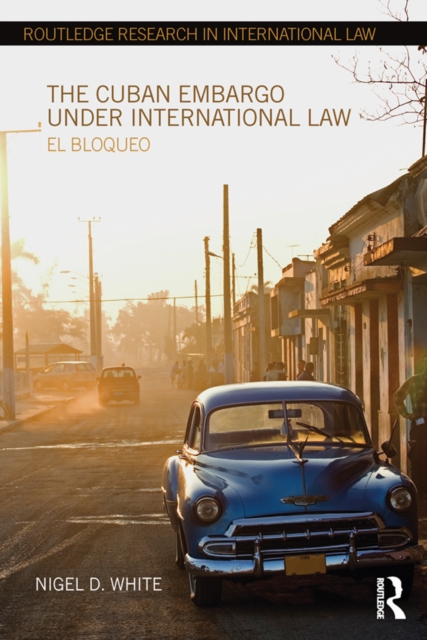
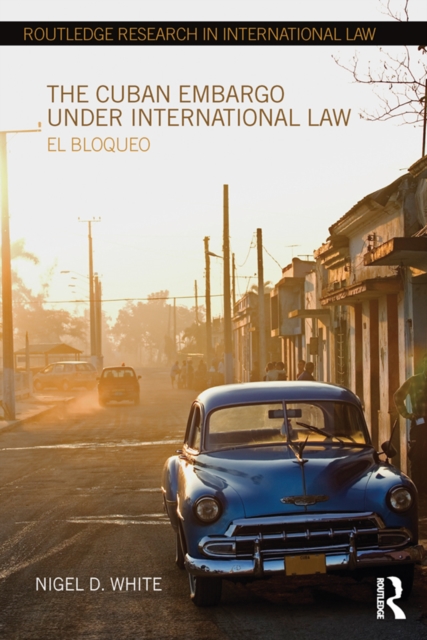
The United States embargo against Cuba was imposed over fifty years ago initially as a response to the new revolutionary government's seizure of US properties, which was viewed by the US as a violation of international law.
The United States embargo against Cuba was imposed over fifty years ago initially as a response to the new revolutionary government's seizure of US properties, which was viewed by the US as a violation of international law.
Competition Policy in East Asia clarifies the key issues and provides a framework for understanding competition policy, looking in-depth at a number of regulated sectors for additional perspectives.
Competition Policy in East Asia clarifies the key issues and provides a framework for understanding competition policy, looking in-depth at a number of regulated sectors for additional perspectives.
Covering the World Intellectual Property Organization, this volume introduces a much ignored element of the contemporary structure of global governance to scholars of international political economy.
Covering the World Intellectual Property Organization, this volume introduces a much ignored element of the contemporary structure of global governance to scholars of international political economy.