This book addresses the international legal obligation to protect economic, social, and cultural human rights in times of armed conflict and other situations of armed violence.
This book addresses the international legal obligation to protect economic, social, and cultural human rights in times of armed conflict and other situations of armed violence.
Torture and Moral Integrity tackles a concrete moral problem that has been hotly debated by governments, scholars, and the media: the morality of interrogational torture.
The imperatives of sovereignty, human rights and national security very often pull in different directions, yet the relations between these three different notions are considerably more subtle than those of simple opposition.
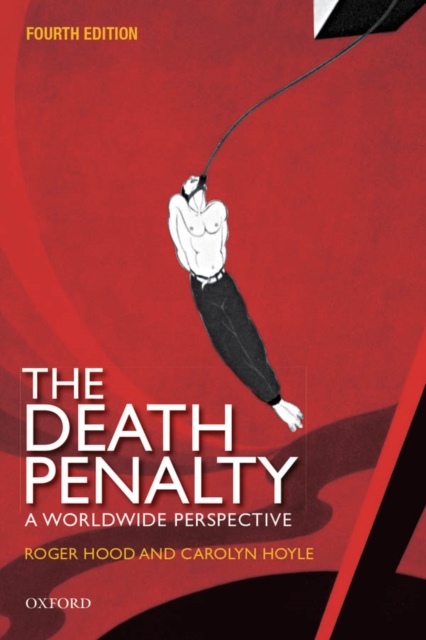
The 4th edition of this authoritative study of the death penalty, now written jointly with Carolyn Hoyle, brings up-to-date developments in the movement to abolish the death penalty worldwide.
Over the past half century, western democracies have lead efforts to entrench the economic and political values of liberal democracy into the foundations of European and international public order.
The move to end impunity for human rights atrocities has seen the creation of international and hybrid tribunals and increased prosecutions in domestic courts.
Human Rights between Idealism and Realism presents human rights in action, focusing on their effectiveness as legal tools designed to benefit human beings.
This book addresses the pressing issue of severe poverty and inequality, and questions why violations of socio-economic rights are treated with less urgency than violations of civil and political rights, such as the right to freedom of speech or to vote?
This book contends that the right of access to justice (at national and international levels) constitutes a basic cornerstone of the international protection of human rights, and conforms a true right to the Law.
In international law, as in any other legal system, respect and protection of human rights can be guaranteed only by the availability of effective judicial remedies.
The idea that international humanitarian law (IHL) and international human rights law (IHRL) are complementary, rather than mutually exclusive regimes generated a paradigmatic shift in the international legal discourse.
Throughout the first decades of its existence, many held the view that the UN Security Council would in some senses automatically encourage the protection of human rights by maintaining international peace.
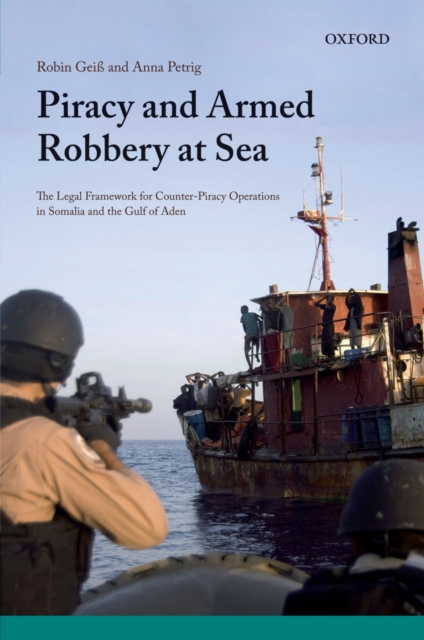
Since 2008 increasing pirate activities in Somalia, the Gulf of Aden, and the Indian Ocean have once again drawn the international community's attention to piracy and armed robbery at sea.
The Optional Protocol to the UN Convention Against Torture (OPCAT) establishes an independent international monitoring committee (SPT) which itself will visit states and places where persons are deprived of their liberty.
The Defamation Act constitutes a significant overhaul of UK defamation legislation, which follows years of concern about the detrimental effects that preceeding libel laws had on freedom of expression, and the extent to which the jurisdiction had become a magnet for libel claimants.
A comprehensive account of legal professional privilege as it applies to corporations covering four major common law jurisdictions: the UK, Australia, Canada and the United States.
A comprehensive account of legal professional privilege as it applies to corporations covering four major common law jurisdictions: the UK, Australia, Canada and the United States.
The Defamation Act constitutes a significant overhaul of UK defamation legislation, which follows years of concern about the detrimental effects that preceeding libel laws had on freedom of expression, and the extent to which the jurisdiction had become a magnet for libel claimants.
Despite the growth in international criminal courts and tribunals, the majority of cases concerning international criminal law are prosecuted at the domestic level.
Despite the growth in international criminal courts and tribunals, the majority of cases concerning international criminal law are prosecuted at the domestic level.
The European architecture for the protection of fundamental rights combines the legal regimes of the states, the European Union, and the European Convention on Human Rights.
The European architecture for the protection of fundamental rights combines the legal regimes of the states, the European Union, and the European Convention on Human Rights.
The Oxford Handbook of International Legal Theory provides an accessible and authoritative guide to the major thinkers, concepts, approaches, and debates that have shaped contemporary international legal theory.
The Oxford Handbook of International Legal Theory provides an accessible and authoritative guide to the major thinkers, concepts, approaches, and debates that have shaped contemporary international legal theory.