The fully revised and updated Third Edition of Remedies in International Human Rights Law provides a comprehensive analysis of the law governing international and domestic remedies for human rights violations.
The fully revised and updated Third Edition of Remedies in International Human Rights Law provides a comprehensive analysis of the law governing international and domestic remedies for human rights violations.
International law has long differentiated between international and non-international armed conflicts, traditionally regulating the former far more comprehensively than the latter.
International law has long differentiated between international and non-international armed conflicts, traditionally regulating the former far more comprehensively than the latter.
The Blackstone's Guide to the Human Rights Act 1998 provides clear, concise coverage of the operation and application of the Human Rights Act 1998, discussing the successes and failures of the Act and the debate surrounding its possible eventual replacement with a Bill of Rights.
The Blackstone's Guide to the Human Rights Act 1998 provides clear, concise coverage of the operation and application of the Human Rights Act 1998, discussing the successes and failures of the Act and the debate surrounding its possible eventual replacement with a Bill of Rights.
Marrying legal doctrine from five pioneering and conversant jurisdictions with contemporary political philosophy, this book provides a general theory of discrimination law.
Marrying legal doctrine from five pioneering and conversant jurisdictions with contemporary political philosophy, this book provides a general theory of discrimination law.
With the acceptance of international criminal procedure as a self-sustaining discipline and as the tribunals established to try the most serious crimes in the former Yugoslavia, Sierra Leone, and Rwanda have completed or are beginning to wind up their activities, the time is ripe for a critical evaluation of these international criminal tribunals and their legacy.
With the acceptance of international criminal procedure as a self-sustaining discipline and as the tribunals established to try the most serious crimes in the former Yugoslavia, Sierra Leone, and Rwanda have completed or are beginning to wind up their activities, the time is ripe for a critical evaluation of these international criminal tribunals and their legacy.
This book offers a fresh approach to human rights by analyzing the role of institutional checks and balances, governmentalism and system's approach, intended for the prevention of human rights violations, the enforcement of human rights norms and rules, and important actors such as International Non-Governmental Organizations (INGO), and domestic Non-Governmental Organizations (NGOs).
The demise and rebirth of states brings with it a set of very complicated legal issues, among which is the question of how to deal with that state's cultural heritage, whether within its boundaries or not.
The demise and rebirth of states brings with it a set of very complicated legal issues, among which is the question of how to deal with that state's cultural heritage, whether within its boundaries or not.
In a comprehensive examination of the constitutional systems of Hong Kong, Malaysia, and Singapore, Po Jen Yap contributes to a field that has traditionally focussed on Western jurisdictions.
In a comprehensive examination of the constitutional systems of Hong Kong, Malaysia, and Singapore, Po Jen Yap contributes to a field that has traditionally focussed on Western jurisdictions.
Between September 2006 and December 2008, Simon Bikindi stood trial at the International Criminal Tribunal for Rwanda, accused of inciting genocide with his songs.
Between September 2006 and December 2008, Simon Bikindi stood trial at the International Criminal Tribunal for Rwanda, accused of inciting genocide with his songs.
'Peace' is often simplistically assumed to be war's opposite, and as such is not examined closely or critically idealized in the literature of peace studies, its crucial role in the justification of war is often overlooked.
'Peace' is often simplistically assumed to be war's opposite, and as such is not examined closely or critically idealized in the literature of peace studies, its crucial role in the justification of war is often overlooked.
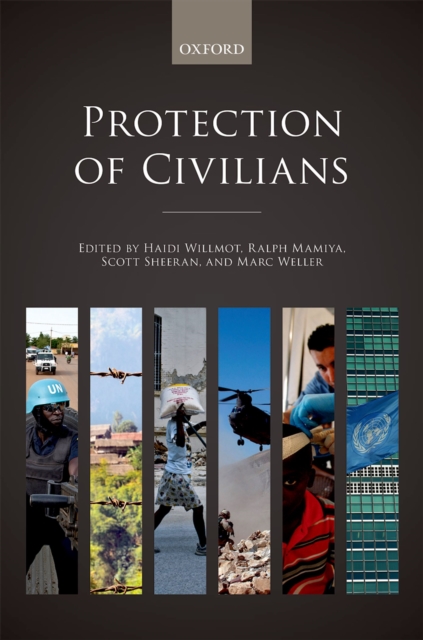
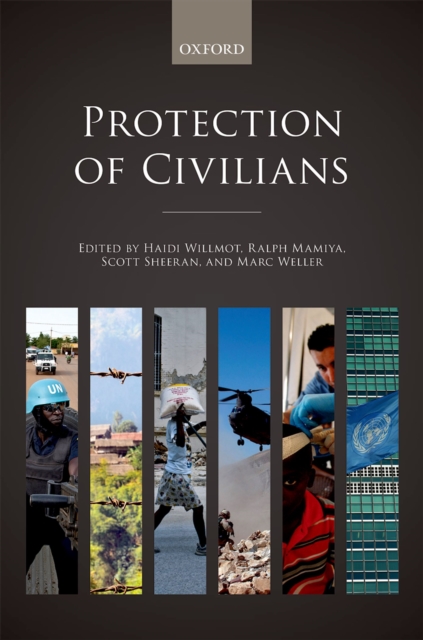
The protection of civilians is a highly topical issue at the forefront of international discourse, and has taken a prominent role in many international deployments.
The protection of civilians is a highly topical issue at the forefront of international discourse, and has taken a prominent role in many international deployments.
A comprehensive analysis into the lawfulness of state-sponsored targeted killings under international human rights and humanitarian law, this book examines treaties, custom and general principles of law to determine the normative paradigms which govern the intentional use of lethal force against selected individuals in law enforcement and the conduct of hostilities.
The Optional Protocol to the UN Convention Against Torture (OPCAT) establishes an independent international monitoring committee (SPT) which itself will visit states and places where persons are deprived of their liberty.
Throughout the first decades of its existence, many held the view that the UN Security Council would in some senses automatically encourage the protection of human rights by maintaining international peace.
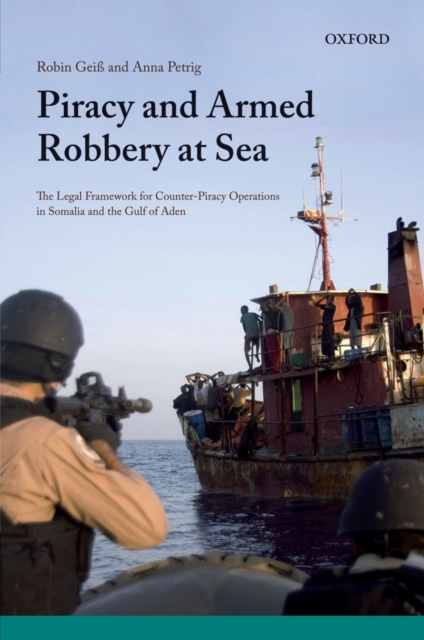
Since 2008 increasing pirate activities in Somalia, the Gulf of Aden, and the Indian Ocean have once again drawn the international community's attention to piracy and armed robbery at sea.
The idea that international humanitarian law (IHL) and international human rights law (IHRL) are complementary, rather than mutually exclusive regimes generated a paradigmatic shift in the international legal discourse.
This book contends that the right of access to justice (at national and international levels) constitutes a basic cornerstone of the international protection of human rights, and conforms a true right to the Law.
Terrorism and International Law: Accountability, Remedies, and Reform A Report of the IBA Task Force on Terrorism examines the developments in international law and practice in a dynamic and often controversial area.
The UN Security Council's transition to 'targeted sanctions' in the 1990s marked a revolutionary shift in the locus of the Council's decision-making from states to individuals.
The UN Security Council's transition to 'targeted sanctions' in the 1990s marked a revolutionary shift in the locus of the Council's decision-making from states to individuals.