The subject of this Essay is not the so-called Liberty of the Will, so unfortunately opposed to the misnamed doctrine of Philosophical Necessity; but Civil, or Social Liberty: the nature and limits of the power which can be legitimately exercised by society over the individual.
Collected here are fourteen essays by Rudolf Steiner covering subjects such as Waldorf Education, The Reordering of Society, The Human Soul, Karma, and Knowledge.
It must be recognized that a knowledge of the spiritual world, not merely a knowledge gained by treading the path, but also a knowledge acquired through grasping the truths of spiritual science with the unprejudiced, healthy human intellect, leads also to a higher moral status in life, to a knowledge of sensory existence that is in accord with the truth, to certainty in life, and to inward health of the soul.
Can religious individuals and communities learn from each other in ways that will lead them to collaborate in addressing the great ethical challenges of our time, including climate change and endless warfare?
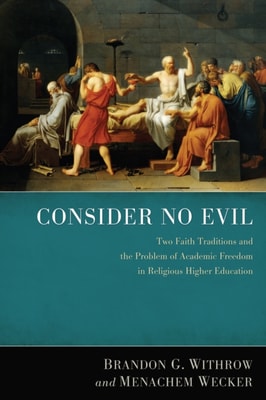
Even casual acquaintances of the Bible know that the Truth shall set you free, but in the pursuit of that Truth in higher education--particularly in Christian or Jewish seminaries--there are often many casualties suffered along the way.
On first consideration, one might not be inclined to view Adolf Hitler and Dietrich Bonhoeffer in relation to Jehanne d'Arc (Joan of Arc), but Brenda E.
Although the moral and ethical dimensions of NATO presence in Afghanistan has been the focus of debate by politicians and media alike, questions of the religious culture and spirituality that underlie the complexities of both the conflict and convictions of those affected have rarely been discussed.
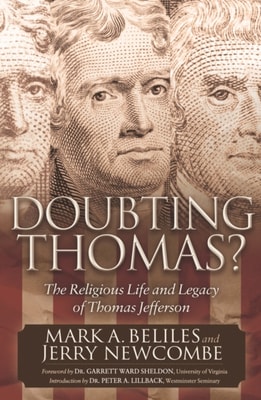
A religious historian argues that historical revisionism has distorted the religious views of Thomas Jefferson, making him appear far more skeptical than he was.
Interest in meditation and mindfulness has skyrocketed in recent years, thanks largely to neuroimaging and the body of scientific research that has validated the many benefits of these practices.
Understanding Victimology: An Active Learning Approach is the only textbook with extensive discussion of both online and offline victimization reinforced by group and individual learning activities.
Understanding Victimology: An Active Learning Approach is the only textbook with extensive discussion of both online and offline victimization reinforced by group and individual learning activities.