More than 45 years after its adoption, the State Immunity Act 1978 remains the principal source of rules as to the immunities and privileges of foreign States and related persons before the courts of the United Kingdom.
More than 45 years after its adoption, the State Immunity Act 1978 remains the principal source of rules as to the immunities and privileges of foreign States and related persons before the courts of the United Kingdom.
This updated Research Handbook presents a comprehensive analysis of the international law of jurisdiction and immunities, examining the mutual interdependence between the two as well as shedding light on the implications.
Elgar Advanced Introductions are stimulating and thoughtful introductions to major fields in the social sciences, business and law, expertly written by the world's leading scholars.
Elgar Advanced Introductions are stimulating and thoughtful introductions to major fields in the social sciences, business and law, expertly written by the world's leading scholars.
This book examines how national and international regional courts in Europe and Latin America address justice for serious human rights violations, comparing approaches across these distinct regions.
Analysing different political and policy drivers of extraterritoriality in various social, cultural, and economic settings, this book assesses the value of politics within the context of the law and practice of extraterritoriality.
The law of the sea imposes a long-established duty to rescue persons in distress, which connotes one of the most important tools in safeguarding safety of life at sea.
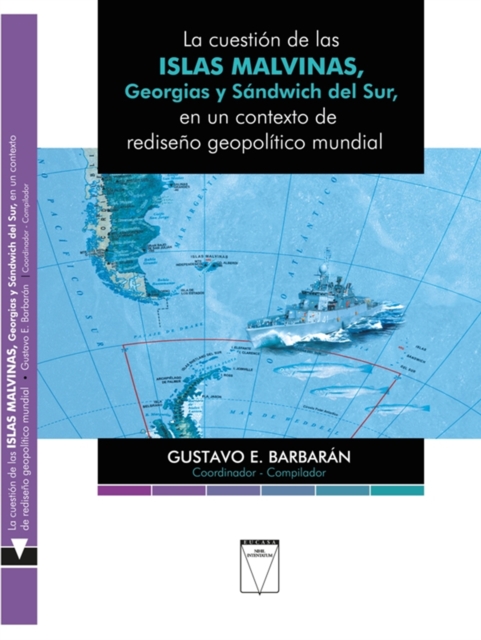
En este libro se ponen a consideración de los lectores seis ensayos presentados en las "II Jornadas Salteñas sobre la Cuestión de las Islas Malvinas, Georgias y Sándwich del Sur en un contexto de rediseño político mundial", realizadas en la ciudad de Salta en junio de 2018.
This edited collection appraises the role, self-perception, reasoning and impact of the European Court of Justice on the development of European Union (EU) external relations law.
This book contains a collection of articles on different aspects of EU law written by one of Europe's most distinguished jurists during the past twenty years, some of which appear here for the first time in English.
This book contains a collection of articles on different aspects of EU law written by one of Europe's most distinguished jurists during the past twenty years, some of which appear here for the first time in English.
This book examines how national and international regional courts in Europe and Latin America address justice for serious human rights violations, comparing approaches across these distinct regions.
In contrast to the views current only a few years ago, when federalism as a system of government was regarded, in academic circles in North America at least, as passe and even reactionary, there is today throughout the world, and especially in Western Europe, a tremendous interest in the federal idea.
Two events occurred in 1998 that had far-reaching consequences for international justice: the adoption of the Statute for the International Criminal Court by the Diplomatic Conference of Plenipotentiaries in Rome (the Rome Statute); and the arrest in London of former President Pinochet for crimes against humanity.
Two events occurred in 1998 that had far-reaching consequences for international justice: the adoption of the Statute for the International Criminal Court by the Diplomatic Conference of Plenipotentiaries in Rome (the Rome Statute); and the arrest in London of former President Pinochet for crimes against humanity.
This book offers an original and insightful analysis of the human rights inadequacies that arise in the practice of UN territorial administration by analysing and assessing the practice of UNMIK.
This book offers an original and insightful analysis of the human rights inadequacies that arise in the practice of UN territorial administration by analysing and assessing the practice of UNMIK.
Questions of legal extraterritoriality figure prominently in scholarship on legal pluralism, transnational legal studies, international investment law, international human rights law, state responsibility under international law, and a large number of other areas.
Questions of legal extraterritoriality figure prominently in scholarship on legal pluralism, transnational legal studies, international investment law, international human rights law, state responsibility under international law, and a large number of other areas.
With the sensational arrest of former Chilean dictator Augusto Pinochet in 1998, the rise to prominence of universal jurisdiction over crimes against international law seemed to be assured.
With the sensational arrest of former Chilean dictator Augusto Pinochet in 1998, the rise to prominence of universal jurisdiction over crimes against international law seemed to be assured.
Analysing different political and policy drivers of extraterritoriality in various social, cultural, and economic settings, this book assesses the value of politics within the context of the law and practice of extraterritoriality.
This book provides comprehensive, rigorous and up-to-date coverage of key issues that have emerged in the first quarter of the 21st Century in transnational construction arbitration and alternative dispute resolution (ADR).
This book provides comprehensive, rigorous and up-to-date coverage of key issues that have emerged in the first quarter of the 21st Century in transnational construction arbitration and alternative dispute resolution (ADR).
This edited collection appraises the role, self-perception, reasoning and impact of the European Court of Justice on the development of European Union (EU) external relations law.
The legal position in international law of heads of states and other senior state representatives is at the heart of the conflict thrown up by recent changes in the international legal order.
This book explores to what extent a state owes human rights obligations to individuals outside of its territory, when the conduct of that state impacts upon the lives of those individuals.
This book explores to what extent a state owes human rights obligations to individuals outside of its territory, when the conduct of that state impacts upon the lives of those individuals.