The book provides a comprehensive overview of the European Sustainability Model which cannot be properly understood without taking into account the global governance trends surrounding the topic.
Situated within the wider post-secular turn in politics and international relations, this volume focuses not on religion per se, but rather explicitly on theology.
This book addresses the discourses, agendas and actions of Muslim faith-based organizations and activists to empower Muslim communities in contemporary sub-Saharan Africa.
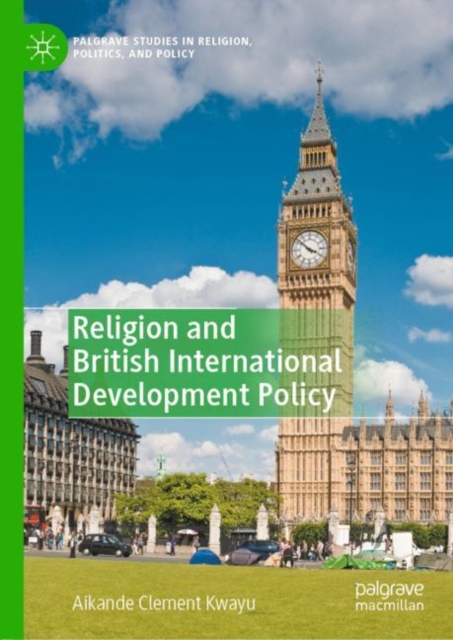
This book studies the relationship between British government and faith groups in its international development agenda within and beyond the context of Brexit.
This book provides an extensive overview of the protection of cultural heritages sites on the Moon (humanity's lunar heritage) and the various threats they face.
Drawing from theories of world society and from historical-sociological theories the book studies the past, present, and future of Middle East Christianity.
Grounded in nine years of ethnographic research on the al Muhajiroun/Ahlus Sunnah Wal Jamaah movement (ALM/ASWJ), Douglas Weeks mixes ethnography and traditional research methods to tell the complete story of al Muhajiroun.
This book analyses the UN's Agenda 2030 and reveals that progress is lagging on all five interlocking and interdependent themes that are discussed: conflict prevention, development, peace, justice and human rights.
This book presents an important discussion on future options for sustainable soil management in Africa from various perspectives, including national soil protection regulations, the role of tenure rights, the work of relevant international institutions such as the UNCCD and FAO, and regional and international cooperation.
This book stems from the worrying scale and intensity of conflicts, humanitarian crises, and human rights violations around the world, which can be seen in a wide range of global hotspots including Venezuela, Yemen, Syria, Myanmar, Sudan, Eritrea, and numerous others.
In light of new global challenges for international cooperation and coordination, such as the revival of protectionism, surge of populism, or energy-related issues, this volume highlights possible scenarios for the future of Global Economic Governance (GEG).
International Marine Mammal Law is a comprehensive, introductory volume on the legal regimes governing the conservation and utilisation of marine mammals.
The book defines and critically discusses the following five principles: the harm principle, legal paternalism, the offense principle, legal moralism and the dignity principle of criminalization.
This book discusses the evolution of three philosophical foundations from the twelfth through the eighteenth centuries that converged to form the basis of liberal democracy's approach to the place and role of religion in society and politics.
This book focuses on oil politics and the development of nuclear technology in Iran, providing a broader historical context to understand Iran's foreign relations and nuclear policy.
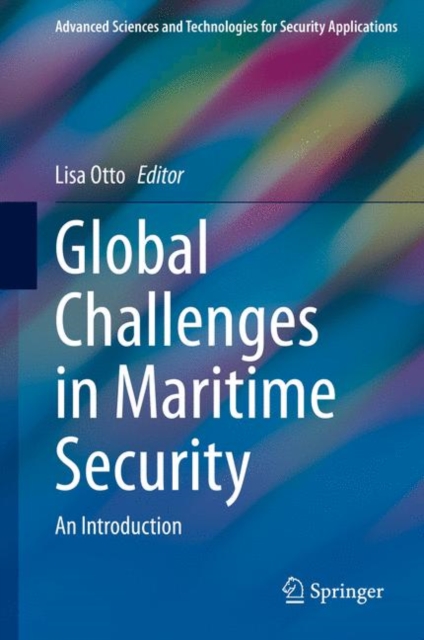
From pirates to smugglers, migrants to hackers, from stolen fish to smuggled drugs, the sea is becoming a place of increasing importance on the global agenda as criminals use it as a theatre to conduct their crimes unfettered.
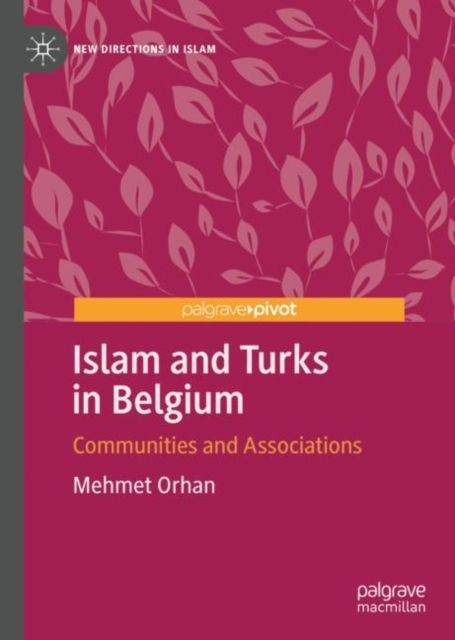
Drawing on qualitative research conducted in Brussels, Wallonia and Flanders, Islam and Turks in Belgium examines the interdependence between Muslim community and association.
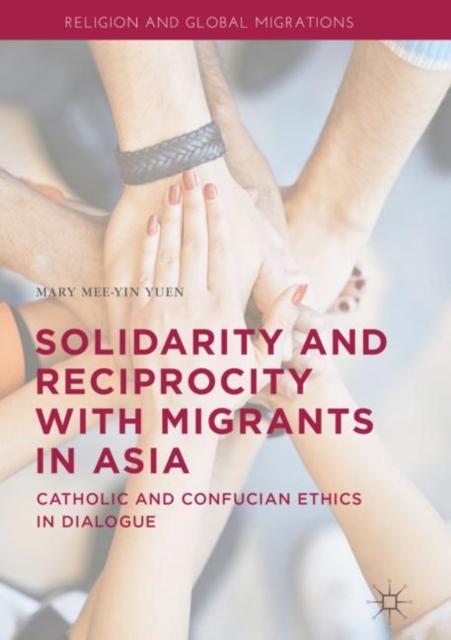
Based on Catholic and Confucian social ethics, this book develops an ethic of solidarity and reciprocity with the migrants in Asia who are marginalized.
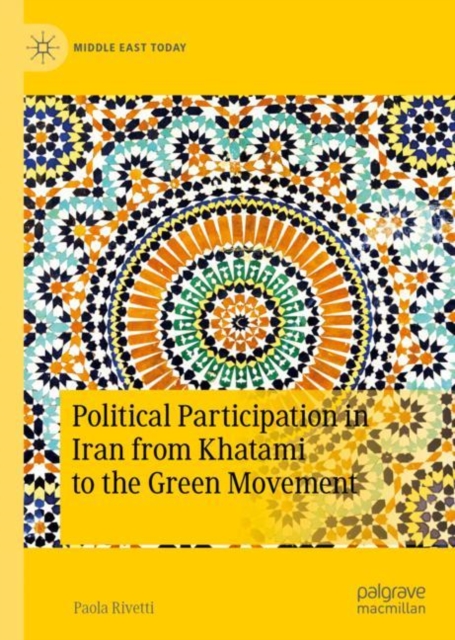
This book examines the unintended consequences of top-down reforms in Iran, analysing how the Iranian reformist governments (1997-2005) sought to utilise gradual reforms to control independent activism, and how citizens responded to such a disciplinary action.
This book considers governance and policy-making within the maritime sector, and focuses significantly on the dimensional context within which governance works.
This book provides detailed insights into how space and its applications are, and can be, used to support the development of the full range and diversity of African societies, as encapsulated in the African Union's Agenda 2063.
This book brings together a series of contributions by international legal scholars that explore a range of subjects and themes in the field of international economic law and global economic governance through a variety of methodological and theoretical lenses.
The first issue of the Balkan Yearbook of European and International Law (BYEIL) focuses on international commercial and investment arbitration as one of the fastest developing fields of law in Southeast Europe.
This book explores how the EU's enforcement of competition law has moved from centralisation to decentralisation over the years, with the National Competition Authorities embracing more enforcement powers.
Cultural Rights of Third-Country Nationals in EU Law provides a complex analysis of the cultural rights of third-country nationals in European Union Law.
This Volume of the AIDA Europe Research Series on Insurance Law and Regulation focuses on transparency as the guiding principle of modern insurance law.
This book produces convincing evidence that exploiting the potential of space could help solve many environmental and social issues affecting our planet, such as pollution, overcrowding, resource depletion and conflicts, economic inequality, social unrest, economic instability and unemployment.
This book presents the principal structure, networks and applications of the Global Aeronautical Distress and Safety System (GADSS) for enhanced airborne Communication, Navigation and Surveillance (CNS).
This book analyses a selection of challenges in the implementation and application of the 1982 UN Convention on the Law of the Sea (UNCLOS), focusing on several areas: international organizations, fisheries, security, preserving marine biodiversity, dispute settlement, and interaction with other areas of international law.
Against the backdrop of enormous technological strides, this book argues that the air transport industry must be constantly vigilant in its efforts to employ a legal regime that is applicable to the aeronautical and human aspects of the carriage by air of persons and goods.
This book analyses the politics of the humanitarian disarmament community-a loose coalition of activist and advocacy groups, humanitarian agencies and diplomats-who have successfully achieved international treaties banning landmines, cluster munitions and nuclear weapons, as well as restricting the global arms trade.