This book consists of interviews with five distinguished international lawyers from the UK, USA, Uruguay and France, conducted by the editor, Antonio Cassese, between 1993 and 1995.
The adoption of the Declaration on the Rights of Indigenous Peoples by the United Nations General Assembly on 13 September 2007 was acclaimed as a major success for the United Nations system given the extent to which it consolidates and develops the international corpus of indigenous rights.
This book examines the impact of international trade rules on the promotion and protection of human rights, and explains why human rights are an important mechanism for assessing the social justice impact of the international trading system.
National Human Rights Institutions (NHRIs), defined by the UN as bodies established to promote and protect human rights, have increased in number since the General Assembly adopted principles governing their effectiveness in 1993.
Privacy today is much debated as an individual's right against real or feared intrusions by the state, as exemplified by proposed identity cards and surveillance measures in the United Kingdom.
The global spread of transnational mining investment, which has been taking place since the 1990s, has led to often volatile conflicts with local communities.
In a world of work that has changed dramatically over the last few years, states see themselves confronted with new actors and conflicting international legal obligations.
The primary purpose of this book is to demonstrate the scope that already exists for using international human rights law in English courts, regardless of its status as 'incorporated' or 'unincorporated'.
The jurisprudence of the International Court of Justice generally demonstrates that no rule of international law can be interpreted and applied without regard to its innate values and the basic principles of human rights.
Fourteen years since its establishment,the work of the African Commission on Human and Peoples' Rights has not received the attention that should have been paid to its important contributions towards the promotion and protection of human rights in Africa.
The UK's new Human Rights Act with its duty to give domestic effect to the European Convention on Human Rights and the jurisprudence of the Strasbourg court will have a significant effect on many aspects of the criminal and regulatory process.
This book constructs a framework which allows a greater understanding of domestic causes of action for breaches of human rights sounding in a monetary remedy.
This book - one in the four-volume set, Global Governance and the Quest for Justice - focuses on the role of corporations in an increasingly globalised world.
From the viewpoint of the constitutional crisis in Europe, slow UN reforms, difficulties implementing the Kyoto Protocol and the International Criminal Court, and tensions between human rights and trade, Mireille Delmas-Marty's 'journey through the legal landscape' of the early years of the 21st century shows it to be dominated by imprecision, uncertainty and instability.
International lawyers have often been interested in the link between their discipline and the foundational issues of jurisprudential method, but little that is systematic has been written on this subject.
As shown by the trials of Slobodan Milosevic, Charles Taylor and Saddam Hussein, the large-scale and systematic commission of international crimes is usually planned and set in motion by senior political and military leaders.
The essays which appear in this work are based on the papers presented at a two-day conference held in Liverpool in July 2007 to celebrate the 50th anniversary of the signing of the Treaty of Rome establishing the EEC.
In this set of interdisciplinary essays leading scholars discuss the future of the Rule of Law, a concept whose meaning and import has become ever more topical and elusive.
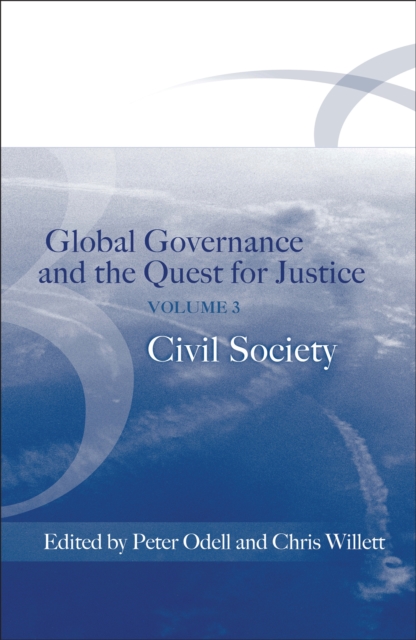
This book - one in the four-volume set,Global Governance and the Quest for Justice - focuses on themes of citizen organisation and empowerment set in the context of globalising legal processes.
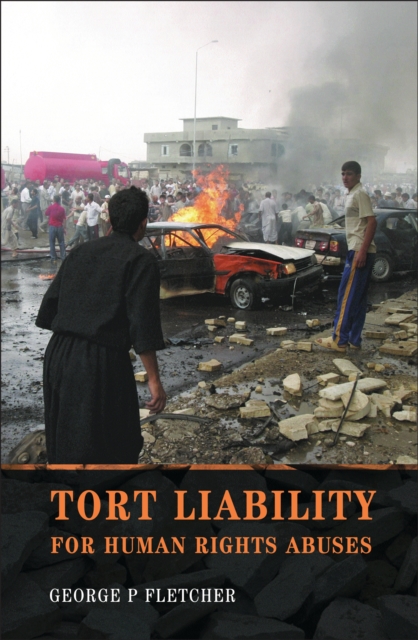
Advancing a bold theory of the relevance of tort law in the fight against human rights abuses, celebrated US law professor George Fletcher here challenges the community of international lawyers to think again about how they can use the Alien Tort Statute.
This book provides a modern and basic introduction to a branch of international law constantly gaining in importance in international life, namely international humanitarian law (the law of armed conflict).
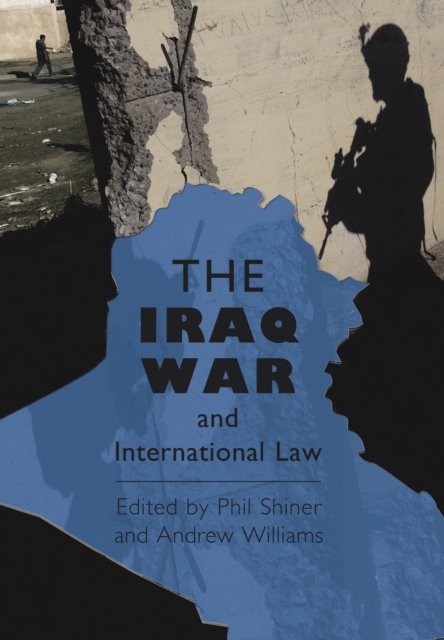
The decision by the US and UK governments to use military force against Iraq in 2003 and the subsequent occupation and administration of that State, has brought into sharp focus fundamental fault lines in international law.
Amnesty laws are political tools used since ancient times by states wishing to quell dissent, introduce reforms, or achieve peaceful relationships with their enemies.
With the incorporation into domestic law of the European Convention on Human Rights,the UK courts will increasingly be called upon to strike the balance between the potentially conflicting rights of the right to privacy under Article 8 and the right to freedom of expression under Article 10.
Terrorist violence is no novelty in human history and, while government reactions to it have varied over time, some lessons can be learnt from the past.
International law is fragmented and complex, and at the same time increasingly capable of shaping reality in areas as diverse as human rights, trade and investment, and environmental law.
This is the first volume of proceedings arising from the biennial conference of the European Society of International Law/Societe europeene de droit international, edited by Emmanuelle Jouannet, H l ne Ruiz Fabri and Vincent Tomkiewicz.
In 1996, the International Court of Justice delivered an Advisory Opinion on the legality of the use of nuclear weapons in which the Court stated that "e;while the existing international law relating to the protection and safeguarding of the environment does not specifically prohibit the use of nuclear weapons it indicates important environmental factors that are properly to be taken into account in the context of the implementation of the principles and rules of the law applicable in armed conflict.
The concept of state sovereignty is increasingly challenged by a proliferation of international economic instruments and major international economic institutions.
The principal aim of this work is to provide a forum for leading international lawyers with experience and interest in Africa to address a broad range of intellectual challenges concerning the contribution of African states and peoples to international law.
The international protection regime for refugees and other forced migrants seems increasingly at risk as measures designed to enhance security-of borders, of people, of institutions, and of national identity-encroach upon human rights.
Taking as a starting point the widely accepted view that states confronted with terrorism must find a proper equilibrium between their respective obligations of preserving fundamental rights and fighting terrorism effectively, this book seeks to demonstrate how the design and enforcement of a human rights instrument may influence the result of that exercise.
The Irish Yearbook of International Law is intended to stimulate further research into Ireland's practice in international affairs and foreign policy, filling a gap in existing legal scholarship and assisting in the dissemination of Irish thinking and practice on matters of international law.
Intellectual Property and Free Trade Agreements presents the papers of the sixth IP conference organised by the Macau Institute of European Studies (IEEM) on intellectual property law and the economic challenges for Asia.
Shortlisted for the 2008 Young Authors Inner Temple Book PrizeThere are believed to be about 700 million small arms and light weapons (SALW) in the world, often contributing to highly destabilising security and other concerns in international law.