The role of religious identity in social communities has gained importance in the past few years, as many questions about individual and collective identity have been brought up in the fields of science and everyday life.
Encapsulating Law Reform requires the creation of a discreet space occupied with normative self-generation, self-correction, and self-adaptation in the very anatomy of law and the architecture of legal systems.
Discrimination in International Investment Arbitration provides an original and comprehensive treatment of the non-discrimination standards at the heart of many investment treaty cases.
Constitutional Law for Criminal Justice, Sixteenth Edition, offers criminal justice professionals the training they need to recognize the constitutional principles that apply to their daily work.
This book provides an in-depth guide to researchers and practitioners who are interested in analysing the evolution of EU law from a national and comparative constitutional law perspective.
Encapsulating Law Reform requires the creation of a discreet space occupied with normative self-generation, self-correction, and self-adaptation in the very anatomy of law and the architecture of legal systems.
This book provides an in-depth guide to researchers and practitioners who are interested in analysing the evolution of EU law from a national and comparative constitutional law perspective.
The inspiration for this book comes from negotiations that are taking place under the auspices of the United Nations by an intergovernmental conference for a new International Legally Binding Instrument (ILBI) under the United Nations Convention on the Law of the Sea (UNCLOS) on the conservation and sustainable use of marine biological diversity of Areas Beyond National Jurisdiction (ABNJ).
The inspiration for this book comes from negotiations that are taking place under the auspices of the United Nations by an intergovernmental conference for a new International Legally Binding Instrument (ILBI) under the United Nations Convention on the Law of the Sea (UNCLOS) on the conservation and sustainable use of marine biological diversity of Areas Beyond National Jurisdiction (ABNJ).
The relationship between human rights and the environment, as evidenced by the 2022 UN Resolution on the human right to a healthy environment, is a topical, fascinating, uneasy, and increasingly urgent one.
Examining the restitution of cultural property to Indigenous Peoples in human rights law, this book offers a detailed analysis of the opportunities and constraints of international law as a tool of resistance and social transformation for marginalized groups.
Examining the restitution of cultural property to Indigenous Peoples in human rights law, this book offers a detailed analysis of the opportunities and constraints of international law as a tool of resistance and social transformation for marginalized groups.
Thoroughly updated with over 30 newly written chapters, this edition of the Routledge Handbook of Sexuality, Gender, Health and Rights brings together academics and practitioners from around the world to provide an authoritative and up-to-date account of the field.
The importance of cultural heritage - in both its tangible and intangible forms - to sustainable development and its economic, social and environmental components is increasingly evident in the recent practice of intergovernmental and non-governmental organizations at the universal and regional level.
This insightful and timely book examines the intersection of international climate change law and international human rights law with respect to loss and damage from climate change.
This book sheds light on the latest trends in environmental law by analyzing some of the main sectors of law, including administrative law, constitutional law, EU law, US Law, and human rights law.
The importance of cultural heritage - in both its tangible and intangible forms - to sustainable development and its economic, social and environmental components is increasingly evident in the recent practice of intergovernmental and non-governmental organizations at the universal and regional level.
This insightful and timely book examines the intersection of international climate change law and international human rights law with respect to loss and damage from climate change.
The Asian Yearbook of International Economic Law (AYIEL) 2023 addresses the rapidly evolving field of international economic law with a special focus on Asia and the Pacific.
Thoroughly updated with over 30 newly written chapters, this edition of the Routledge Handbook of Sexuality, Gender, Health and Rights brings together academics and practitioners from around the world to provide an authoritative and up-to-date account of the field.
The Asian Yearbook of International Economic Law (AYIEL) 2023 addresses the rapidly evolving field of international economic law with a special focus on Asia and the Pacific.
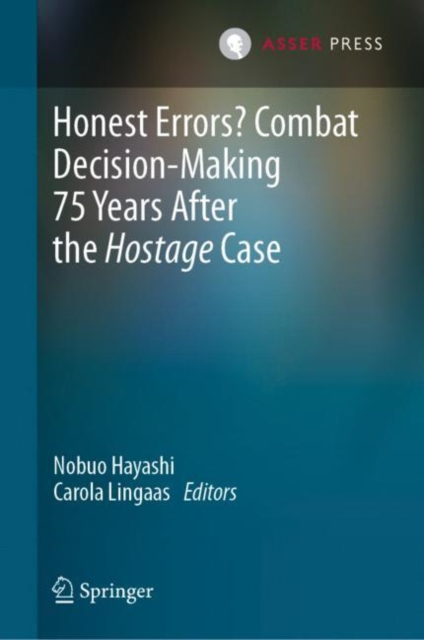
This book marks the 75th anniversary of the 1948 Hostage Case in which a US military tribunal in Nuremberg acquitted General Lothar Rendulic of devastating Northern Norway on account of his honest factual error.
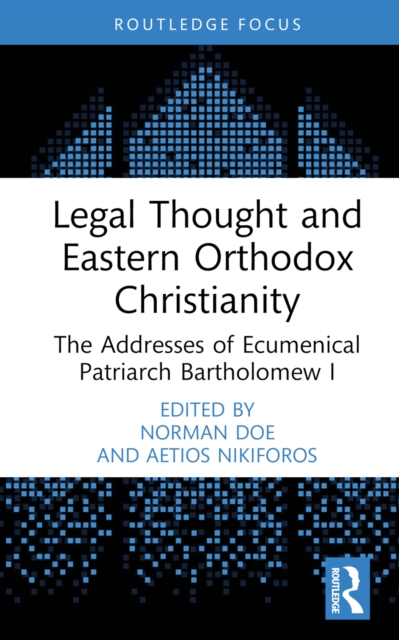
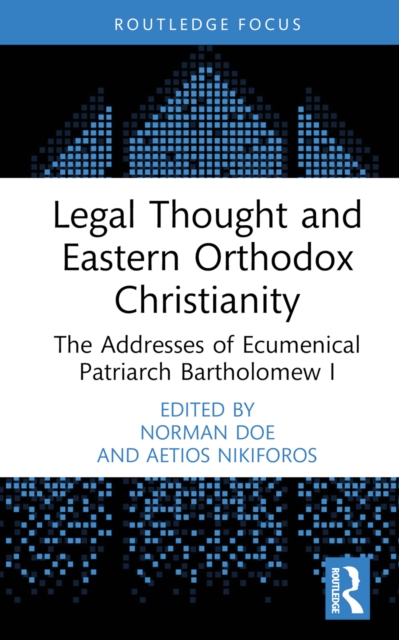
Ecumenical Patriarch Bartholomew I, the spiritual leader of Eastern Orthodox Christians worldwide, has thought profoundly about the role of law as it applies to the church, to civic life in Europe, to human rights, to religious freedom, and to the environment.
Ecumenical Patriarch Bartholomew I, the spiritual leader of Eastern Orthodox Christians worldwide, has thought profoundly about the role of law as it applies to the church, to civic life in Europe, to human rights, to religious freedom, and to the environment.
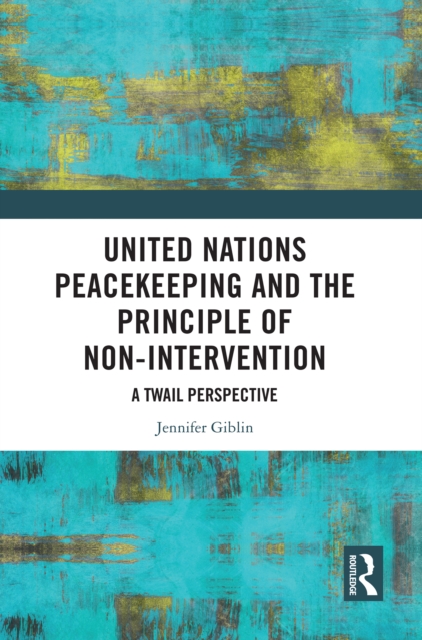
Using a unique application of Third World Approaches to International Law (TWAIL), this book provides a critical, interdisciplinary, examination of the contemporary practice of UN peacekeeping.
While recent scholarship has focused on wartime Syria, this book is dedicated to heads of state in the immediate post-Ottoman era until the end of the French Mandate in 1946.
While recent scholarship has focused on wartime Syria, this book is dedicated to heads of state in the immediate post-Ottoman era until the end of the French Mandate in 1946.