Race, Rights, and Justice explores questions of the nature of law and constitutional interpretation, international law and global justice, and the nature, function, and importance of rights each from a perspective that takes seriously the realities of race and racism.
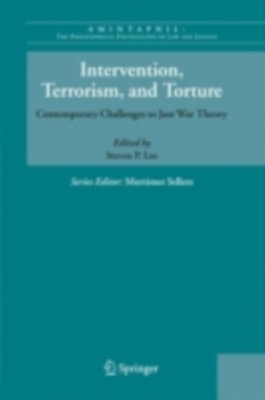
Most books on terrorism deal with descriptions of terrorist organizations and activities, some examine privacy and civil liberties issues, and others treat terrorism as a series of policy choices.
Charity Law & Social Policy explores contemporary law, policy and practice in a range of modern common law nations in four parts and from the perspective of how this has evolved in the UK.
International Documents on Environmental Liability brings together 30 official full-text documents in the field of international environmental liability into an easily accessible, practical handbook; details the work of the International Law Commission on this topic; and provides the latest versions of international liability conventions and their statuses - including the latest on: (1) 2003 UNECE Kyiv Liability Protocol; (2) 2004 EC Directive on Environmental Liability; (3) 2005 Antartica Liability Annex.
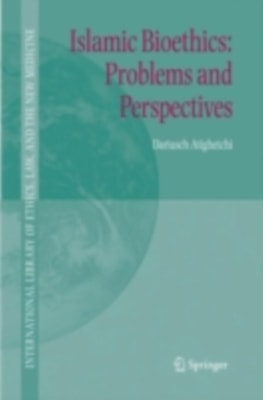
This book presents a critical analysis of the debate at the religious, legal and political level sparked off by the introduction of new biomedical technologies (cloning, genetics, organ transplants, IVF, etc.
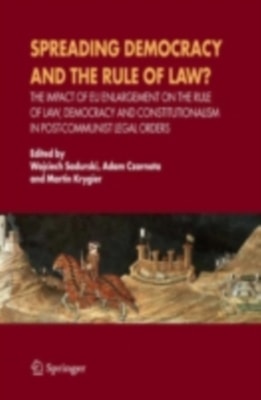
The accession of eight post-communist countries of Central and Eastern Europe (and also of Malta and Cyprus) to the European Union in 2004 has been heralded as perhaps the most important development in the history of European integration so far.
Challenging the conventional wisdom that constitutional courts are the best device that democratic systems have for the protection of individual rights, Wojciech Sadurski examines carefully the most recent wave of activist constitutional courts: those that have emerged after the fall of communism in Central and Eastern Europe.
Jens HETLAND & Teimuraz GOCHITASHVILI In contrast to oil, natural gas is usually routed through pipeline systems stretched from the wellhead to the end-user - although liquefied natural gas (LNG) is gaining increased interest; the commercialisation of natural gas fields is inherently linked to rigid transportation systems that require huge investments in tangible assets fixed to specific locations; the supply of natural gas is constrained by the transportation system, and requires access to appropriate infrastructure for transport and distribution; the trading of natural gas is traditionally associated with long-term contracts, albeit the duration per se of gas transport contracts appears to be less important after the deregulation of the energy markets.
This book examines how the Roman, French and English legal systems have each dealt with the issue of unforeseen, supervening events which have rendered the performance of contractual obligations either impossible or fundamentally different in nature, sometimes known as Force Majeure or Acts of God.
The events of September 11 and the subsequent war on terrorism have provoked widespread discussion about the possibility of democracy in the Islamic world.
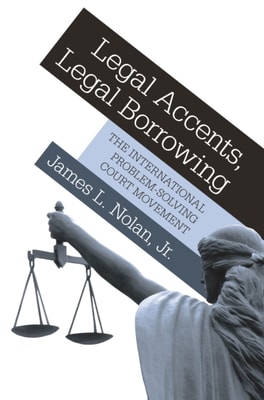
A wide variety of problem-solving courts have been developed in the United States over the past two decades and are now being adopted in countries around the world.
This book studies the international investment law regime in Africa and provides a comprehensive analysis of the current treaty practices in Africa from global, regional and domestic perspectives.
This book studies the international investment law regime in Africa and provides a comprehensive analysis of the current treaty practices in Africa from global, regional and domestic perspectives.
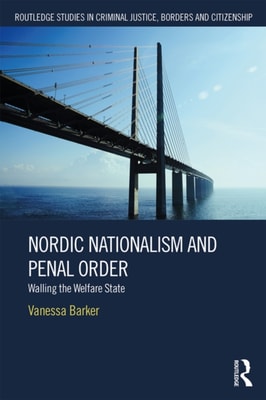
In late summer 2015, Sweden embarked on one of the largest self-described humanitarian efforts in its history, opening its borders to 163,000 asylum seekers fleeing the war in Syria.
In late summer 2015, Sweden embarked on one of the largest self-described humanitarian efforts in its history, opening its borders to 163,000 asylum seekers fleeing the war in Syria.
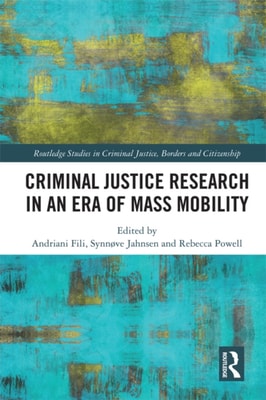
We live in an era of mass mobility where governments remain committed to closing borders, engaging with securitisation discourses and restrictive immigration policies, which in turn nurture xenophobia and racism.
We live in an era of mass mobility where governments remain committed to closing borders, engaging with securitisation discourses and restrictive immigration policies, which in turn nurture xenophobia and racism.