In this compelling volume in the What Everyone Needs to Know(R) series, Paul Waldau expertly navigates the many heated debates surrounding the complex and controversial animal rights movement.
Chief Justice John Marshall argued that a constitution "e;requires that only its great outlines should be marked [and] its important objects designated.
Chief Justice John Marshall argued that a constitution "e;requires that only its great outlines should be marked [and] its important objects designated.
The study and practice of juvenile law is inherently interdisciplinary--a successful practitioner must understand not only the legal implications in the field, but also have a solid grounding in child psychology, child development, neuroscience, sociology, criminology, and social work.
Corrective and Distributive Justice: From Aristotle to Modern Times retraces the intricate history of the distinction between corrective and distributive justice.
In a stinging dissent to a 1961 Supreme Court decision that allowed the Illinois state bar to deny admission to prospective lawyers if they refused to answer political questions, Justice Hugo Black closed with the memorable line, "e;We must not be afraid to be free.
For the first time in legal history, an indictment was filed against an acting head of state, Slobodan Milosevic, for crimes that he allegedly committed while in office.
During the past decade, rapid developments in information and communications technology have transformed key social, commercial and political realities.
In three parts, this volume in the AP-LS series explores the phenomena of captivity and risk management, guided and informed by the theory, method, and policy of psychological jurisprudence.
While the right to have one's day in court is a cherished feature of the American democratic system, alarms that the United States is hopelessly litigious and awash in frivolous claims have become so commonplace that they are now a fixture in the popular imagination.
While the right to have one's day in court is a cherished feature of the American democratic system, alarms that the United States is hopelessly litigious and awash in frivolous claims have become so commonplace that they are now a fixture in the popular imagination.
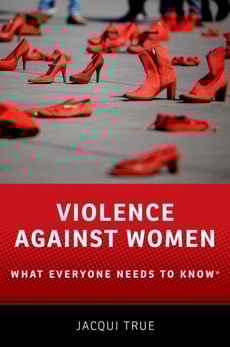
Violence against women and girls (VAWG) is a longstanding problem that has increasingly come to the forefront of international and national policy debates and news: from the US reauthorization of the Violence against Women Act and a United Nations declaration to end sexual violence in war, to coverage of gang rapes in India, cyberstalking and "e;revenge porn"e;, honor killings, female genital mutilation, and international trafficking.
Violence against women and girls (VAWG) is a longstanding problem that has increasingly come to the forefront of international and national policy debates and news: from the US reauthorization of the Violence against Women Act and a United Nations declaration to end sexual violence in war, to coverage of gang rapes in India, cyberstalking and "e;revenge porn"e;, honor killings, female genital mutilation, and international trafficking.
Whenever governments change policies--tax, expenditure, or regulatory policies, among others--there will typically be losers: people or groups who relied upon and invested in physical, financial, or human capital predicated on, or even deliberately induced by the pre-reform set of policies.
Exploring the connection between families and inequality, Failure to Flourish: How Law Undermines Family Relationships argues that the legal regulation of families stands fundamentally at odds with the needs of families.
The growth of international law in the post-World War II era stemmed partly from the belief that universal norms would make life for the entire world's population safer, more equitable, and more conducive to each person's acquisition of basic material needs.
This volume responds to a growing interest in the language of legal settings by situating the study of language and law within contemporary theoretical debates in discourse studies, linguistic anthropology, and sociolinguistics.
This scholarly legal work focuses on the dilemma of prosecuting gender-based crimes under the statutes of the international criminal tribunals with reference to the principle of fair labelling.
Poor Justice: How the Poor Fare in the Courts provides a vivid portrait and appraisal of how the lives of poor people are disrupted or helped by the judicial system, from the lowest to the highest courts.
Poor Justice: How the Poor Fare in the Courts provides a vivid portrait and appraisal of how the lives of poor people are disrupted or helped by the judicial system, from the lowest to the highest courts.
It is essential for anyone involved in law, politics, and government to comprehend the workings of the federal independent regulatory agencies of the United States.
What Women Want is a trenchant examination of the struggle for women's equality, and a prescription for what to focus on next in order to ensure maximum success.
What Women Want is a trenchant examination of the struggle for women's equality, and a prescription for what to focus on next in order to ensure maximum success.
From gang- and drug-related shootings to mass shootings in schools, shopping centers, and movie theatres, reports of gun crimes fill the headlines of newspapers and nightly news programs.
From gang- and drug-related shootings to mass shootings in schools, shopping centers, and movie theatres, reports of gun crimes fill the headlines of newspapers and nightly news programs.
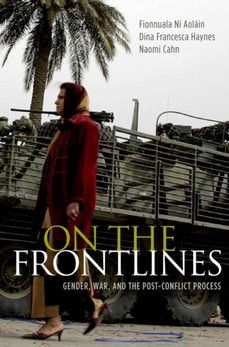
Gender oppression has been a feature of war and conflict throughout human history, yet until fairly recently, little attention was devoted to addressing the consequences of violence and discrimination experienced by women in post-conflict states.
While the 1960s marked a rights revolution in the United States, the subsequent decades have witnessed a rights revolution around the globe, a revolution that for many is a sign of the advancement of democracy.