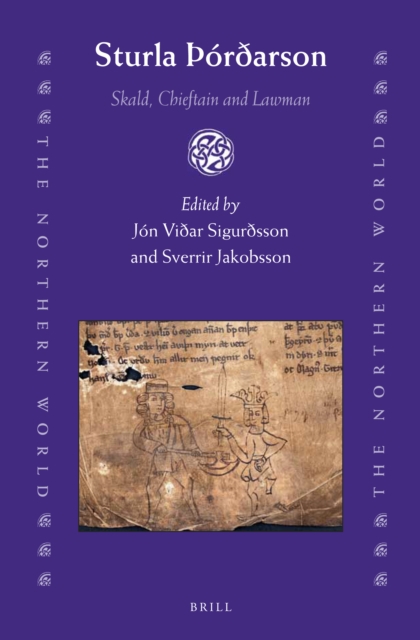
Sturla or arson is one of only a handful of thirteenth-century Icelandic historians to be known by name, and he is certainly one of the most significant.
This book focuses on the study of China’s legal image in the Chinese legal tradition, taking Chinese classics as the carrier of the study of China’s legal image, and provides a pioneering approach to the study of China’s legal image through a comprehensive and interdisciplinary analysis of the spreading of ancient Chinese classics outside the region.
This book focuses on the study of China’s legal image in the Chinese legal tradition, taking Chinese classics as the carrier of the study of China’s legal image, and provides a pioneering approach to the study of China’s legal image through a comprehensive and interdisciplinary analysis of the spreading of ancient Chinese classics outside the region.
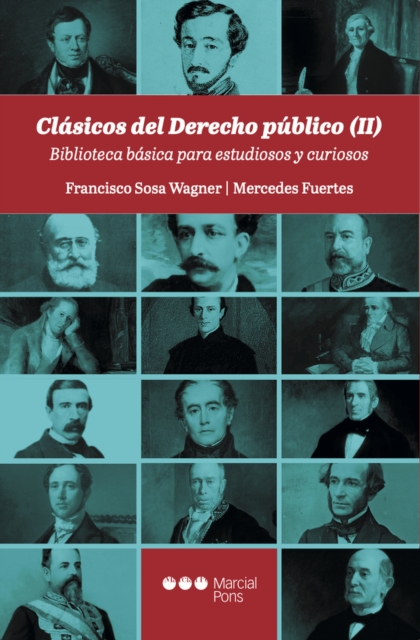
Este segundo tomo de Clásicos del Derecho público aborda la vida y la obra de los autores españoles e hispanoamericanos que escriben en el espacio temporal que va desde comienzos del siglo XIX hasta los dos primeros decenios del siglo XX.
This book explores the transformation of the state in Wallachia, an Ottoman tributary principality, between 1740 and 1800, by focusing on three administrative techniques: regulations, paperwork (registers, identification certificates), and weights and measures.
This book systematically explores the historical development, connotation, characteristics and cultural resources of Chinese rule of law path based on the combination theory and practice.
This book focuses on a key case study in the history of American territories, public works, transportation and the constitutional system of checks and balances.
This book focuses on a key case study in the history of American territories, public works, transportation and the constitutional system of checks and balances.
This book systematically explores the historical development, connotation, characteristics and cultural resources of Chinese rule of law path based on the combination theory and practice.
This book investigates the role of Sir Robert Hart in China’s early engagement with Western international law, covering the period from Hart’s earliest days as Inspector General of the foreign-dominated Chinese Imperial Maritime Customs (CIMC) to his final years in China (1863-1908).
This book explores the transformation of the state in Wallachia, an Ottoman tributary principality, between 1740 and 1800, by focusing on three administrative techniques: regulations, paperwork (registers, identification certificates), and weights and measures.
Dieser Buchtitel ist Teil des Digitalisierungsprojekts Springer Book Archives mit Publikationen, die seit den Anfängen des Verlags von 1842 erschienen sind.
Dieser Buchtitel ist Teil des Digitalisierungsprojekts Springer Book Archives mit Publikationen, die seit den Anfängen des Verlags von 1842 erschienen sind.
Dieser Buchtitel ist Teil des Digitalisierungsprojekts Springer Book Archives mit Publikationen, die seit den Anfängen des Verlags von 1842 erschienen sind.
Dieser Buchtitel ist Teil des Digitalisierungsprojekts Springer Book Archives mit Publikationen, die seit den Anfängen des Verlags von 1842 erschienen sind.
Dieser Buchtitel ist Teil des Digitalisierungsprojekts Springer Book Archives mit Publikationen, die seit den Anfängen des Verlags von 1842 erschienen sind.
Dieser Buchtitel ist Teil des Digitalisierungsprojekts Springer Book Archives mit Publikationen, die seit den Anfängen des Verlags von 1842 erschienen sind.
Dieser Buchtitel ist Teil des Digitalisierungsprojekts Springer Book Archives mit Publikationen, die seit den Anfängen des Verlags von 1842 erschienen sind.
Dieser Buchtitel ist Teil des Digitalisierungsprojekts Springer Book Archives mit Publikationen, die seit den Anfängen des Verlags von 1842 erschienen sind.
Dieser Buchtitel ist Teil des Digitalisierungsprojekts Springer Book Archives mit Publikationen, die seit den Anfängen des Verlags von 1842 erschienen sind.
Dieser Buchtitel ist Teil des Digitalisierungsprojekts Springer Book Archives mit Publikationen, die seit den Anfängen des Verlags von 1842 erschienen sind.
Dieser Buchtitel ist Teil des Digitalisierungsprojekts Springer Book Archives mit Publikationen, die seit den Anfängen des Verlags von 1842 erschienen sind.
Dieser Buchtitel ist Teil des Digitalisierungsprojekts Springer Book Archives mit Publikationen, die seit den Anfängen des Verlags von 1842 erschienen sind.