This volume considers a variety of key issues pertaining to the rights of defendants and victims at International Criminal Courts (ICTs) and explores how best to balance and enhance the rights of both in order to ensure the effectiveness and efficiency of international criminal proceedings.
This book gathers together leading voices in virtue theory-an increasingly influential aspect of legal theory in the 21st century-to take stock of virtue jurisprudence's evolution and suggest ways in which this approach can be further developed.
This book gathers together leading voices in virtue theory-an increasingly influential aspect of legal theory in the 21st century-to take stock of virtue jurisprudence's evolution and suggest ways in which this approach can be further developed.
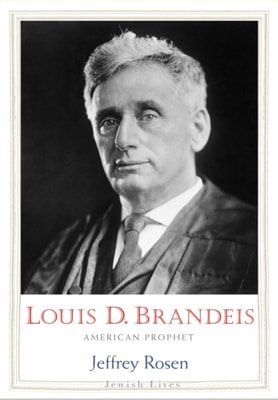
From the prizewinning Jewish Lives series, a riveting new examination of the leading progressive justice of his era, published in the centennial year of his confirmation to the U.
For more than two decades, the law and economics movement has been one of the most influential and controversial schools of thought in American jurisprudence.
In Constitutional Revolutions Robert Justin Lipkin radically rethinks modern constitutional jurisprudence, challenging the traditional view of constitutional change as solely an extension or transformation of prior law.
Rules perform a moral function by restating moral principles in concrete terms, so as to reduce the uncertainty, error, and controversy that result when individuals follow their own unconstrained moral judgment.
While antiliberal legal theorist Carl Schmitt has long been considered by Europeans to be one of this century's most significant political philosophers, recent challenges to the fundamental values of liberal democracies have made Schmitt's writings an unavoidable subject of debate in North America as well.
Toward an Islamic Reformation is an ambitious attempt to modernize Islamic law, calling for reform of the historical formulations of Islamic law, commonly known as Shari'a that is perceived by many Muslims to be part of the Islamic faith.
Although there are legal norms to secure the uniform treatment of asylum claims in the United States, anecdotal and empirical evidence suggest that strategic and economic interests also influence asylum outcomes.
Law and War explores the cultural, historical, spatial, and theoretical dimensions of the relationship between law and war-a connection that has long vexed the jurisprudential imagination.
Imagining New Legalities reminds us that examining the right to privacy and the public/private distinction is an important way of mapping the forms and limits of power that can legitimately be exercised by collective bodies over individuals and by governments over their citizens.
Many today place great hope in law as a vehicle for the transformation of society and accept that law is autonomous, universal, and above all, secular.
Though many legal theorists are familiar with Jurgen Habermas's work addressing core legal concerns, they are not necessarily familiar with his earlier writings in philosophy and social theory.
The book provides deep insights into heritage politics in Myanmar on the basis of the conservation history of Bagan and its entanglement in national politics.
Addressing the relationship between law and the visual, this book examines the importance of photography in Central, East, and Southeast European show trials.
Chinas traditional system of dispute resolution and maintenance of order in society has been treated by Western scholars as legal history, but because the Chinese system is radically different from European systems in its conceptual structure and therefore does not fit into the familiar categories and models of Western law and jurisprudence, such treatment has been inadequate and often misleading.