This book analyses and reconstructs the European Convention on Human Rights standard of application and execution of preventive deprivation of liberty.
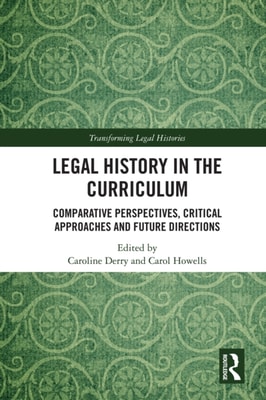
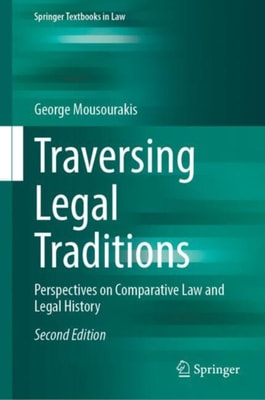
As legal education faces fresh challenges and opportunities, and a growing literature calls for subversive new approaches, this book engages with vital questions about the place of history in the law school.
En la presente obra los lectores encontraran informacion sobre diferentes aspectos que van desde el ambito juridico, academico, hasta los antecedentes de la Universidad Autonoma de Baja California Sur, y un ejemplo de una ruta metodologica cualitativa que se siguio para para hacer la investigacion.
As legal education faces fresh challenges and opportunities, and a growing literature calls for subversive new approaches, this book engages with vital questions about the place of history in the law school.
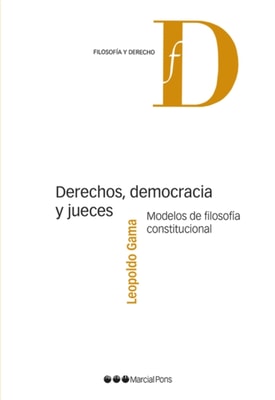
Esta obra explora y desarrolla los temas iusfilosóficos que subyacen a una concepción argumentativa del Derecho (que el autor presentó hace unos años en su Curso de argumentación jurídica), esto es, cómo entender el Derecho, el conocimiento jurídico, la justicia o la propia filosofía del Derecho.
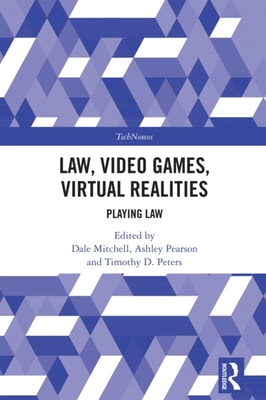
This edited volume explores the intersection between the coded realm of the video game and the equally codified space of law through an insightful collection of critical readings.
This volume provides an innovative and engaging way of assessing the development of international law scholarship and practice to date and its potential future development by focusing upon the 'leading works' of the discipline.
This volume provides an innovative and engaging way of assessing the development of international law scholarship and practice to date and its potential future development by focusing upon the 'leading works' of the discipline.
El Derecho es un arte (un ars, nunca una tecné) que se manifiesta en toda circunstancia dependiente de un "problema" que necesariamente concluye en un "caso" (judicial o extrajudicial).
This edited volume explores the intersection between the coded realm of the video game and the equally codified space of law through an insightful collection of critical readings.
En el interior de una democracia constitucional se viven fricciones que son resultado de la convergencia entre diversos ideales políticos (la soberanía popular o el ideal de un poder limitado para evitar la arbitrariedad), así como de la pluralidad ideológica propia de las sociedades modernas.
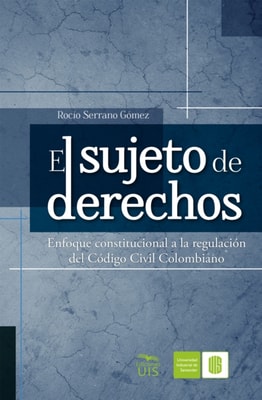
Este libro de investigación, sobre los más significativos aportes jurisprudenciales y legales a la teoría jurídica del sujeto, está escrito en un lenguaje sencillo y asequible a cualquier lector, especialmente a estudiantes de derecho y litigantes.
This book offers a comprehensive summary of extant international law scholarship on the topics of self-determination and secession and positions the concepts among present-day theory and relevant practice, illustrated through various ongoing cases and historical examples.
Using an innovative history of the constitutional right to privacy, and inspired by Emersonian Justices like Brandeis and Douglas, this book rescues the meaning of privacy from prevalent liberal thinking by proposing a general theory of rights based on a spiritual-ecological jurisprudence tradition at the heart of American law.
This study analyzes the process of constitutional interpretation, that is, the methodology by which the Supreme Court goes about interpreting the Constitution, and offers a comprehensive view of constitutional law through the lens of history, political science, and jurisprudence.
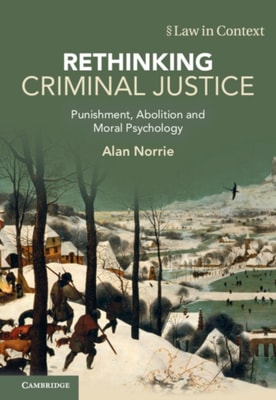
This book proposes an explicit recognition of criminology as a moral science: a philosophically textured appreciation of the presence and role of values in people's reasoning and motivation, set within an empirically rigorous social-scientific account.
The third volume of the Vienna Lectures on Legal Philosophy series focuses on one of the most fiercely contested issues in contemporary legal philosophy: the question of the importance of legal reasoning and how to properly engage with it.
The third volume of the Vienna Lectures on Legal Philosophy series focuses on one of the most fiercely contested issues in contemporary legal philosophy: the question of the importance of legal reasoning and how to properly engage with it.
This book proposes an explicit recognition of criminology as a moral science: a philosophically textured appreciation of the presence and role of values in people's reasoning and motivation, set within an empirically rigorous social-scientific account.